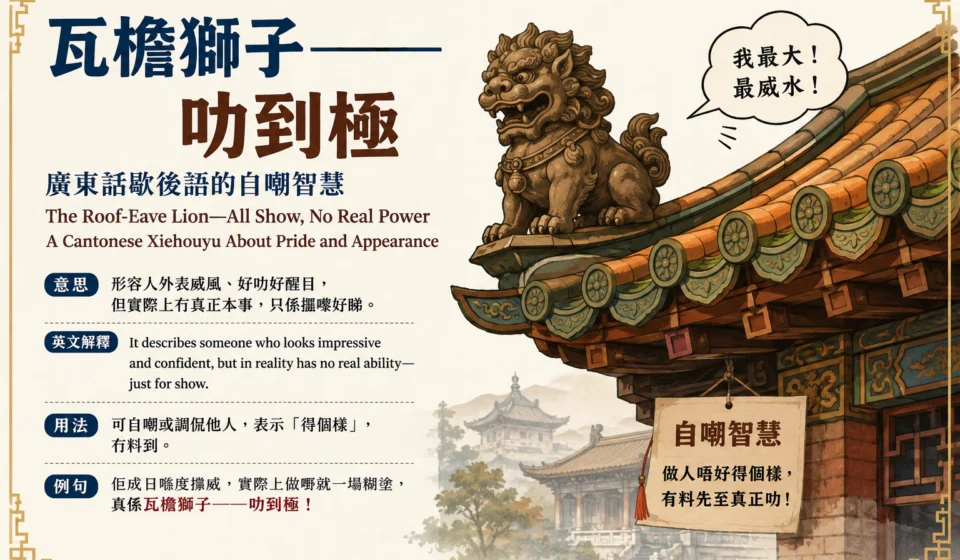
瓦檐獅子——叻到極|廣東話歇後語的自嘲智慧|The Roof-Eave Lion—All Show, No Real Power|A Cantonese Xiehouyu About Pride and Appearance
廣東話歇後語「瓦檐獅子——叻到極」,表面上講獅子威風凜凜,實際上卻帶有幾分揶揄意味。瓦檐上的獅子雖然威猛,但終究只是一件屋頂裝飾,不能真正發威。這句說話正正反映廣東話幽默、直接而又帶點反諷的語言智慧。相關資料亦將「瓦檐獅子」解作「叻到抆」或「叻到極」,形容表面威風、實際未必有真本領的人。
中文
「瓦檐獅子」係指瓦屋屋簷盡頭嘅獅子裝飾。獅子本身係百獸之王,擺喺屋頂上自然顯得威風,但佢只係裝飾,並冇真正嘅力量。所以「瓦檐獅子——叻到極」通常唔係真正讚人,而係帶住反話同取笑意味,形容一個人自以為好叻、好有本事,甚至表現得非常威風,但實際能力可能冇想像中咁強。
English Version
“瓦檐獅子” literally refers to a lion decoration placed at the edge of a traditional tiled roof. A lion represents strength and authority, so it looks powerful and impressive from a distance. Yet it is only a decorative figure and cannot actually do anything. The expression is therefore often used ironically for someone who acts extremely capable or important but has little real power behind the appearance. It is a humorous Cantonese way of bringing exaggerated confidence back down to earth.
用法
日常廣東話入面,呢句通常用嚟講一個人表現得好威、成日話自己乜都識,但真正遇到事情就未必有料到。例如有人成日話自己最叻、最有經驗,結果一到真正要處理問題就手忙腳亂,朋友就可以笑住講:「你真係瓦檐獅子——叻到極喎!」語氣可以係玩笑,亦可以帶少少諷刺,視乎雙方關係同說話時嘅語氣。如果對方係熟朋友,講出嚟通常係一種幽默式提醒。
English Version
This expression works best when teasing someone who talks confidently about their abilities but does not always deliver when real responsibility arrives. Imagine a colleague constantly claiming to be the expert, only to become helpless when a difficult problem appears. A friend might jokingly describe him as a “roof-eave lion”—impressive-looking, but ultimately just decoration. The phrase is usually playful among friends, although it can become sarcastic when used toward someone who is genuinely boastful.
小故事:
阿明返工嗰陣成日同同事講自己最熟電腦,話公司有咩技術問題都可以搵佢,連老闆都話佢係「IT專家」。有一日,公司部電腦突然連唔到網絡,大家即刻望住阿明,佢就好有信心咁話:「呢啲小問題,我一分鐘就搞掂。」點知佢撳咗幾下之後,電腦仍然完全冇反應,仲越搞越亂。最後真正識處理網絡嘅同事行過嚟,幾分鐘就搵到問題所在。阿明尷尬到面紅,旁邊嘅同事笑住講:「你平時咁威,今日真係瓦檐獅子——叻到極喎!」大家聽完都笑咗。阿明自己都知道呢句講得啱,於是笑住承認:「好啦,下次唔敢再吹咁大啦。」
English Version
Ming often told his colleagues that he was the best person in the office when it came to computers. Whenever something went wrong, he confidently claimed that he could fix it. One afternoon, the office suddenly lost its network connection. Everyone looked at Ming, and he immediately said, “It’s nothing. I can sort this out in a minute.” He clicked through several settings, restarted the computer, and tried a few more things, but nothing worked. In fact, the situation seemed to become even more confusing. Eventually, a colleague with real networking experience came over and identified the problem within a few minutes. Everyone laughed, and one colleague joked, “You sounded so powerful before. You’re really a roof-eave lion today—impressive, but only decoration!” Ming laughed too and admitted that perhaps he had been talking a little too confidently.
總結
「瓦檐獅子——叻到極」最有趣嘅地方,就係佢將威猛嘅獅子同屋簷上嘅裝飾放埋一齊,用反差去形容一個人表面好威、實際未必有真本領。呢句歇後語唔單止幽默,亦提醒人做人唔好只靠吹噓,真正嘅能力始終要靠實際表現證明。
English Version
“瓦檐獅子——叻到極” captures a very Cantonese kind of humour: using something that looks powerful to describe someone whose real ability may not match the image. It gently mocks boasting, exaggerated confidence and empty appearances. The deeper lesson is simple—looking impressive is easy, but genuine ability is shown when it is actually needed.