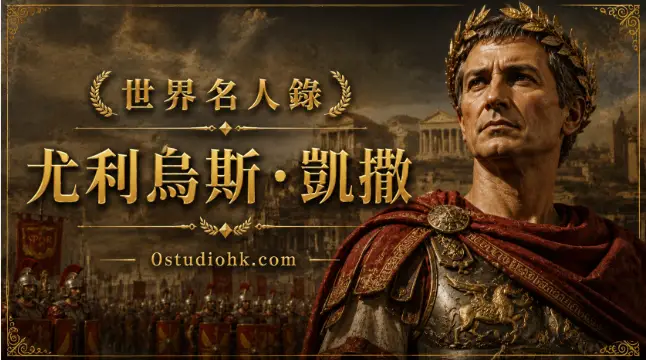
尤利烏斯·凱撒|改變羅馬共和國命運的傳奇統帥 Julius Caesar | The Legendary General Who Changed the Fate of Rome
尤利烏斯·凱撒是古羅馬最具影響力的人物之一,他憑藉卓越的軍事才能與政治智慧,擴張羅馬版圖,並改變共和國的發展方向,深刻影響後世兩千多年。
Julius Caesar stands among history’s greatest military commanders and political leaders. His victories transformed Rome into a dominant Mediterranean power while setting the stage for the rise of the Roman Empire.
中文版本
尤利烏斯·凱撒(Julius Caesar)約於西元前100年出生於羅馬貴族家庭,雖然家族歷史悠久,但當時並非最具權勢的豪門。年輕時的凱撒展現出過人的學識、演說能力與政治手腕,在羅馬政壇逐步嶄露頭角。他曾擔任祭司、軍官及地方官員,累積豐富的行政與軍事經驗。為了取得更大的政治影響力,他與龐培及克拉蘇組成著名的「第一次三頭同盟」,共同掌控羅馬政局。凱撒後來出任高盧總督,在長達八年的高盧戰爭中征服今日法國、比利時及部分德國地區,不僅大幅擴展羅馬領土,也讓自己成為全羅馬最受敬重的將軍之一。他更親自撰寫《高盧戰記》,以簡潔生動的文字記錄戰事,至今仍被視為拉丁文經典著作。隨著聲望日益提高,凱撒與元老院及龐培之間的矛盾逐漸加深。西元前49年,他率軍跨越盧比孔河,象徵正式向元老院挑戰,也留下「骰子已經擲下」(Alea iacta est)這句流傳千古的名言。內戰爆發後,凱撒迅速擊敗龐培勢力,最終成為羅馬最具權力的人物。他推動多項改革,包括調整曆法,制定後來著名的儒略曆;改革稅制、擴大元老院人數、改善退伍軍人安置及殖民政策,並推動公共建設,使羅馬行政制度更加完善。他的改革提高了政府效率,也改善部分平民生活,但權力過度集中,引起不少共和派貴族憂慮。他被授予終身獨裁官稱號,更被部分支持者視為近乎君王般的人物。西元前44年3月15日,即著名的「三月十五日」,布魯圖斯、卡西烏斯等元老院成員發動刺殺行動,凱撒在龐貝劇場遭到二十多刀襲擊身亡,終年約56歲。這宗事件並未恢復共和制度,反而再次引發內戰。最終,凱撒的養子屋大維擊敗各方勢力,建立羅馬帝國,成為第一位皇帝奧古斯都。凱撒雖未正式稱帝,但他的名字後來成為皇帝稱號「Caesar」的來源,並演變成德語「Kaiser」及俄語「Tsar」等君主稱號。他卓越的軍事才能、政治改革與深遠影響,使他成為世界歷史上最重要的人物之一,其事蹟至今仍廣泛出現在歷史、文學、電影及戲劇作品之中。
English Version
Julius Caesar, born around 100 BC into an ancient Roman noble family, emerged as one of the most remarkable figures of classical civilization. Although his family possessed prestige, it lacked overwhelming political influence, forcing Caesar to rely on intelligence, ambition, and exceptional leadership to advance his career. He built his reputation through public service, military command, and persuasive oratory before forming the political alliance known as the First Triumvirate with Pompey and Crassus. This partnership temporarily dominated Roman politics and opened the door to Caesar’s greatest military achievements. As governor of Gaul, he led a series of brilliant campaigns that brought vast territories under Roman control. His victories extended Rome’s borders to the Atlantic Ocean and strengthened its influence across Western Europe. Caesar documented these campaigns in Commentaries on the Gallic War, a work admired for both its historical value and elegant Latin prose. His growing popularity alarmed political rivals in Rome, leading to a confrontation with the Senate. In 49 BC, Caesar crossed the Rubicon River with his army, an act that ignited civil war and forever changed Roman history. After defeating Pompey’s forces, Caesar returned to Rome as its dominant leader. During his rule, he introduced sweeping reforms that reshaped government administration, improved tax collection, expanded opportunities for veterans and citizens, encouraged public construction, and introduced the Julian calendar, whose influence survives in the modern calendar system. While many Romans welcomed these reforms, others feared that republican traditions were disappearing as Caesar accumulated unprecedented authority. When he accepted the title of dictator for life, opposition intensified. On the Ides of March in 44 BC, a group of senators led by Brutus and Cassius assassinated him inside the Theatre of Pompey, believing they were saving the Republic. Instead, the assassination plunged Rome into another devastating civil war. Caesar’s adopted heir, Octavian, eventually defeated his rivals and became Augustus, the first emperor of Rome, marking the beginning of the Roman Empire. Although Caesar himself never ruled as emperor, his surname became synonymous with supreme authority. The titles “Caesar,” “Kaiser,” and “Tsar” all trace their origins to his extraordinary legacy. More than two thousand years later, Julius Caesar continues to symbolize military brilliance, political ambition, and the profound ability of one individual to alter the course of world history.
總評
尤利烏斯·凱撒以卓越的軍事與政治才能改變羅馬歷史,他的改革與影響延續至今,成為世界歷史上最偉大的領袖之一。
Summary
Julius Caesar reshaped Rome through conquest, reform, and vision. His remarkable achievements and dramatic death continue to define one of history’s most influential political and military legacies.