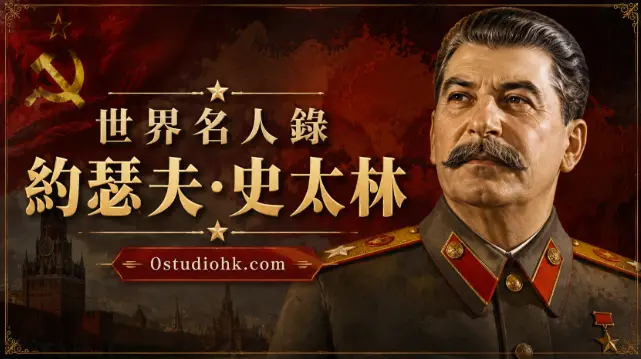
約瑟夫·史太林|蘇聯鐵腕領袖與二十世紀最具爭議人物 Joseph Stalin | The Iron-Fisted Soviet Leader Who Shaped the Twentieth Century
約瑟夫·史太林是二十世紀最具影響力與爭議的政治人物之一。他帶領蘇聯成為世界強權,同時其高壓統治、政治清洗與集權政策,也留下深遠而沉重的歷史影響。
Joseph Stalin transformed the Soviet Union into a global superpower while ruling through fear, centralized authority, and sweeping political control. His legacy combines military victory, industrial success, and immense human suffering.
中文版本
約瑟夫·史太林(Joseph Stalin)於1878年出生於俄羅斯帝國統治下的喬治亞哥里鎮,原名約瑟夫·朱加什維利。少年時曾進入神學院就讀,但後來投身革命運動,加入俄羅斯社會民主工黨,逐漸成為布爾什維克的重要成員。他多次因革命活動被捕與流放,但始終沒有放棄推翻沙皇制度的目標。1917年俄國革命成功後,列寧建立蘇維埃政權,史太林在黨內逐步累積權力。1922年,他出任蘇聯共產黨總書記,這個原本被視為行政性的職位,卻成為他掌握全國權力的重要基礎。1924年列寧逝世後,史太林透過政治鬥爭擊敗托洛茨基等對手,逐步建立個人獨裁體制,成為蘇聯最高領導人。執政期間,他推動快速工業化與五年計畫,希望將農業國家轉變為現代工業強國,同時強制推行農業集體化,大量農民被迫加入集體農莊,部分地區更因政策失誤及糧食徵收而爆發嚴重饑荒,造成數以百萬計人口死亡。1930年代,史太林展開著名的大清洗,大批黨員、軍官、知識分子及普通百姓遭到逮捕、流放或處決,蘇聯社會長期籠罩於恐懼之中。他同時建立龐大的秘密警察與勞改營制度,令人民生活受到嚴密監控。1939年,蘇聯與德國簽訂互不侵犯條約,但1941年德國突然發動巴巴羅薩行動入侵蘇聯,第二次世界大戰全面爆發於東線。史太林率領蘇聯展開艱苦抗戰,莫斯科保衛戰、史太林格勒戰役及庫爾斯克戰役等重大勝利,逐漸扭轉戰局,最終紅軍攻入柏林,成為擊敗納粹德國的重要力量。戰後,蘇聯控制東歐多個國家,形成社會主義陣營,與美國展開長達數十年的冷戰。史太林在國際舞台上的影響力達到高峰,但國內高壓統治始終未曾放鬆。1953年史太林逝世,蘇聯政府後來開始揭露其個人崇拜及大規模政治迫害,赫魯曉夫更於1956年公開批評其統治方式。直到今天,史太林仍是歷史評價最兩極的人物之一,有人認為他建立了現代工業化的蘇聯並擊敗納粹德國,也有人認為他的極權統治造成無數人民死亡與長期的人權災難,其歷史影響至今仍引發廣泛討論。
English Version
Joseph Stalin, born Ioseb Jughashvili in 1878 in what is now Georgia, rose from a modest background to become one of the most powerful and controversial leaders in modern history. Educated briefly in a religious seminary, he abandoned the path toward priesthood and joined revolutionary movements seeking to overthrow the Russian monarchy. His involvement with the Bolsheviks led to repeated arrests and exile, yet these experiences only strengthened his determination. Following the Russian Revolution of 1917, Stalin steadily climbed the ranks of the Communist Party. His appointment as General Secretary in 1922 appeared administrative at first, but he skillfully used the position to build an extensive political network. After Vladimir Lenin’s death in 1924, Stalin outmaneuvered rivals including Leon Trotsky and gradually established absolute authority over the Soviet Union. His government launched ambitious Five-Year Plans designed to transform the largely agricultural nation into an industrial powerhouse. Massive factories, railways, and infrastructure projects reshaped the economy, but the rapid modernization came at a tremendous human cost. Forced collectivization disrupted rural life, and severe famines devastated several regions, causing millions of deaths. During the late 1930s, Stalin initiated the Great Purge, targeting political opponents, military officers, intellectuals, and ordinary citizens. Widespread arrests, executions, and imprisonment in labor camps created an atmosphere of fear throughout Soviet society. Despite these internal tragedies, Stalin became a central figure during the Second World War after Nazi Germany invaded the Soviet Union in 1941. Soviet resistance at Moscow, Stalingrad, and Kursk ultimately reversed the course of the war on the Eastern Front. The Red Army’s capture of Berlin in 1945 established the Soviet Union as one of the world’s two dominant superpowers. In the postwar years, Soviet influence expanded across Eastern Europe, marking the beginning of the Cold War. Stalin maintained strict political control until his death in 1953. Soon afterward, Soviet leaders began exposing the abuses of his regime, and Nikita Khrushchev publicly denounced Stalin’s cult of personality and widespread repression. Historians continue to debate his legacy. Some emphasize his role in defeating Nazi Germany and accelerating Soviet industrial development, while others point to mass repression, forced labor, political terror, and famine as defining features of his rule. His life remains a powerful reminder of how concentrated political power can transform both a nation and the wider world.
總評
史太林深刻改變了蘇聯與世界歷史。他既帶領蘇聯成為超級強國,也因極權統治造成巨大人道災難,成為歷史上最具爭議的領袖之一。
Summary
Joseph Stalin’s rule reshaped global politics, industry, and warfare. His achievements and atrocities remain inseparable, making him one of the most debated figures in modern world history.