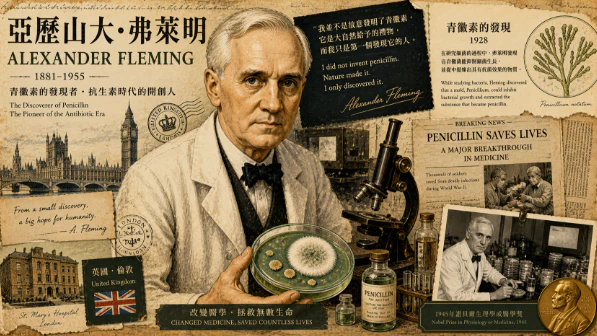
在20世紀的英國,亞歷山大·弗萊明意外發現青黴素,開啟抗生素時代,徹底改變醫療與人類對抗疾病的方式。
In the 20th century in the United Kingdom, Alexander Fleming accidentally discovered penicillin, ushering in the antibiotic era and transforming the way humanity fights disease.
中文
在現代醫學史上,亞歷山大·弗萊明的名字幾乎與抗生素的誕生劃上等號,他出生於蘇格蘭農村,隸屬於英國,早年在倫敦接受醫學教育並進入實驗室從事細菌學研究,這段經歷為他日後的重大發現奠定了基礎。1928年,他在實驗室中觀察到一個看似偶然的現象:一個培養皿中的細菌被某種黴菌抑制生長,這種黴菌正是後來被命名為青黴菌的微生物,弗萊明敏銳地意識到其中潛藏的醫學價值,並進一步提取其抗菌物質,命名為青黴素。這項發現最初並未立即引起廣泛關注,因為當時技術尚不足以大量生產與穩定應用,但隨著時間推進,尤其在第二次世界大戰期間,青黴素被成功量產,成為治療感染的革命性藥物,大幅降低了傷口感染與致命疾病的死亡率,拯救了無數生命。弗萊明的貢獻不僅在於發現本身,更在於他揭示了抗生素的概念,開啟了一個全新的醫學領域,促使後來更多抗菌藥物的研發。值得注意的是,弗萊明本人也曾警告抗生素濫用可能導致細菌產生抗藥性,這一預見在今日顯得尤為重要,因為抗生素抗藥性已成為全球公共衛生的一大挑戰。他的研究精神體現了科學探索中的觀察力與好奇心,從一個看似偶然的發現中挖掘出改變世界的成果。弗萊明因此獲得諾貝爾獎,並被視為現代醫學的奠基人物之一,他的發現不僅延長了人類壽命,也改變了醫療體系與公共衛生的發展方向,使人類在與細菌的戰爭中取得重要優勢。
English Version
In the history of modern medicine, the name Alexander Fleming stands as a defining symbol of the antibiotic revolution. Born in rural Scotland within the United Kingdom, Fleming pursued medical training in London and specialized in bacteriology, a field that would ultimately lead him to one of the most important discoveries in human history. In 1928, while working in his laboratory, Fleming noticed an unusual occurrence: a Petri dish containing bacteria had been contaminated by a mold that appeared to inhibit bacterial growth. Rather than dismissing this as a failed experiment, he recognized its significance and identified the mold as Penicillium, from which he derived the antibacterial substance later known as penicillin. Initially, his discovery did not receive immediate widespread attention, largely due to the technical challenges of isolating and mass-producing the compound. However, during World War II, scientists succeeded in developing methods to produce penicillin on a large scale, transforming it into a life-saving drug used to treat infections that had previously been fatal. The introduction of penicillin dramatically reduced mortality rates from wounds and infectious diseases, marking a turning point in medical history. Fleming’s achievement extended beyond the discovery itself; it established the foundation for the entire field of antibiotics, leading to the development of numerous drugs that continue to save lives today. Importantly, Fleming also warned about the dangers of antibiotic misuse, predicting that overuse could lead to resistant strains of bacteria—a concern that has become one of the most pressing global health issues in the modern era. His work exemplifies the power of careful observation, scientific curiosity, and the ability to recognize significance in unexpected results. Fleming was later awarded the Nobel Prize and is widely regarded as one of the pioneers of modern medicine. His discovery not only revolutionized treatment methods but also reshaped healthcare systems worldwide, giving humanity a powerful tool in its ongoing battle against infectious disease.