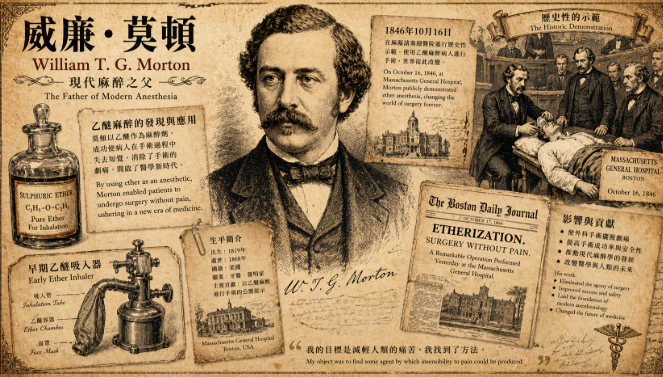
威廉·莫頓以乙醚麻醉改變醫學史,使手術從痛苦折磨走向現代醫療的安全與人道。
English: William T. G. Morton transformed medicine with ether anesthesia, turning surgery from agony into a humane and modern practice.
中文
William T. G. Morton(威廉·莫頓)於1819年出生於美國,是麻醉醫學發展史上的關鍵人物之一,在他之前,手術往往伴隨劇烈痛苦與極高風險,病人需要在清醒狀態下承受切割與縫合,這不僅限制了外科手術的發展,也讓醫療過程充滿恐懼與不確定性,莫頓原本是一名牙醫,日常工作中經常面對病人因拔牙而產生的劇烈疼痛,這促使他尋找能夠減輕甚至消除痛苦的方法,他受到當時化學知識的啟發,開始研究乙醚的麻醉效果,並在反覆實驗後,成功掌握其安全使用方式,1846年,他在Massachusetts General Hospital公開展示乙醚麻醉進行手術,這場歷史性的示範震驚醫學界,證明手術可以在無痛狀態下進行,這一事件被後世稱為現代麻醉的誕生,標誌著醫學進入全新時代,莫頓的突破使外科手術得以快速發展,醫生能夠進行更複雜且精細的操作,大大提高了治療成功率與病人存活率,然而他的成就也伴隨爭議,關於誰才是真正發現麻醉技術的人曾引發激烈爭論,包括Horace Wells與Charles Thomas Jackson等人都曾聲稱對此有貢獻,這場爭議使莫頓在生前未能完全獲得應有的榮譽與經濟回報,但歷史最終肯定了他在臨床應用與推廣上的決定性角色,莫頓的發明不僅改變了醫學技術,更改變了人類對痛苦與治療的觀念,使醫療從殘酷走向人道,他的努力讓無數病人免於痛苦,也為現代麻醉學奠定基礎,今日無論是大型手術還是日常醫療程序,都離不開麻醉技術的支持,莫頓的貢獻因此被視為醫學史上的重大轉折點,他證明了創新不僅來自理論,更來自對人類痛苦的深刻理解與解決問題的決心,他的故事提醒人們,醫學的進步本質上是為了改善人類生活品質,而他正是這一理念的最佳體現者
English Version
William T. G. Morton was born in 1819 in the United States and became one of the pivotal figures in the history of anesthesia, before his breakthrough surgical procedures were often performed without effective pain relief, forcing patients to endure extreme suffering while fully conscious, this limitation not only restricted the advancement of surgery but also made medical treatment a terrifying experience, Morton began his career as a dentist, where he frequently encountered patients experiencing severe pain during tooth extractions, motivating him to search for a method to eliminate or significantly reduce pain, inspired by contemporary chemical knowledge he experimented with ether and gradually refined a safe and effective method of administration, in 1846 he conducted a landmark public demonstration at Massachusetts General Hospital, where ether anesthesia was successfully used during surgery, astonishing the medical community and proving that operations could be performed without pain, this event is widely recognized as the birth of modern anesthesia and marked a turning point in medical history, Morton’s innovation enabled surgeons to perform more complex and precise procedures, greatly improving patient survival rates and expanding the possibilities of medical treatment, however his achievement was accompanied by controversy, as disputes arose over who deserved credit for the discovery of anesthesia, with figures such as Horace Wells and Charles Thomas Jackson also claiming involvement, these conflicts prevented Morton from fully receiving recognition and financial reward during his lifetime, despite this history has ultimately acknowledged his crucial role in demonstrating and popularizing anesthesia in clinical practice, Morton’s contribution went beyond a single invention as it transformed the philosophy of medicine itself, shifting it from a field associated with pain and fear to one grounded in compassion and patient care, his work laid the foundation for modern anesthesiology, a discipline essential to virtually all forms of surgery and many medical procedures today, by alleviating human suffering Morton helped redefine what medicine could achieve, his legacy stands as a testament to the power of innovation driven by empathy and determination, reminding us that the true purpose of medical progress is to improve the quality of human life