
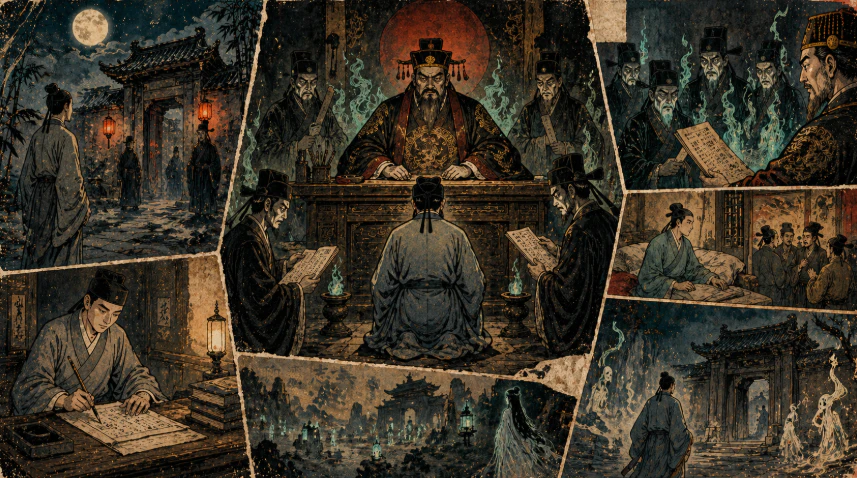
生死之間,正義未曾沉睡,陰間亦有考試,衡量人心與德行。
Between life and death, justice persists; even spirits are tested for virtue.
江南有一書生,姓宋,性情端正,為人誠實。年少讀書,志在科舉,然數試不中,心中難免鬱結。一夜秋風乍起,月色如水,他獨坐書齋,忽覺神思恍惚,似夢非夢之間,被兩名差役引出門外。
行至一處,陰氣森然,四周高牆如城,燈火幽藍。門上懸匾,書「考城隍」三字。宋生心驚,欲退不能,只得隨之入內。堂上高坐一官,面容嚴肅,似人非人。左右侍立判官,手持簿冊。
官曰:「世間多有科舉,陰司亦然。今日考試,不論文章詞藻,只問心術與德行。」宋生聞言,雖懼,卻正色答曰:「學生平生未敢欺心,願試之。」
遂命書題:「人之為善,何以為本?」宋生沉思片刻,提筆而書。文中不談華麗辭藻,只述仁義、誠信與忍讓,言人若能守本心,即為至善。字字平實,卻發自肺腑。
判官閱後,微微點頭。堂上之官卻未置評,只命再試。第二題乃:「人若遭冤,當何以處?」宋生心中一震,略作思索,答曰:「冤者,非報之以怨,當以德解之。若報復,則冤冤相報,無有止時。」
堂上忽然一陣低語,似眾鬼議論。那官凝視宋生良久,忽然一笑,道:「此人心地光明,可任城隍。」隨即命判官記名。
宋生驚駭萬分,跪地叩首:「學生不才,安敢任此重任?」官曰:「陽世科舉,取才學;陰司選任,重德行。汝雖文章未顯,然心術端正,足以鎮一方。」
言畢,忽有一陣黑風捲起,宋生眼前一暗。再醒時,已在家中床榻。天色將明,窗外雞鳴。他以為一場奇夢,然數日後,鄰里傳言某地城隍忽然易人,而其名,竟與宋生相同。
宋生自此心中惶然,愈加謹慎,不敢妄行一事。數年後,果然無疾而終。人皆言其死時面色安詳,如赴任而去。
自此傳說流傳於鄉間:人間之功名或有偶然,陰間之任命卻必以德為準。世人聞之,或笑其怪,或信其真,唯有夜深時分,風過燈影,仍似有人低語:「考城隍,考的是心。」
English Version
In the southern provinces lived a scholar named Song, a man of upright character and quiet dignity. Though diligent in study and earnest in ambition, he failed the imperial examinations again and again. Beneath his calm exterior, disappointment slowly gathered like storm clouds.
One autumn night, under a pale and watchful moon, he sat alone in his study. The wind whispered through the bamboo, and drowsiness crept upon him. Between waking and dream, he felt himself summoned. Two shadowy figures appeared and beckoned him to follow.
They led him to a vast walled compound, cold and dimly lit with bluish flames. Above the gate hung a plaque bearing the words: “Examination of the City God.” A chill ran through him, yet he could not turn back.
Inside, a solemn official presided over a dark hall. Judges stood at either side, holding ledgers filled with unseen records. The official spoke in a voice that seemed to echo from another world.
“In the realm of the living, men compete for rank through knowledge. Here, we examine the heart. Speak truthfully, and you may yet pass.”
Song steadied himself. “I have never knowingly betrayed my conscience. I will answer as I am.”
The first question was given: “What is the foundation of goodness?” He paused, then wrote not with flourish but sincerity. He spoke of integrity, compassion, and restraint—that true virtue lies not in grand acts, but in the quiet refusal to betray one’s inner truth.
The judges nodded subtly.
The second question followed: “If wronged, how should a man respond?” Song hesitated, feeling the weight of the question. Then he answered: “To answer hatred with hatred breeds endless cycles. Only by virtue can grievance dissolve.”
A murmur rippled through the hall, like wind through unseen crowds. The presiding official studied him for a long moment, then smiled faintly.
“This one possesses clarity of heart. He is fit to serve as a City God.”
Song fell to his knees, shaken. “I am unworthy of such a post.”
“In life,” the official replied, “titles are granted for talent. Here, they are granted for virtue. You lack brilliance in words, but not in spirit.”
A sudden gust swept the hall into darkness.
When Song awoke, he was in his own bed. Dawn was breaking, and the world seemed unchanged. He dismissed it as a dream—until days later, rumors spread of a newly appointed City God in a nearby region, bearing his very name.
From that moment on, Song lived with quiet caution, as if already judged by unseen eyes. Years later, he passed away peacefully, his expression calm, as though answering a final summons.
People would later whisper of his story: that earthly success may falter, but in the unseen realm, the heart is always weighed. And when the night grows still, some claim a voice lingers in the dark:
“The true examination… is of the soul.”