
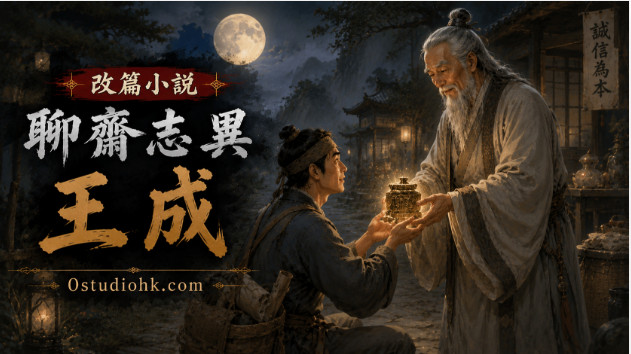
人生是否真的有時來運轉的一天?《王成》透過一位屢遭挫折的平凡人物,描寫命運起伏、人心善惡與堅持信念的重要,展現蒲松齡對人生際遇與品德修養的深刻體悟。
Can destiny truly change for those who refuse to surrender? “Wang Cheng” follows the extraordinary journey of an ordinary man whose hardships become the foundation of unexpected fortune, revealing timeless lessons about patience, integrity, and resilience.
中文
王成出身寒微,自幼家境清苦,成年後靠販賣日用品維持一家生計。他每日天未亮便挑著貨擔走遍鄉鎮,雖然收入微薄,卻始終童叟無欺,因此深受街坊信任。然而命運似乎從未眷顧他,不僅生意時好時壞,還屢次遭遇天災與盜賊,使多年積蓄化為烏有。親友見他始終一事無成,不少人勸他投機取巧,甚至有人介紹欺騙顧客的方法,希望能快速致富。王成卻始終認為,靠欺詐所得的財富終究無法長久,因此寧願繼續辛苦經營,也不願違背自己的良心。某日,他在山路上偶然救助一位受傷老人。老人衣衫破舊,看似普通旅人,王成不但替他療傷,還將身上僅有的乾糧分給老人充飢,更親自護送他離開危險山區。臨別時,老人只是微笑道謝,沒有留下姓名。數月之後,王成前往外地販貨,途中迷失方向,竟再次遇見那位老人。老人帶他來到一處幽靜山谷,贈予他一件看似平凡的古物,並叮囑他不可因一時利益而出售,只要誠心珍惜,自會改變命運。王成雖然不明所以,仍依言收藏。回家後不久,一位古董商偶然見到那件古物,大為震驚,表示竟是失傳已久的珍寶,願以重金收購。王成想起老人囑咐,婉拒高價誘惑。此事傳開後,更多博學之士前來鑑賞,最終確認那件古物具有極高歷史價值。地方官府得知消息後,依法高價收購並妥善收藏,王成因此獲得豐厚報酬,一家人終於過上安穩生活。然而富裕之後,他並未忘記昔日困苦,反而設立義倉、修橋鋪路,幫助窮苦百姓重新生活。多年後,那位老人再次現身。他告訴王成,自己其實是奉命考驗世人的仙人,多年來一直觀察他的為人。真正改變命運的,不是那件古物,而是王成始終保持誠實善良,即使身處逆境,也從未放棄做人應有的原則。老人說完便飄然而去,再無蹤影。王成終其一生樂善好施,深受鄉民愛戴。後世提起他的故事,不再只記得他曾經獲得財富,而是敬佩他在貧窮時不失品格,在富裕後不忘初心。《王成》沒有以奇異法術作為成功關鍵,而是透過一段充滿傳奇色彩的經歷,說明真正改變人生的力量來自誠信、善良與堅持。蒲松齡藉此提醒世人,機會或許人人都會遇見,但唯有品德高尚的人,才能真正把握命運賜予的轉機,使福報不僅改變自身,也惠及更多人。
English Version
Wang Cheng was born into poverty and spent his youth struggling to support his family as a traveling merchant. Before sunrise each morning, he carried simple goods across villages, earning only modest profits through honest work. Customers trusted him because he never cheated, exaggerated prices, or took advantage of those less fortunate. Yet despite his integrity, success always seemed beyond his reach. Floods destroyed merchandise, thieves stole his savings, and years of hard work often disappeared overnight. Many acquaintances urged him to abandon honesty, arguing that clever deception was the quickest path to wealth. Wang Cheng quietly rejected every suggestion, believing that prosperity built upon dishonesty could never bring lasting peace. One afternoon while crossing a lonely mountain path, he discovered an elderly traveler injured beside the road. Without hesitation, Wang Cheng shared his remaining food, treated the stranger’s wounds, and personally escorted him to safety despite delaying his own journey. The old man thanked him warmly before disappearing without revealing his identity. Several months later, Wang Cheng again lost his way while traveling through unfamiliar mountains. By remarkable coincidence, he encountered the same elderly man, who welcomed him into a secluded valley. Before they parted, the old traveler presented Wang Cheng with an ancient object that appeared entirely ordinary. He instructed him never to sell it merely for immediate profit, promising that patience and sincerity would eventually reveal its true value. Although puzzled, Wang Cheng carefully followed the advice. Soon after returning home, an experienced collector noticed the artifact and immediately recognized it as an extraordinarily rare historical treasure. He offered an enormous fortune for it, yet Wang Cheng politely declined, remembering the mysterious warning. As news spread, respected scholars confirmed its remarkable importance, and government officials eventually acquired it for preservation at an honorable price. For the first time in his life, Wang Cheng enjoyed genuine financial security. Yet prosperity never changed his character. Instead of pursuing luxury, he built bridges, established charitable granaries, supported struggling families, and generously improved the lives of those around him. Years later, the mysterious old man returned once more. Smiling gently, he revealed himself to be an immortal sent to observe human virtue. The priceless treasure had never been the true source of Wang Cheng’s good fortune. Rather, his honesty, compassion, and refusal to abandon moral principles had made him worthy of receiving heaven’s blessing. With those final words, the immortal quietly vanished. Wang Cheng remained respected throughout the remainder of his life, remembered not simply as a fortunate merchant but as a man whose character remained constant through both poverty and wealth. Through this inspiring story, Pu Songling teaches that opportunity alone cannot transform a person’s destiny. Fortune achieves its greatest meaning only when joined with integrity, generosity, and unwavering moral conviction. Wealth may arrive unexpectedly, but lasting honor belongs only to those whose hearts remain faithful to goodness regardless of circumstance. These timeless virtues become the greatest treasure anyone can possess.