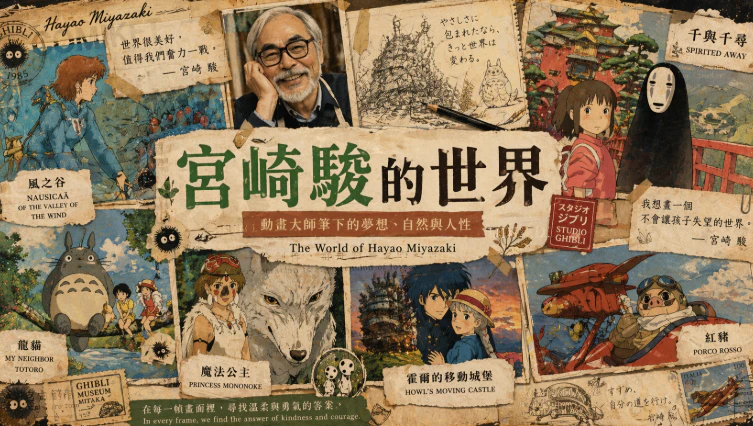
宮崎駿的作品總讓人誤以為是在讚美自然,但其實更像是在提問:當人類不再理解自然時,世界會變成什麼樣子。他筆下的森林、風與生物,都不是背景,而是與人類對話的存在。
Hayao Miyazaki’s films are often seen as celebrations of nature, yet they are closer to quiet questions: what happens when humanity no longer understands the natural world? In his stories, forests, wind, and creatures are not scenery, but presences that respond, resist, and remember.
中文
在宮崎駿的世界裡,自然從來不是單純的風景,而是一種具有意志的存在,它既溫柔也殘酷,既包容也會反擊,人類與自然之間並不是對立的關係,而是一種逐漸失去平衡的距離,在風之谷中,那片充滿毒氣的腐海其實並非純粹的災難,而是一個正在自我淨化的系統,人類誤以為自然正在毀滅世界,但實際上,是世界正在修復人類造成的破壞,這種顛倒的視角讓人重新思考誰才是真正的入侵者,而在魔法公主中,森林與人類的衝突被描繪得更加直接,鐵鎮的發展代表人類文明的進步,但同時也象徵對自然的侵蝕,而森林神與動物並不是單純的受害者,它們擁有憤怒與報復的能力,甚至帶著某種神性與不可理解性,宮崎駿並沒有將任何一方描寫成絕對的正義,反而讓每一個角色都站在自己的立場上做出選擇,人類為了生存與發展而破壞自然,自然則以自己的方式回應這種侵略,這種關係沒有明確的對錯,只有不斷累積的後果,而這正是宮崎駿作品中最令人不安也最真實的部分,他所描繪的並不是一個需要被拯救的自然,而是一個早已存在並持續運作的世界,人類只是其中一部分,但卻常常誤以為自己是中心,這種錯位讓衝突不斷產生,也讓距離越來越大,而在他的故事裡,真正能夠跨越這種距離的,往往不是力量或科技,而是一種理解與傾聽,例如娜烏西卡願意走進腐海,理解它的運作,阿席達卡試圖在兩方之間尋找平衡,這些角色並沒有改變世界的結構,但卻改變了自己看待世界的方式,而這種改變,或許才是宮崎駿真正想表達的核心,他並不是單純地批判人類,也不是浪漫化自然,而是在描繪一種關係,一種人類與自然之間逐漸疏離卻仍有可能重新連結的關係,而這種關係的關鍵,不在於誰勝誰負,而在於人類是否願意承認自己並不在世界的中心,當這個前提被打破時,距離才有可能縮短,而世界也才有可能重新恢復平衡
English Version
In Miyazaki’s world, nature is never a passive backdrop but an active force with its own rhythm and intention, capable of nurturing life while also reclaiming it, and the relationship between humanity and nature is not defined by simple opposition but by a growing imbalance shaped by misunderstanding and distance, in Nausicaä of the Valley of the Wind the toxic jungle appears at first as a symbol of destruction, yet it is revealed to be part of a larger ecological process that purifies a corrupted world, suggesting that what humans perceive as catastrophe may in fact be nature’s attempt to heal itself, this reversal challenges the assumption that humanity stands at the center of existence, while in Princess Mononoke the tension becomes more immediate and visceral, as industrial expansion collides with ancient forests, and neither side is portrayed as entirely right or wrong, the people of Iron Town represent survival, progress, and human resilience, yet their actions also contribute to environmental harm, while the forest spirits and animals embody a form of natural resistance that is powerful but not inherently benevolent, Miyazaki avoids moral absolutes and instead presents a world where every choice carries weight and consequence, and where conflict emerges not from evil but from competing needs and perspectives, what makes these narratives resonate is not their environmental message alone but their deeper exploration of perception, humanity often believes it controls or defines the world, yet in Miyazaki’s vision it is merely one part of a vast and interconnected system, and the failure to recognize this leads to conflict and alienation, the distance between humanity and nature is therefore not physical but conceptual, a gap created by the loss of understanding and humility, and in his stories, the characters who bridge this gap are not warriors or rulers but listeners, individuals who choose to observe, to empathize, and to accept complexity rather than impose control, Nausicaä’s willingness to understand the toxic jungle and Ashitaka’s effort to mediate between opposing forces illustrate a different kind of strength, one rooted in awareness rather than dominance, these characters do not resolve the conflict entirely, but they shift the perspective through which it is seen, and this shift is perhaps the true transformation Miyazaki seeks to convey, he does not offer simple solutions or idealized harmony, but instead presents a fragile possibility, that even within a world shaped by imbalance and misunderstanding, there remains a chance for reconnection, not through conquest but through recognition, and it is within this quiet possibility that the emotional depth of his work continues to resonate across generations