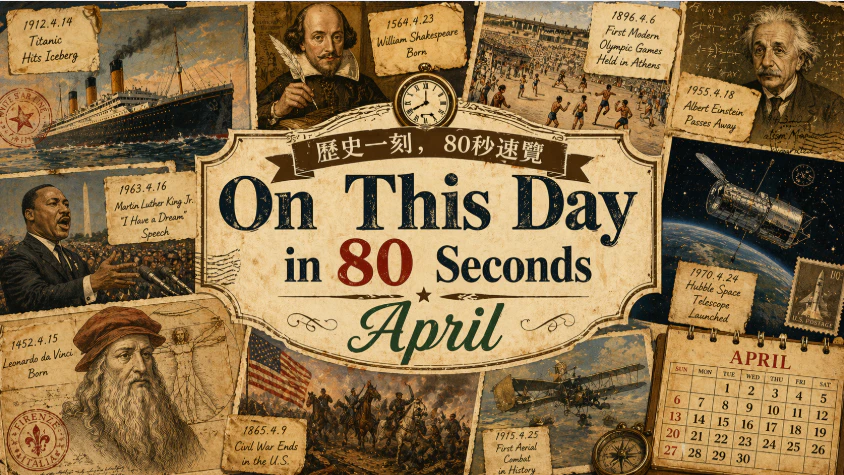
1912年RMS Titanic沉沒|世紀海難震驚世界 | Titanic Sinks (1912) – The Tragedy That Shocked the Worldy | 歷史一刻,80秒速覽 April 15
1912年4月15日凌晨,RMS Titanic在北大西洋沉沒,超過1,500人喪生,成為歷史上最著名的海難之一。事件暴露出海上安全制度的重大缺陷,並促使國際海事規範全面改革。
On April 15, 1912, RMS Titanic sank in the North Atlantic, resulting in over 1,500 deaths. The disaster exposed major safety flaws and led to significant reforms in maritime regulations worldwide.
中文
1912年: 英國豪華客輪RMS Titanic在撞上冰山後數小時,於4月15日凌晨在北大西洋沉沒。船體逐漸斷裂並最終沉入海底,超過1,500名乘客與船員喪生,成為20世紀最具代表性的海難之一。事故發生時,船上救生艇數量不足,加上疏散安排混亂,使大量乘客未能及時逃生。當時海水溫度極低,多數落水者在短時間內因失溫而喪命。附近船隻RMS Carpathia在接獲求救訊號後趕往現場,成功救起部分生還者。這場悲劇震驚全球,也引發各國對海上安全制度的全面檢討,包括規定船隻必須配備足夠救生艇、加強無線電通訊及建立國際冰山監測系統。Titanic 的沉沒,不僅象徵人類對科技過度自信的代價,也成為歷史上最具警示意義的災難之一。
English Version
April 15, 1912: The British passenger liner RMS Titanic sank in the North Atlantic in the early hours of the morning, just hours after striking an iceberg. The massive ship gradually broke apart and disappeared beneath the ocean, resulting in the deaths of more than 1,500 passengers and crew. The disaster quickly became one of the most infamous maritime tragedies in history. At the time of the sinking, the ship carried insufficient lifeboats, and evacuation efforts were disorganized, leaving many without a chance to escape. The freezing waters of the Atlantic caused rapid hypothermia among those who entered the sea, drastically reducing survival rates. The nearby vessel RMS Carpathia responded to distress signals and managed to rescue survivors, but for many, help arrived too late. The tragedy shocked the world and prompted sweeping reforms in maritime safety, including requirements for adequate lifeboats, continuous radio monitoring, and the establishment of international iceberg patrol systems. The sinking of the Titanic remains a powerful reminder of human vulnerability and the consequences of overconfidence in technology, leaving a lasting legacy in both history and culture.