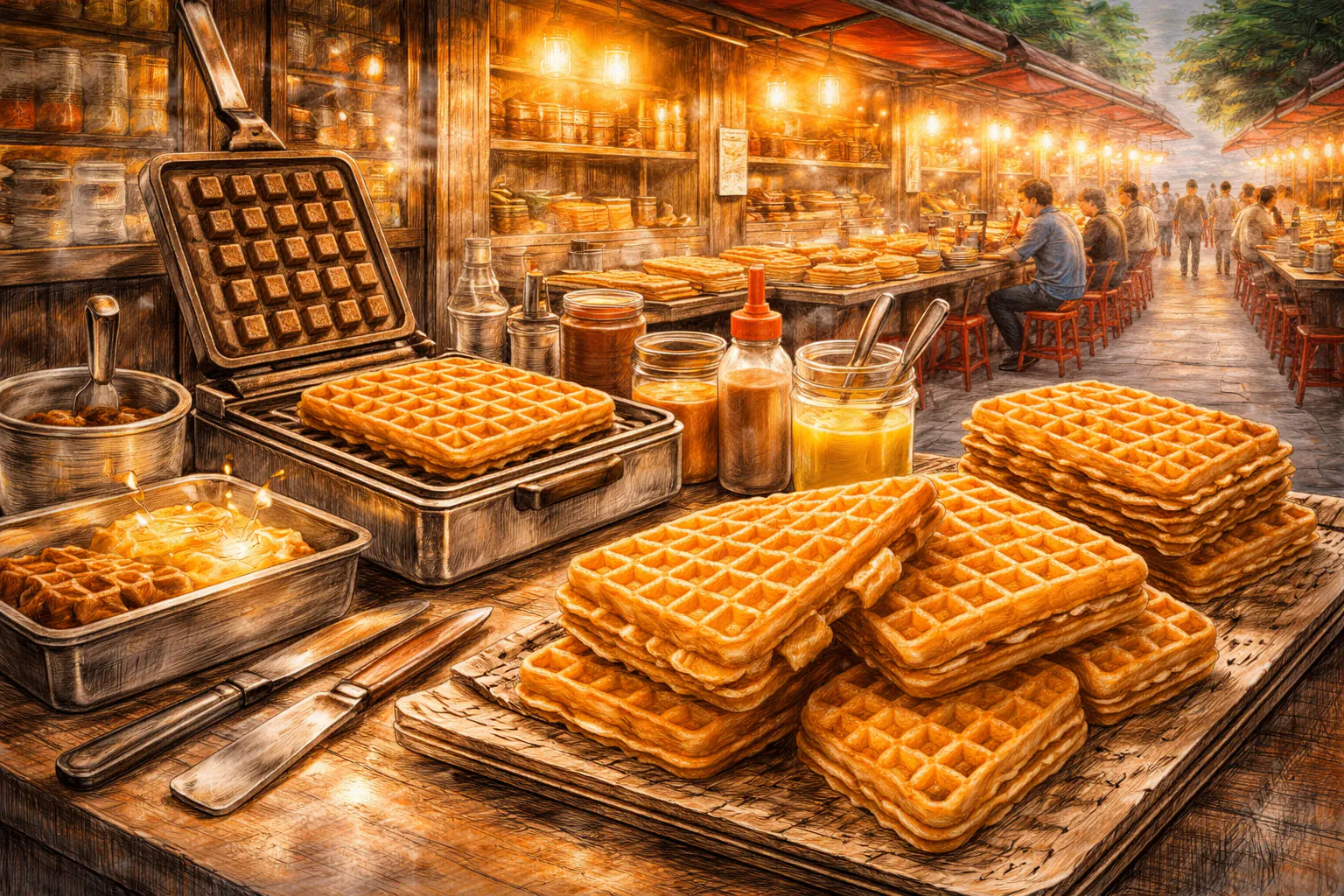
在香港的街頭小食文化中,格仔餅是一種充滿懷舊味道的甜點。金黃色的餅皮帶着格子紋路,夾上牛油、花生醬與砂糖,再對折成三角形,是不少香港人童年的甜蜜回憶。放學後的學生、逛街的年輕人,常常在街角小販前排隊,等待剛烤好的格仔餅。這種簡單而香甜的小食,不僅價格親民,也見證了香港街頭文化的興盛。回望香港格仔餅的年代,那股溫暖的麵香與甜味,至今仍留在城市的集體記憶之中。
The aroma of egg waffles once drifted through Hong Kong’s streets, marking moments of joy in everyday life. Crisp on the outside and soft within, these golden treats were more than snacks—they were part of childhood, after-school rituals, and shared laughter. From humble street stalls to busy corners, egg waffles captured a sense of warmth and innocence that continues to live on in memory.
在香港眾多街頭甜點之中,格仔餅是一種充滿懷舊氣息的小食。這種表面佈滿格子紋路的金黃色餅皮,不僅味道香甜,也承載着一代又一代香港人的童年記憶。
格仔餅的歷史,可以追溯到香港街頭小販文化盛行的年代。當時許多小販在街角設置簡單的鐵爐與模具,製作各種麵糊甜點。格仔餅正是在這樣的背景下逐漸流行起來。
格仔餅的製作方式其實相當簡單。小販會把麵粉、雞蛋、砂糖與牛奶混合成麵糊,再倒入特製的鐵模具中烘烤。模具表面有整齊的方格紋路,因此烤出來的餅皮呈現出漂亮的格子圖案。
當餅皮烤至金黃色時,小販會把餅取出,再在表面塗上厚厚的牛油。接着加入花生醬與砂糖,最後把餅對折成三角形。這樣一份簡單的甜點,卻散發出濃濃的香味。
剛出爐的格仔餅外層微脆,內部柔軟。牛油的香氣與花生醬的甜味交織在一起,形成令人難忘的口感。
在過去的香港街道上,格仔餅攤檔常常出現在學校附近或熱鬧商業區。放學時間一到,許多學生會聚集在攤檔前排隊購買。
對不少人來說,格仔餅不只是甜點,而是一段童年的記憶。與同學一起分享一塊熱騰騰的格仔餅,是許多學生時代最簡單的快樂。
格仔餅之所以受歡迎,也因為價格十分親民。在早年的香港,一份格仔餅只需很少的錢,因此深受學生喜愛。
除了學生之外,逛街的年輕人與上班族也會購買格仔餅作為小食。邊走邊吃的方式,使這種甜點成為街頭文化的一部分。
隨着時間推移,格仔餅也開始出現不同變化。有些店舖會加入巧克力醬、煉奶或水果等配料,讓味道更加多樣。
然而,對許多老香港人來說,最懷念的仍然是傳統口味的格仔餅。那種簡單的牛油與花生醬配搭,才是最純粹的味道。
在一些舊區裡,仍然可以找到經營多年的格仔餅小店。走近攤檔時,常常能聞到熟悉的麵香與甜味。
這些小販攤檔,不只是售賣甜點的地方,也是一段城市歷史的見證。許多小販在同一個街角經營多年,成為街坊熟悉的面孔。
近年來,香港的懷舊文化逐漸受到重視。一些新開的小食店開始重新推出格仔餅,讓年輕一代也能品嚐這種傳統甜點。
此外,格仔餅也逐漸被外地遊客認識。不少遊客來到香港,都會嘗試這種具有本地特色的小食。
回望香港格仔餅的年代,可以看到一座城市最溫暖的一面。那些排隊等待的小孩、忙碌的小販與剛出爐的香氣,構成了街道上最動人的畫面。
在香港人的記憶裡,格仔餅不只是甜點,更是一段生活的味道。那些金黃色的格子與甜甜的花生香,記錄着城市最平凡卻最珍貴的時光。
即使城市不斷變化,格仔餅依然在香港街頭散發香味。這種簡單的小食,也因此成為香港飲食文化中不可或缺的一部分。
English Version
In the lively streets of Hong Kong’s past, egg waffles—known locally as “gai daan jai”—held a special place in both the city’s food culture and its emotional landscape. These iconic street snacks, with their distinctive bubble-like shape, were instantly recognizable, not only by sight but by the irresistible fragrance that filled the air as batter met hot metal molds. Vendors operated from modest stalls, often tucked into busy corners or outside schools, drawing in crowds of children, teenagers, and adults alike. The process itself was part of the attraction: the rhythmic pouring of batter, the closing of the iron mold, and the careful turning over an open flame. Within minutes, a golden sheet of puffed spheres emerged, slightly crisp on the surface and tender inside. It was simple, yet deeply satisfying. For many children growing up in Hong Kong, egg waffles were inseparable from daily routines. They were the reward after a long school day, the treat shared with friends, or the small comfort during moments of quiet. Held in thin paper wrappers, still warm to the touch, they were eaten piece by piece, each bubble torn apart with anticipation. The experience was as much about texture as it was about taste—the contrast between crisp edges and soft centers created a sensory memory that lingered long after the last bite. Unlike more elaborate desserts, egg waffles required no ceremony, no seating, and no occasion. They belonged entirely to the street, to the flow of life that moved around them. Vendors themselves became familiar figures within the neighborhood. Their stalls were not just places of business, but points of connection where people gathered briefly, exchanged words, and then moved on. Regular customers knew when to arrive to avoid long queues, and vendors often recognized returning faces, offering a quiet nod or a knowing smile. These small interactions, repeated over time, formed a subtle but meaningful sense of community. Egg waffles also reflected the ingenuity of Hong Kong’s street food culture. Made from simple ingredients—flour, eggs, sugar, and evaporated milk—they transformed basic components into something memorable. This creativity was born not out of luxury, but out of necessity, a way to create joy and flavor within limited means. Over time, variations began to appear, with different flavors and fillings, yet the classic version remained the most beloved, rooted in tradition and familiarity. As the city evolved, so too did the environment in which egg waffles were sold. Street stalls gradually gave way to licensed shops and modern storefronts, where hygiene standards and presentation became more formalized. While these new settings ensured consistency and broader appeal, they inevitably changed the atmosphere. The spontaneity of buying egg waffles from a roadside stall, the sound of traffic blending with the crackle of the mold, and the immediacy of eating on the street became less common. What was once an organic part of urban life began to feel curated and contained. Despite these changes, the cultural significance of egg waffles remains strong. They continue to symbolize a simpler time, one defined by small pleasures and shared experiences. For many, the taste of an egg waffle is not just about flavor, but about memory—of childhood afternoons, of friendships, and of a city that felt both vibrant and close-knit. Even today, whether found in traditional stalls or modern cafes, egg waffles carry with them echoes of the past. They remind us that food can be a powerful vessel for memory, capable of preserving emotions, moments, and identities across time. In remembering the era of Hong Kong’s egg waffles, we are not only recalling a beloved snack, but also reconnecting with a way of life that valued simplicity, warmth, and the quiet joy found in everyday moments.