遊戲誌 | LV2 | 遊戲機中心的黃昏:城市記憶的流逝 | The Twilight of Arcades: How Game Centers Faded from Urban Memory
遊戲機中心曾是城市生活的一部分,一個充滿聲光與熱鬧的地方。無論是學生放學後的聚集地,還是上班族下班後短暫紓壓的避風港,這些小小的空間承載了無數人的青春與回憶。它們的存在,不僅是一個地點,更是一種生活方式的象徵。
Arcades were once more than places to play—they were vibrant social hubs where noise, light, and competition merged into a shared urban rhythm. As technology advanced and lifestyles shifted, these spaces slowly dimmed, leaving behind fragments of memory scattered across cities. The decline of game centers is not merely a story of business change, but of cultural transition, where communal play gave way to more private, individualized experiences shaped by new forms of entertainment.
在過去,遊戲機中心是城市裡的熱門據點。每當夜幕降臨,霓虹燈閃爍,街道上人聲鼎沸,遊戲機中心內更是熱鬧非凡。鐵閘半掩,店內傳出的音效與人聲交織成一種獨特的城市旋律。進入其中,迎接你的不只是閃爍的螢幕與震耳欲聾的音效,還有一群與你一同沉浸在遊戲世界中的陌生人。
那時候,遊戲是一種公開的行為。玩家站在機台前,背後總會聚集一群圍觀者。他們或是為了學習技巧,或是單純欣賞高手對決。每一場比賽,每一次勝負,都不僅僅屬於玩家個人,而是整個空間共同見證的事件。輸贏之間的情緒波動,透過旁觀者的目光與聲音,變得更加真實且深刻。
然而,這樣的景象逐漸改變了。一開始,你可能會注意到燈光變得明亮了些,音量也被調得更低。隨後,你會發現新款遊戲機台的引進速度減慢,甚至有些老舊的機台被重複使用。再後來,人潮開始減少,曾經擁擠不堪的空間變得冷清,只剩下少數熟客默默地站在熟悉的位置上。
遊戲機中心並沒有一夜之間消失,而是逐漸被城市邊緣化。它們從熱鬧喧嘩的城市焦點,變成了安靜無聲的角落。
遊戲機中心的衰退,有著多方面的原因。首先是科技的進步。家用遊戲主機的普及,使得人們不再需要特地前往遊戲機中心才能體驗高品質的遊戲。隨著網絡技術的不斷發展,玩家甚至可以在家中與來自世界各地的對手即時對戰,不再需要面對面地競技。
其次,是經濟壓力的影響。城市中的租金逐年攀升,而遊戲機中心本身並非高利潤行業。在高昂的成本面前,許多經營者不得不選擇關閉店面或縮減規模。當「停留」成為一種負擔時,人們自然會選擇更方便、更經濟的娛樂方式。
然而,這些外在因素只是表象。真正改變的是人與遊戲之間的關係。在過去,遊戲是一種社交活動。一場比賽不僅僅是技術的較量,更是一種群體性的儀式。而如今,隨著個人化科技的普及,遊戲逐漸成為一種私密的體驗。螢幕變得更加清晰,操作更加流暢,但那份來自他人目光與聲音所帶來的緊張感卻不復存在。
今天,我們依然在玩遊戲,但方式已大不相同。我們不再需要走出家門,就能進入虛擬世界。我們可以隨時隨地開始或結束一場遊戲,而不需要考慮他人的時間安排。我們可以透過耳機與麥克風與朋友交流,但這樣的交流卻少了一層真實感。
這樣的改變並非全然負面。個人化的遊戲體驗讓我們能夠更自由地選擇喜歡的方式,也讓我們能夠更深入地探索虛擬世界。然而,我們也因此失去了某些東西——那種與陌生人共享時光的感覺,那種因為觀眾而倍感壓力與興奮的情緒,那種屬於群體而非個人的勝利喜悅。
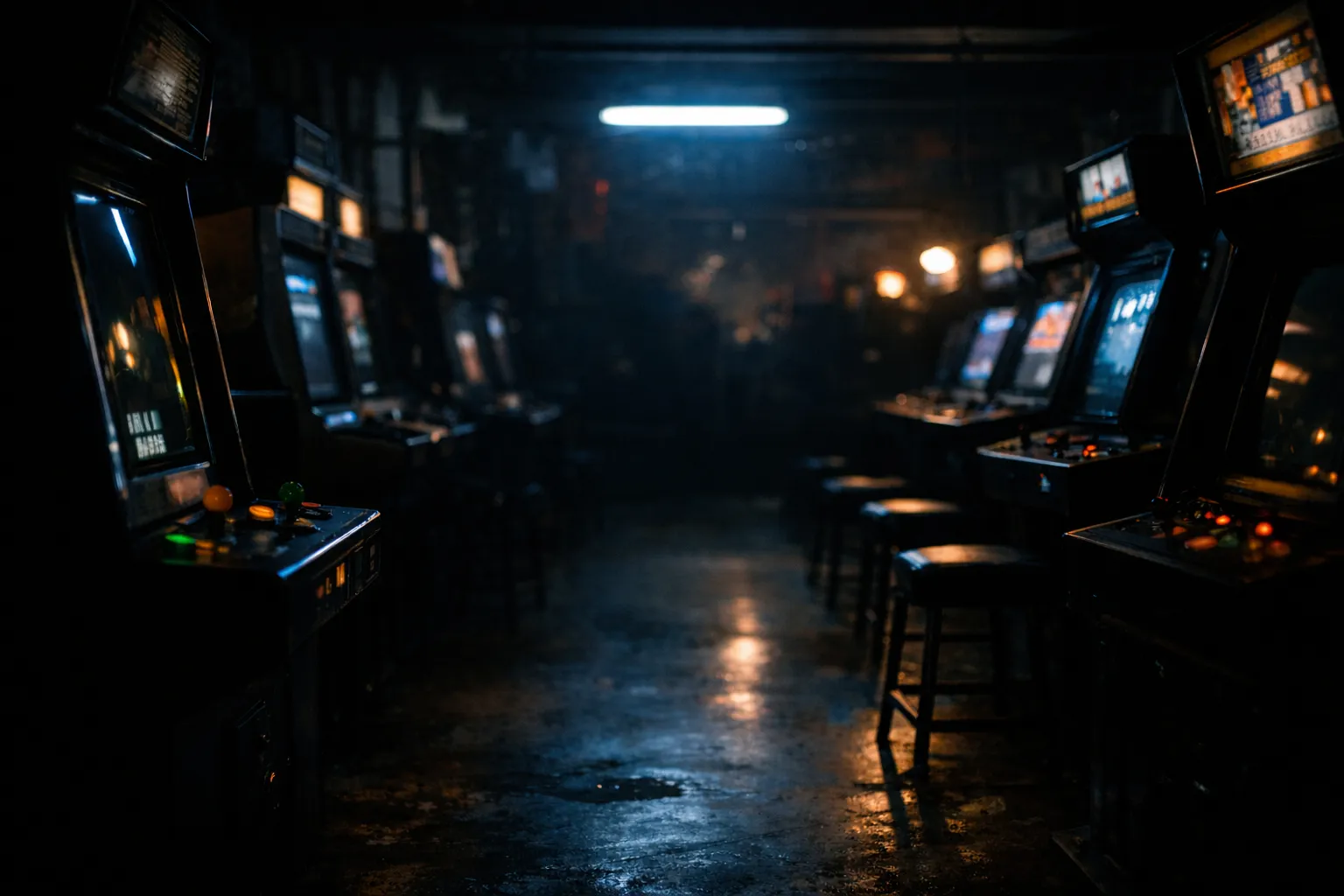
儘管如此,一些舊式遊戲機中心仍然存在於城市的一隅。它們不像過去那樣熱鬧,而是變得安靜而不顯眼,就像是被遺忘在角落的一段備份記憶。走進這些地方,你依然可以看到亮著燈光的機台,依然可以聽到熟悉的音效。然而,操作機台的人卻寥寥無幾,曾經的人潮與喧囂似乎早已成為遙遠的過去。
這些殘存下來的遊戲機中心,如今更像是見證者。它們見證了一個時代——一個需要實體空間來完成一場遊戲的時代;也見證了遊戲如何從群體行為轉變為個人世界。
或許,有一天我們會完全告別那些舊式的遊戲機中心,它們將成為博物館中的展品,被當作一種過去文化的象徵。然而,我們是否會懷念那段時光?是否會想念那些曾經與陌生人共享歡笑與嘆息的時刻?
遊戲機中心的改變,不僅僅是場地上的消失,更是城市文化的一次轉型。它提醒我們,在追求科技進步與個人化便利之餘,也許我們應該停下腳步,重新思考「一起玩」這件事真正的意義。在這個越來越數位化、碎片化的時代,我們是否還能找到新的方式,重拾那種屬於群體、屬於大家的共同體驗?
或許答案並不簡單,但值得我們去探索。在那之前,那些安靜伫立於城市角落的遊戲機中心,將繼續承載著一代人的記憶,靜靜等待下一位願意按下「開始」的人。
English Version
The disappearance of arcades from city landscapes is not a sudden collapse but a gradual fading, a process in which technological evolution, economic pressure, and shifting social habits converged to reshape how people engage with play and with each other, and to understand this transformation it is necessary to recall what arcades once represented, not merely as venues filled with machines but as dynamic social environments where strangers and friends gathered under the same neon glow, united by the simple yet powerful act of play, where the sounds of button presses, digital explosions, and overlapping conversations formed a unique urban soundtrack that was both chaotic and alive, and within this environment individuals experienced a form of public interaction that was immediate and unfiltered, where skill could be demonstrated, challenged, and recognized in real time, creating a sense of presence that extended beyond the screen itself, yet this presence was always tied to a specific place, a physical location that required participation and movement, and it is precisely this requirement that would later become one of the defining factors in the arcade’s decline, as technological advancements gradually untethered gaming from physical spaces, bringing experiences into homes and eventually into the palms of individuals through personal devices, and with each step of this transition the necessity of gathering in a shared location diminished, replaced by convenience, accessibility, and personalization, which while expanding the reach of games also altered their social structure, shifting interaction from physical co-presence to mediated connection, where players could engage with others across distances but often without the same intensity of shared atmosphere, and as home consoles improved in graphical capability and gameplay depth they began to replicate and even surpass what arcades could offer, removing the arcade’s technological advantage and redefining it as an optional rather than essential space, while at the same time economic realities began to exert pressure, as the cost of maintaining physical venues, updating machines, and securing urban locations increased, making it increasingly difficult for arcade operators to sustain their businesses in the face of declining foot traffic, and this decline was further accelerated by changes in urban life itself, where cities became more fast-paced, more fragmented, and in some cases less accommodating to spaces dedicated purely to leisure, leading to the gradual disappearance of arcades from neighborhoods where they once thrived, yet the fading of arcades is not solely a story of loss, as their influence persists in the design and culture of modern gaming, where elements of competition, leaderboard systems, and short-session gameplay can be traced back to arcade traditions, demonstrating that while the physical spaces may have diminished, their conceptual legacy continues to shape how games are experienced today, and there is also a layer of nostalgia that surrounds arcades, a collective memory that frames them as symbols of a particular era, often idealized as a time of simpler pleasures and more direct forms of interaction, though this nostalgia can sometimes obscure the complexities of the arcade experience, which included not only excitement and camaraderie but also exclusion, competition, and the constant negotiation of space and attention among players, and in this sense arcades functioned as microcosms of urban life, reflecting broader social dynamics within a confined environment, where issues of access, hierarchy, and belonging were played out through the medium of games, and as these spaces disappeared, what was lost was not only a form of entertainment but also a particular mode of social engagement, one that required physical presence, immediate response, and shared attention, qualities that are increasingly rare in a world dominated by digital connectivity and asynchronous interaction, yet it would be overly simplistic to frame this transition as purely negative, as new forms of gaming have created different kinds of communities and interactions that were not possible within the constraints of arcades, expanding the scope of who can participate and how, and allowing for more diverse expressions of play and identity, but these new forms also come with their own limitations, particularly in the way they mediate social interaction, often reducing the richness of physical co-presence to text, voice, or simplified avatars, which while effective in maintaining connection cannot fully replicate the sensory and emotional immediacy of shared physical space, and this tension between old and new forms of play highlights a broader question about how technology reshapes not only what we do but how we experience being together, and the story of arcades serves as a lens through which this question can be explored, illustrating how spaces of play are deeply intertwined with cultural, technological, and economic contexts, and how their transformation reflects larger shifts in society, and even as arcades continue to exist in certain forms, whether as retro venues, niche attractions, or hybrid entertainment spaces, their role has fundamentally changed, no longer central to everyday life but instead positioned as reminders of a different era, places where the past can be briefly revisited but not fully restored, and in this way the twilight of arcades is not an ending but a transition, a movement from one form of collective experience to another, carrying with it both loss and possibility, and inviting reflection on what is gained and what is left behind as cities and technologies continue to evolve.