
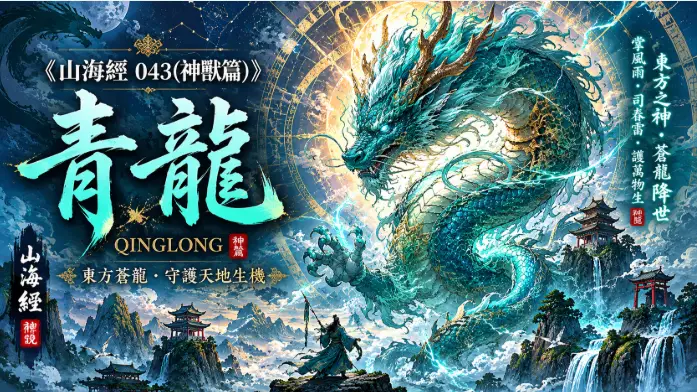
《山海經 043(神獸篇)》青龍 | The Azure Dragon of the Classic of Mountains and Seas
青龍是中國古代神話中最具代表性的神獸之一,象徵東方、春天、風雨與天地生機。《山海經》中的青龍不只是守護神,更代表自然循環與萬物甦醒的力量,在古代信仰與星宿文化中佔有極重要地位。
The Azure Dragon stands among the most legendary creatures in ancient Chinese mythology. Associated with the East, springtime, storms, and renewal, it represents cosmic balance and the awakening of life. In the world of the Classic of Mountains and Seas, the dragon is not merely a guardian beast but a celestial force woven deeply into ancient spiritual beliefs and astronomical traditions.
中文
青龍盤踞於東方天際,身披蒼青鱗甲,長身如山脈延綿,雙目猶如雷火閃耀。在遠古傳說中,每當春雷初響,雲海翻湧,人們便相信那是青龍自沉睡中甦醒。牠穿越高山與江海,帶來雨水與生機,使枯萎的大地重新長出綠意。古代部族敬畏青龍,將其視為天地秩序的守護者。傳說有些祭司能在暴風雨來臨前,看見天空深處浮現巨大龍影,青色光芒穿透雲層,如同神明巡行人間。
在《山海經》的奇異世界裡,青龍不只是單純的龍獸,更是一種象徵天地循環的存在。東方屬木,而木象徵生命與成長,因此青龍也代表萬物復甦。古人觀測星宿時,將東方七宿連結成龍形,稱為蒼龍七宿。每當春季夜空出現蒼龍星象,人們便知道農耕時節即將開始。於是青龍逐漸成為風調雨順的象徵,也被視為連接天地與四時運行的重要神靈。
相傳青龍曾居於深海盡頭的神山之中,那裡常年雲霧翻騰,無人能輕易靠近。只有在天地失衡時,青龍才會真正現身。古老故事記載,某一年大地乾裂,河流枯竭,百姓向諸神祈求降雨。就在第七夜,東方天際突然雷聲震動,巨大青龍自黑雲中降臨。牠盤旋於高空,龍尾掃過群山,霎時間暴雨傾瀉,乾枯河道重新流動。人們在雨中跪拜,認為那是青龍回應人間的祈求。從此之後,東方龍神的信仰更加深植民間。
青龍同時也是力量與威嚴的象徵。古代帝王常以龍作為皇權標誌,而青龍則被視為最接近天命的存在。在一些古老壁畫與石刻中,青龍總是與白虎、朱雀、玄武並列,形成鎮守四方的四象。青龍鎮東,白虎守西,朱雀護南,玄武居北,共同維持天地平衡。這種觀念不僅影響神話,也深入建築、風水與軍事文化之中。許多古代城門與宮殿,都刻有青龍圖騰,希望藉此獲得祥瑞與庇護。
然而青龍並非永遠溫和。在部分傳說裡,牠也象徵大自然不可違逆的力量。當人類過度破壞山林、污染河海時,青龍便會引發暴風與洪水,以警示世人。古人因此相信,人與自然必須維持平衡,若失去敬畏之心,天地將降下災厄。這種思想使青龍不只是神獸,更像是一種古代對自然法則的具象化描繪。
千百年後,青龍的形象依然活躍於東亞文化之中。從廟宇雕刻、武俠傳說,到現代遊戲與動漫,青龍始終代表神秘、力量與守護。牠穿梭於歷史與幻想之間,成為華人文化中最鮮明的神話象徵之一。即使時代改變,人們依然會在雷雨夜仰望東方天空,想像那條穿越雲海的蒼青巨龍,仍在守望人間。
English Version
Far beyond the eastern horizon, the Azure Dragon stretches across the heavens like a living mountain range wrapped in emerald scales. Ancient legends say that when the first thunder of spring echoed through the skies, the dragon awakened from its deep celestial slumber. Storm clouds would gather, rivers would swell, and new life would spread across the earth wherever the dragon traveled. To early civilizations, this creature was more than myth—it was the embodiment of nature’s rhythm and divine renewal.
In the mythic landscapes described within the Classic of Mountains and Seas, the Azure Dragon represented the cycle of rebirth tied to the eastern direction and the element of wood. Wood symbolized growth, vitality, and the return of life after winter’s silence. Farmers and astronomers watched the stars carefully, believing the appearance of the Azure Dragon constellation marked the arrival of planting season. The creature became inseparable from rain, fertile lands, and the balance between heaven and earth.
Legends speak of the dragon dwelling beyond mortal reach in sacred mountains hidden within endless seas of mist. Ordinary travelers could never find this realm, for it existed somewhere between the human world and the celestial domain. Yet during times of imbalance, the dragon would descend from the heavens. One ancient tale tells of a terrible drought that scorched rivers and forests alike. Villagers prayed night after night for mercy. On the seventh evening, thunder exploded across the eastern sky as the Azure Dragon emerged from dark clouds glowing with blue light. Its immense body twisted through the storm while torrents of rain poured down upon the dying earth. Crops revived, rivers flowed once more, and people believed heaven itself had answered through the dragon’s appearance.
The Azure Dragon also became a symbol of imperial power and sacred authority. Chinese rulers viewed dragons as signs of heavenly legitimacy, and among them the Azure Dragon carried profound prestige because of its association with cosmic order. Ancient palaces, temples, and city gates were decorated with dragon carvings meant to invoke protection and prosperity. Alongside the White Tiger, Vermilion Bird, and Black Tortoise, the Azure Dragon formed one of the Four Symbols guarding the cardinal directions. Together they created a spiritual map of the universe that shaped mythology, military traditions, architecture, and feng shui practices for centuries.
Despite its benevolent role, the dragon could also embody the destructive force of nature. Floods, tempests, and violent storms were sometimes interpreted as warnings from the celestial guardian. Ancient people believed humanity must live in harmony with mountains, rivers, and forests. If greed or destruction upset the natural balance, the Azure Dragon would unleash its fury upon the world. In this way, the myth carried an enduring message about respect for the environment and the fragile relationship between mankind and the natural world.
Across generations, the image of the Azure Dragon continued evolving through art, religion, literature, and popular culture. It appears in temple murals, martial arts legends, fantasy novels, films, and modern games, always retaining its aura of mystery and power. Even today, during nights filled with thunder and rain, many still imagine a colossal dragon moving silently beyond the clouds of the eastern sky, guarding the balance between heaven and earth just as it did in ancient legend.