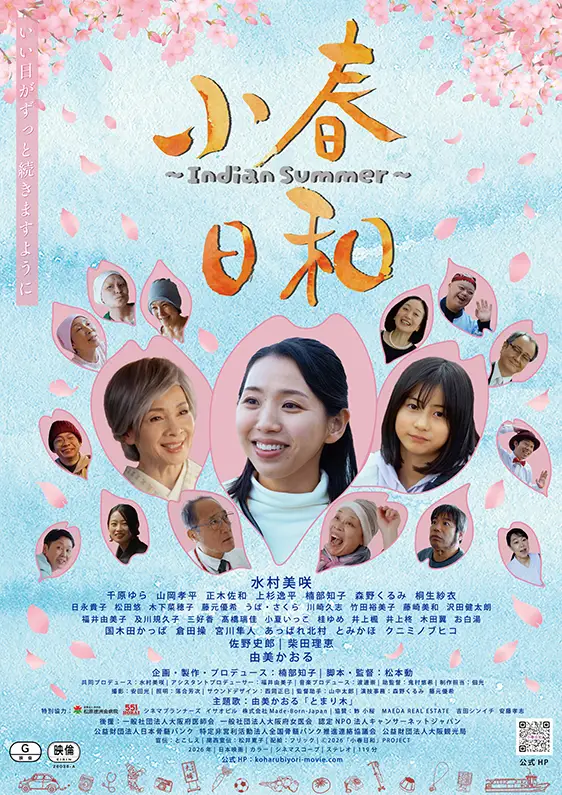
在人生最低潮的時候,人往往最容易迷失自己。《小春日和 Indian Summer》是一部細膩描寫人與病痛、家庭、生命距離感的日本人文電影,透過一名年輕女子在醫院工作的經歷,慢慢拼湊出一段關於和解與重新出發的旅程。電影以平靜卻溫暖的節奏,描繪不同世代的人如何面對疾病、失落與有限的人生,也讓觀眾重新思考「活著」真正的意義。
Life often feels most uncertain when people are carrying emotional pain they cannot share. Indian Summer is a gentle Japanese human drama that explores loneliness, illness, family conflict, and emotional healing through the experiences of a young woman working in a hospital. Rather than relying on melodrama, the film quietly observes how different people confront suffering, mortality, and the fragile beauty of everyday life. Through warm encounters and emotional reflection, the story becomes a moving portrait of rediscovering hope when life seems to have lost direction.
電影內容
《小春日和 Indian Summer》由松本動執導,是一部以生命療癒與人際交流為主題的人文劇情片。故事圍繞阪口小春展開,她是一名內心充滿壓抑與自責的年輕女性,因為與父親發生衝突後離家出走,從此無法坦然回到原本的家庭生活。帶著無法向人訴說的陰影,她來到一所醫院擔任看護助手,在陌生環境中開始新的生活。電影並沒有以激烈衝突推進情節,而是透過醫院日常與患者互動,慢慢描繪小春內心的變化。她在工作中遇見許多身患重病的人,有人對死亡感到恐懼,也有人早已學會坦然接受生命終點。其中最令人印象深刻的是一群罹癌卻依然積極生活的女性團體「キャンサーズ」,她們總是帶著笑容,用輕鬆態度面對治療與生活,即使身體承受巨大痛苦,依然努力珍惜剩餘時光。這些角色並非刻意煽情,而像是真實存在於社會中的普通人,讓電影充滿生活感與真實情緒。另一位重要角色山本由紀選擇離開醫院,希望在人生最後階段回到家中渡過餘生,她與丈夫之間平靜卻深刻的情感,也成為小春重新理解「家庭」的重要契機。電影中醫院不只是治病場所,更像是一個讓人重新思考人生的空間。小春原本對世界保持距離,甚至不願面對自己的傷口,但在陪伴病患的過程中,她逐漸開始理解每個人都背負著不同痛苦,而真正重要的不是逃避,而是如何繼續向前。電影標題中的「Indian Summer」帶有晚秋暖陽般的意象,象徵人生即使進入低潮,依然可能出現短暫卻珍貴的溫暖時光。作品整體風格安靜柔和,沒有刻意灑狗血的橋段,而是透過日常對話、病房氣氛與人物眼神傳達情感。由水村美咲飾演的小春,展現出壓抑與脆弱並存的真實感,而由美かおる飾演的祖母鈴子則像人生中的微光,以溫柔話語陪伴小春成長。電影也融入對生死觀的思考,並不是強調奇蹟式痊癒,而是著重於人在有限生命中如何找到活著的價值。當小春再次想起祖母曾經說過的重要話語時,她終於開始理解自己真正想走的人生方向,也做出改變未來的重要決定。整部電影像一封寫給迷惘之人的溫柔信件,提醒觀眾即使生命充滿傷痕,人依然可以慢慢找到重新面對世界的方法。
English Version
Directed by 松本動, Indian Summer is a quiet and emotionally reflective Japanese drama centered on healing, mortality, and human connection. The story follows Koharu Sakaguchi, a young woman burdened by emotional trauma and unresolved conflict with her father. After leaving home following an argument, she becomes unable to return, trapped between guilt and emotional isolation. Searching for a place to belong, she begins working as a nursing assistant at a hospital, where she slowly encounters people whose lives force her to rethink her own understanding of pain and existence. Rather than presenting dramatic twists, the film unfolds through intimate daily interactions within the hospital environment. Patients, nurses, doctors, and families each reveal different ways of confronting illness and uncertainty. Among the most memorable figures is a cheerful group of women battling cancer who continue to embrace life despite their suffering. Their laughter, resilience, and honesty create some of the film’s warmest moments, showing that hope can still survive even in the presence of fear and physical pain. Another emotionally powerful storyline involves Yuki Yamamoto, a terminally ill woman who chooses to leave the hospital and spend her remaining days at home with her husband. Through observing this couple’s quiet affection and acceptance, Koharu begins to reconsider what family and emotional connection truly mean. The hospital itself becomes more than a medical setting; it transforms into a space where people confront regrets, rediscover purpose, and attempt to heal invisible wounds. Koharu initially keeps herself emotionally distant from everyone around her, but as she witnesses the courage and vulnerability of the patients, she gradually realizes that everyone carries hidden struggles. The film’s title, Indian Summer, symbolizes a brief period of warmth before winter arrives, reflecting the fragile but meaningful moments of comfort that can still appear even during life’s darkest seasons. Visually and emotionally, the film maintains a restrained and naturalistic tone, avoiding excessive melodrama in favor of subtle performances and quiet emotional honesty. 水村美咲 delivers a deeply human portrayal of Koharu, capturing the character’s loneliness, hesitation, and gradual emotional awakening. Meanwhile, 由美かおる brings warmth and wisdom to the role of Koharu’s grandmother Suzuko, whose gentle words continue to guide her granddaughter long after they were spoken. The film also reflects on the meaning of living with illness without reducing its characters to tragedy. Instead of focusing on miraculous recoveries, it emphasizes the emotional dignity of continuing forward despite uncertainty. As Koharu recalls an important lesson once taught by her grandmother, she finally begins to understand how she wants to live her own life. In the end, Indian Summer becomes a compassionate story about rediscovering hope, accepting emotional scars, and finding small moments of light within human suffering.
影片簡介(預告片/片段)
在人生最寒冷的季節裡,一群與病痛同行的人,讓迷失的女孩重新找到活著的理由。
A lonely young woman discovers the meaning of life through the quiet strength of people facing illness and loss.
電影資料
導演:松本動
類型:人文劇情、生命療癒、醫療電影
製片公司:日本獨立電影製作
上映年份:2025
主要演員
水村美咲
千原ゆら
由美かおる
柴田理恵
国木田かっぱ
佐野史郎
總結
《小春日和 Indian Summer》並不是一部追求戲劇高潮的電影,而是一部以溫柔目光凝視生命的作品。它透過病房中的日常、人與人之間微小卻真誠的交流,慢慢累積出深刻情感。電影提醒觀眾,即使人生充滿失落與遺憾,人依然能在陪伴與理解之中找到重新站起來的力量。
Indian Summer is a deeply compassionate film that finds emotional power in ordinary moments rather than dramatic spectacle. Through quiet conversations, fragile relationships, and reflections on illness and family, the story gently explores what it means to continue living even when life feels uncertain. Its warmth and sincerity leave behind a lasting emotional resonance about healing, acceptance, and the courage to move forward.