快餐早已融入日常生活,但它的出現並非偶然,而是工業時代效率思維的產物。從最初簡單的快速供餐模式,到全球連鎖體系的建立,快餐重新定義了飲食與時間的關係,成為現代生活節奏的重要象徵。
Fast food is now a global norm, yet its origins are deeply rooted in the pursuit of efficiency. What began as a simple way to serve meals quickly evolved into a worldwide system that reshaped how people eat, blending convenience, speed, and modern lifestyle demands.
中文
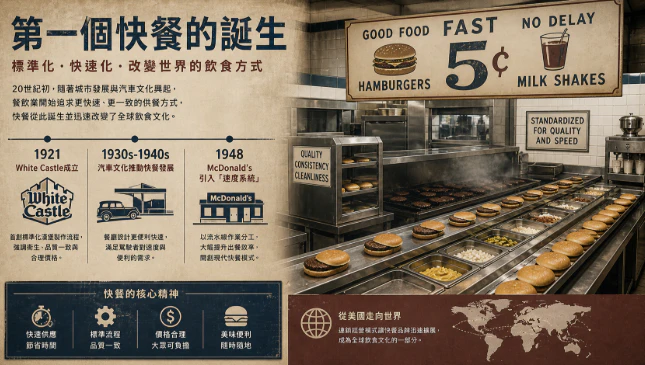
所謂「第一個快餐」,並非單一餐廳的瞬間誕生,而是一種逐步形成的飲食模式,其核心在於快速製作、即時供應與標準化流程,早在19世紀工業革命時期,城市人口急速增加,工人需要在有限時間內獲得價格合理且能迅速食用的食物,街頭攤販與簡單餐館開始提供預先準備的餐點,這些形式已具備快餐的雛形,而真正讓快餐概念成形的,是20世紀初美國出現的標準化餐飲系統,其中以White Castle為重要里程碑,該品牌於1921年成立,首次將漢堡製作流程工業化,確保每一份餐點在品質、份量與口味上保持一致,並強調透明廚房與衛生標準,建立消費者信任,隨後,汽車文化的興起進一步推動快餐發展,餐廳開始設計方便駕駛者快速購買的服務模式,到了1940年代,McDonald’s的出現則將快餐推向另一個高峰,其創辦人引入流水線概念,將廚房運作如同工廠般精細分工,大幅提升出餐速度並降低成本,這種「速度系統」讓顧客可以在極短時間內取得餐點,從而徹底改變飲食習慣,快餐不再只是填飽肚子的選擇,而是一種效率與現代化的象徵,隨著連鎖經營模式成熟,快餐品牌迅速擴展至全球,形成統一標準與品牌識別,使不同地區的消費者都能享受到相似體驗,這種高度複製的商業模式也影響了其他產業,成為現代服務業的重要參考,然而,快餐的發展亦帶來對健康與飲食文化的討論,人們開始關注高熱量與加工食品的影響,促使業界逐步調整菜單與營養標示,但無可否認的是,快餐已深深嵌入現代社會,從工業時代的效率需求,到今日全球化的生活方式,它不僅是一種飲食選擇,更是一種文化現象,反映出人類對時間、便利與標準化的持續追求
English Version:
The concept of the “first fast food” is not tied to a single restaurant but rather to the gradual evolution of a new way of eating centered on speed, consistency, and accessibility. During the Industrial Revolution, rapidly growing urban populations created demand for meals that were affordable and quick to consume, leading to the rise of street vendors and simple eateries offering pre-prepared food. These early practices laid the groundwork for what would become fast food. The turning point came in the early twentieth century in the United States, where standardized food production began to take shape. White Castle, founded in 1921, played a crucial role by introducing an industrial approach to burger preparation, ensuring uniform quality and portion control while emphasizing cleanliness and transparency to build customer trust. As automobile culture expanded, the need for convenience grew, and food service adapted to meet the pace of modern life. In the 1940s, McDonald’s revolutionized the industry by implementing an assembly-line system in its kitchens, breaking down food preparation into specialized tasks that dramatically increased efficiency and reduced costs. This innovation allowed customers to receive meals within minutes, fundamentally changing expectations around dining. Fast food became more than just a quick meal—it evolved into a symbol of modern efficiency and convenience. With the rise of franchising, fast food chains spread rapidly across the globe, offering consistent experiences regardless of location and shaping consumer habits worldwide. This highly replicable business model influenced numerous other industries, setting a benchmark for operational efficiency and scalability. At the same time, the expansion of fast food sparked discussions about nutrition and health, prompting gradual changes such as menu diversification and clearer labeling. Despite these debates, fast food remains deeply embedded in contemporary society. From its origins in industrial necessity to its current role in a globalized world, it represents not just a method of eating but a broader cultural shift toward speed, convenience, and standardized living.