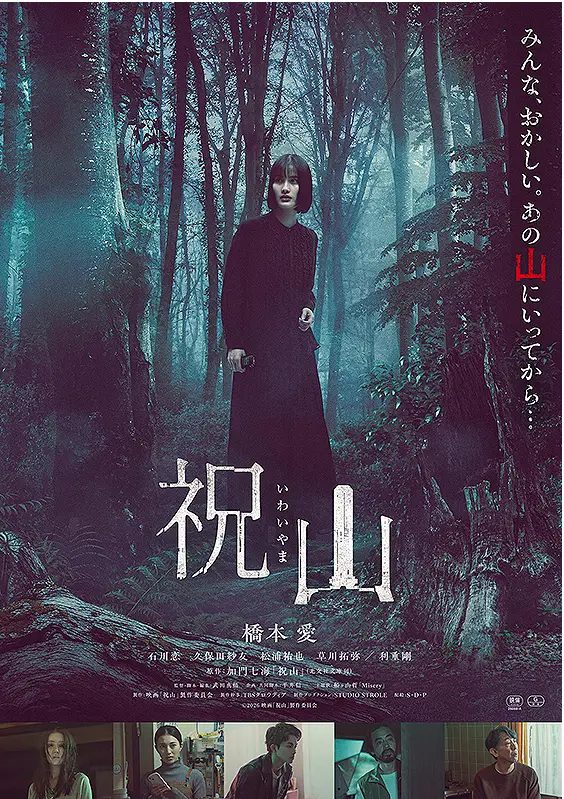
當都市傳說、民俗信仰與心理恐懼交織,一座被視為禁地的山林,便可能成為所有異象的起點。《祝山》改編自作家加門七海以親身經歷為靈感創作的小說,透過民俗學、古老禁忌與人性恐懼,帶領觀眾走進一場逐步揭開真相的神秘旅程。
Blending folklore, supernatural legends, and psychological suspense, Shukuyama transforms an isolated mountain into the center of an unsettling mystery. Inspired by a novel based on author Nanami Kamon’s own experiences, the film explores forgotten rituals, hidden beliefs, and the lingering fear that some places are never meant to be disturbed.
電影內容
《祝山》是一部融合民俗恐怖、心理驚悚與神秘懸疑元素的日本電影,以禁忌之地、古老信仰與人類未知恐懼作為故事核心。主角鹿角南是一位陷入創作瓶頸的恐怖小說家,當她收到多年未見的中學同學矢口朝子寄來的一封求助信後,塵封多年的記憶再次被喚醒。朝子提及,多年前一群好友曾經前往一處荒廢建築探險,自那次試膽之後,每個人都陸續遭遇無法用科學解釋的怪異事件。起初,南只是希望將這段經歷作為新小說的素材,但隨著她重新聯絡昔日同伴,越來越多離奇現象開始出現在她的生活之中。有人反覆夢見陌生山林,有人聽見不存在的低語,有人則感受到無形視線始終跟隨自己。調查逐漸深入後,一切線索竟然都指向一座鮮少出現在地圖上的神秘山岳——祝山。相傳那裡自古便受到特殊信仰守護,流傳著不可踏入、不可呼喚、不可驚擾的禁忌,而任何試圖打破規則的人,都將付出沉重代價。電影並未依賴大量血腥畫面營造恐怖,而是利用寂靜森林、廢棄建築、古老祭祀遺跡、模糊真假的傳說以及人物逐漸崩潰的心理狀態,一步步累積令人窒息的不安。故事同時探討人類面對未知時的好奇、恐懼與愧疚,以及記憶是否會因逃避而真正消失。當過去與現在逐漸重疊,每個角色都不得不重新面對當年共同犯下的錯誤,也開始懷疑真正存在的究竟是超自然力量,還是人心深處始終未曾消散的陰影。《祝山》透過細膩節奏與濃厚民俗氛圍,打造出不同於傳統鬼片的觀影體驗,在真假難辨的情境之中,引導觀眾自行拼湊事件真相,也讓整部電影始終籠罩在難以言喻的不安與神秘之中。
English Version
Shukuyama is a Japanese folk horror film that combines supernatural mystery, psychological tension, and traditional beliefs into a slow-burning narrative centered on a forbidden mountain. The story follows Minami Kajika, a horror novelist struggling with creative exhaustion, whose ordinary life changes after receiving a letter from Asako Yaguchi, a former classmate she has not seen since middle school. The letter describes a series of strange incidents that began years earlier after several friends explored an abandoned location rumored to be haunted. What initially appears to be an interesting source of inspiration gradually develops into something far more disturbing as Minami reconnects with the people involved. Each of them carries fragments of unsettling memories, recurring nightmares, unexplained sounds, and inexplicable feelings of being watched. Their separate experiences slowly converge toward the same forgotten destination—a mysterious mountain known only as Shukuyama. According to old local traditions, the mountain has long been protected by sacred customs and strict taboos. Visitors are warned never to cross certain boundaries, speak particular names, or disturb what has remained undisturbed for generations. Rather than relying on graphic violence or sudden shocks, the film creates fear through silence, isolation, abandoned structures, ancient rituals, and the unsettling uncertainty between folklore and reality. The atmosphere constantly suggests that the greatest danger may not be a visible monster but the invisible burden carried within human memory. As the investigation continues, forgotten events return with increasing clarity, forcing every survivor to confront decisions made long ago. Questions arise about guilt, denial, belief, and whether supernatural forces truly exist or simply reflect unresolved trauma hidden deep inside the human mind. Through restrained storytelling and carefully crafted visual tension, Shukuyama embraces the traditions of Japanese folk horror while presenting a mystery that invites audiences to interpret the truth for themselves. The film leaves much intentionally unexplained, allowing its lingering atmosphere and emotional uncertainty to remain with viewers long after the final scene.
影片簡介(預告片/片段)
中文:一封求助信,揭開一座禁忌山林與塵封多年的恐怖真相。
English: A desperate letter leads to a forbidden mountain where forgotten secrets refuse to stay buried.
電影資料
導演:武田真悟
類型:民俗恐怖、心理驚悚、懸疑
製片公司:暫未公布
上映年份:2025
主要演員
- 橋本愛
- 石川戀
- 久保田紗友
- 草川拓彌
- 松浦祐也
- 利重剛
總結
《祝山》並非單純描寫鬼怪現身的恐怖電影,而是透過日本民俗文化、禁忌信仰與人物心理變化,慢慢累積出令人難以逃離的不安感。對喜歡《殘穢》、《咒怨》以及民俗怪談題材的觀眾而言,本片以細膩氛圍與懸疑節奏,呈現出一場介於現實與傳說之間的神秘體驗。
Conclusion
Rather than delivering conventional supernatural scares, Shukuyama builds its horror through folklore, emotional tension, and the haunting influence of forgotten traditions. Its atmospheric storytelling, layered mystery, and psychological depth make it an engaging experience for viewers who appreciate slow-burning horror rooted in cultural legends instead of simple shock value.