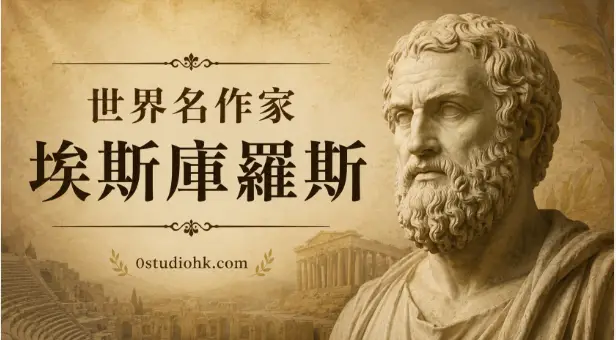
埃斯庫羅斯是古希臘最具影響力的劇作家之一,被後世尊稱為「悲劇之父」。他將宗教、神話、命運與人性融合於舞台之上,不僅奠定西方戲劇基礎,也深刻影響了文學與哲學發展。
Aeschylus transformed ancient storytelling into dramatic art that explored justice, fate, and human responsibility. His innovations reshaped theatre forever, establishing dramatic traditions that continue to inspire writers, playwrights, and audiences across the world.
中文版本
埃斯庫羅斯(約公元前525年至前456年)出生於古希臘雅典附近的埃琉西斯,自幼生活於宗教儀式與神話文化濃厚的環境,這些經歷日後成為他創作的重要養分。當時希臘正逐步建立民主制度,同時亦面對波斯帝國的威脅,埃斯庫羅斯本人曾親身參與馬拉松戰役及薩拉米斯海戰,親眼見證民族生死存亡,因此他的作品不僅描寫神祇,更充滿對國家、榮耀、法律與正義的思考。他相信人類雖然受到命運支配,但仍必須為自己的選擇承擔責任,而真正的和平來自秩序與公義,而不是暴力與報復。早期希臘戲劇通常只有一位演員與合唱隊共同演出,故事形式較為單調,埃斯庫羅斯率先加入第二位演員,使角色之間可以展開真正的對話與衝突,大大提升戲劇張力,也讓人物性格更加立體。他同時改良舞台設計、服裝、面具以及演出規模,使戲劇逐漸由宗教祭典演變成完整的藝術表演,因此後世一致尊稱他為「悲劇之父」。據歷史記載,他一生創作約七十至九十部作品,但完整流傳至今的只有七部,其中最具代表性的便是《奧瑞斯提亞》三部曲,包括《阿伽門農》、《奠酒人》及《報仇女神》,也是現存唯一完整保存下來的古希臘悲劇三部曲。故事描寫阿特柔斯家族世代相互報復,從特洛伊戰爭開始,阿伽門農凱旋回國後遭妻子殺害,其子奧瑞斯忒斯又奉神命復仇,最終引發復仇女神追逐。故事最後並沒有以更多鮮血結束,而是透過雅典法庭建立公開審判制度,以法律終止無止境的仇恨,象徵人類文明由私人復仇走向司法制度的重要轉變。除了《奧瑞斯提亞》,《被縛的普羅米修斯》亦是他的經典代表作,描寫普羅米修斯違抗宙斯,將火種帶給人類,因此遭受永無止境的懲罰。故事歌頌知識、自由與犧牲精神,也讓普羅米修斯成為西方文化中反抗暴政與追求文明的重要象徵。埃斯庫羅斯筆下的人物往往並非單純善惡分明,而是在神意、命運、家庭責任及個人信念之間掙扎,讓觀眾思考人是否能真正改變自己的未來。他晚年移居西西里島,並於公元前456年逝世。雖然距今已有兩千多年,但他的作品依然經常於世界各地劇院重新演出,並持續影響莎士比亞、歌德、尼采以及無數現代劇作家。他所建立的悲劇精神,不只是描述死亡與痛苦,而是在苦難之中尋找公義、秩序與希望,成為西方戲劇史永遠的重要里程碑。
English Version
Aeschylus stands among the greatest architects of Western literature, remembered not simply as an accomplished playwright but as the visionary who transformed Greek drama into a powerful form of storytelling. Born around 525 BCE in Eleusis near Athens, he grew up in a culture where religious ceremonies, heroic myths, and civic life were deeply connected. These influences shaped his imagination and later became the foundation of his dramatic works. Unlike many writers who observed history from a distance, Aeschylus fought as a soldier during the Persian Wars, including the famous Battles of Marathon and Salamis. Experiencing conflict firsthand gave him a profound understanding of courage, sacrifice, and the consequences of human ambition. Those experiences echo throughout his tragedies, where victory often comes with painful costs and justice is rarely simple. One of his greatest achievements was changing the structure of Greek theatre itself. Earlier performances relied mainly on a single actor accompanied by a chorus. Aeschylus introduced a second actor, allowing genuine conversations, emotional conflict, and more sophisticated storytelling to unfold on stage. He also expanded the use of costumes, masks, scenery, and dramatic staging, transforming theatrical performances into complex artistic productions. His influence became so significant that later generations honored him with the title “Father of Tragedy.” Although historians believe he wrote between seventy and ninety plays, only seven survive today. Among them, the Oresteia trilogy remains his greatest masterpiece and the only complete trilogy preserved from ancient Greece. The three plays follow the violent history of the House of Atreus after the Trojan War. King Agamemnon returns home victorious only to be murdered by his wife, Clytemnestra. Their son, Orestes, later avenges his father, triggering relentless pursuit by the Furies. Rather than ending with endless revenge, the trilogy concludes with the creation of a legal court in Athens, where justice replaces personal vengeance. This remarkable ending symbolizes society’s transition from cycles of bloodshed toward the rule of law, making the trilogy not only a family drama but also a philosophical reflection on civilization itself. Another enduring masterpiece is Prometheus Bound, portraying the Titan who defies Zeus by bringing fire to humanity. Condemned to eternal suffering, Prometheus becomes a symbol of intellectual freedom, sacrifice, and resistance against absolute authority. The play has inspired generations of philosophers, artists, and political thinkers who see knowledge as humanity’s greatest gift. Across all his works, Aeschylus explored timeless questions about fate, divine power, moral responsibility, and the difficult choices that define human existence. His characters rarely fit into simple categories of heroes or villains; instead, they struggle within forces larger than themselves while still remaining accountable for their actions. Aeschylus spent his final years in Sicily, where he died around 456 BCE. More than two thousand years later, his dramas continue to be performed worldwide, influencing literary giants including Shakespeare, Goethe, and Nietzsche. His legacy extends far beyond ancient Greece, reminding every generation that justice, wisdom, and human dignity are earned through courage rather than inherited through power.
總評
埃斯庫羅斯不僅開創了古希臘悲劇的新時代,更透過戲劇探討法律、命運與人性的永恆課題。他的作品至今仍是世界文學與戲劇藝術的重要基石。
Aeschylus reshaped theatre into a profound exploration of justice, responsibility, and the human condition. His enduring works remain essential reading for anyone seeking to understand the origins of dramatic storytelling and Western thought.