
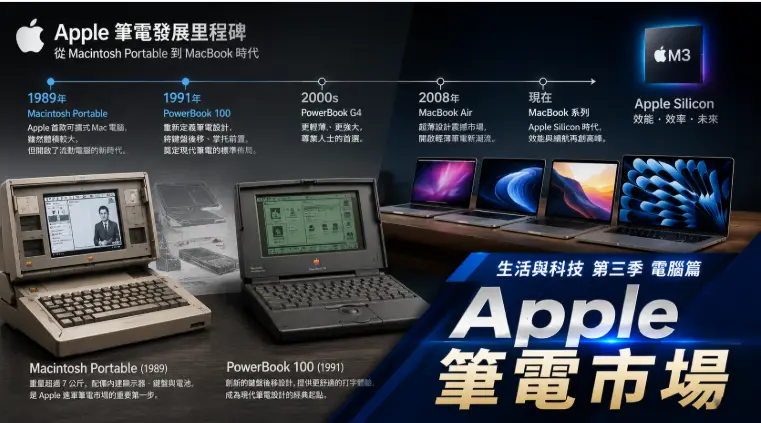
生活與科技 第三季 電腦篇 004|Apple 筆電市場:PowerBook 如何改變現代筆電設計 | Life and Technology Season 3 Computer Series | Apple and the Laptop Market: How PowerBook Redefined Modern Notebooks
當筆記型電腦仍然笨重而缺乏統一設計時,Apple開始重新思考流動電腦的使用方式。從Macintosh Portable到PowerBook系列,Apple不但進軍筆電市場,更重新定義現代筆記型電腦的外型與操作體驗。
Before laptops became sleek everyday devices, portable computers were often bulky and awkward to use. Apple entered the market with a different vision, introducing designs that reshaped how people interacted with mobile computers and influenced the entire notebook industry.
中文
1980年代末期,個人電腦市場開始快速發展,而流動工作需求亦逐漸增加。雖然當時已經出現一些可攜式電腦,但大多數產品仍然十分笨重,而且操作方式與桌面電腦差異不大。Apple在這個時期開始進軍筆記型電腦市場,希望把Macintosh的操作體驗帶進流動電腦世界。1989年,Apple正式推出Macintosh Portable。這是Apple第一款真正意義上的可攜式Mac電腦。雖然名字叫「Portable」,但實際重量超過七公斤,在今天看來並不算方便攜帶。不過,在當時它已經屬於先進產品。Macintosh Portable配備液晶顯示器、完整鍵盤以及可攜式設計,並支援長時間電池使用。相比許多需要接駁電源的早期流動電腦,它的流動性已經大幅提升。Macintosh Portable最大的特色之一,是延續Macintosh圖形化介面概念。當時很多電腦仍然依賴文字指令操作,但Apple一直強調滑鼠與圖像介面的易用性。這種設計令更多普通用戶能夠接觸電腦,也讓Apple產品建立出與眾不同的品牌形象。然而,Macintosh Portable價格昂貴,加上體積仍然偏大,因此市場反應未算成功。Apple很快意識到,真正理想的筆記型電腦不只是「可搬動的電腦」,而是需要更符合人體工學與流動工作的產品。1991年,Apple推出PowerBook 100系列,成為筆電歷史上的重要轉折點。與早期手提電腦相比,PowerBook最大的改變,在於它重新安排了鍵盤與操作區域位置。Apple把鍵盤向後移,並在前方留出空間放置掌托與指向裝置。這種設計後來成為幾乎所有現代筆記型電腦的標準布局。今天人們熟悉的觸控板位置與雙手操作方式,其實都能追溯到PowerBook時代。除了外型設計之外,PowerBook亦強調真正適合移動工作。相比Macintosh Portable,它更輕巧、更易攜帶,也更符合商務人士與專業用戶需求。PowerBook系列推出後,不但提升Apple在筆電市場的地位,更影響整個PC產業。許多Windows筆電廠商後來亦開始模仿類似設計。Apple在1990年代的筆電發展,亦逐漸建立其「設計與科技結合」形象。Apple不單重視性能,亦重視外觀、人體工學與使用感受。這種理念後來延續到iBook、PowerBook G4以及MacBook系列。特別是2008年推出的MacBook Air,更再次改變全球筆電市場。超薄機身設計令其他品牌開始追求更輕薄化,Ultrabook概念亦因此興起。Apple在筆電市場的成功,不只是硬件競爭,更與整體生態系統有關。macOS系統、軟件整合與品牌文化,都令Apple筆電形成獨特定位。許多創作者、設計師與影像工作者,亦因穩定性與操作體驗而偏好MacBook。進入Apple Silicon時代後,M系列晶片進一步提升筆電效能與電池續航力,再次令Apple成為業界焦點。從Macintosh Portable到PowerBook,再到今天的MacBook系列,Apple筆電的發展,其實反映了整個流動電腦時代的演變。它不只是推出新產品,而是不斷重新思考人類與電腦之間的關係。現代人今天習慣隨身攜帶筆電工作、學習與創作,而這種流動科技文化的形成,Apple在其中扮演了非常重要的角色。
English Version
By the late 1980s, personal computers were becoming increasingly common, and demand for portable computing was rising rapidly. Although several transportable computers already existed, most were heavy, difficult to carry, and designed more like movable desktop systems than true laptops. Apple entered this growing market with the goal of bringing the Macintosh experience into the world of mobile computing. In 1989, the company released the Macintosh Portable, its first serious attempt at a portable Mac computer. Despite the word “portable” in its name, the machine weighed more than seven kilograms, making it far from lightweight by modern standards. Even so, it represented a significant technological step forward at the time. The Macintosh Portable featured a built-in display, full keyboard, rechargeable battery, and graphical user interface that reflected Apple’s distinctive design philosophy. While many computers of the era still depended heavily on text-based commands, Apple focused on making computers easier and more intuitive to use through graphical interaction and mouse control. This helped attract users who were less interested in technical complexity and strengthened Apple’s reputation for user-friendly computing. However, the Macintosh Portable faced major challenges. Its high price and heavy size limited its commercial success. Apple quickly realized that the future of mobile computing required more than simply shrinking desktop hardware. A truly successful laptop needed to be comfortable, ergonomic, and practical for daily mobile work. In 1991, Apple introduced the PowerBook 100 series, which became one of the most influential laptop families in computing history. The PowerBook transformed notebook design by repositioning the keyboard toward the back of the device and leaving space at the front for palm rests and pointing controls. This layout became the foundation of modern laptop ergonomics and remains standard across the industry today. Features that users now consider normal—such as comfortable wrist positioning and integrated pointing devices—can trace their origins directly to the PowerBook era. Compared with earlier portable computers, the PowerBook was lighter, more practical, and far better suited for professional use. Its success elevated Apple’s position within the notebook market and influenced countless competing PC manufacturers. Throughout the 1990s, many Windows laptop makers adopted similar design principles inspired by Apple’s innovations. Apple’s notebook strategy also strengthened its identity as a company that combined technology with industrial design. Rather than focusing solely on specifications, Apple emphasized aesthetics, usability, and user experience. This philosophy continued through later generations such as the PowerBook G4, iBook, and eventually the MacBook series. In 2008, Apple once again reshaped the laptop industry with the launch of the MacBook Air. Its ultra-thin design inspired competitors worldwide to pursue slimmer notebook designs, helping create the modern ultrabook category. Apple’s influence in the laptop market extends beyond hardware alone. The integration of macOS, software optimization, and brand identity created a unique ecosystem that appealed strongly to designers, filmmakers, musicians, and creative professionals. In recent years, Apple Silicon processors such as the M-series chips have further strengthened the company’s reputation by delivering powerful performance alongside exceptional battery life. From the Macintosh Portable to the PowerBook and modern MacBook generations, Apple’s notebook history reflects the broader evolution of mobile computing itself. The company did not simply manufacture laptops—it helped redefine how people interact with portable technology. The modern culture of working, studying, and creating anywhere owes much to the innovations Apple introduced during the early years of the notebook computer revolution.
總結
中文
Apple由Macintosh Portable到PowerBook,不但推動筆電市場發展,更建立現代筆記型電腦的重要設計標準。今天流動工作與創作文化的形成,與Apple早期筆電發展有密切關係。
English Version
Apple’s early notebook computers transformed portable computing by introducing ergonomic designs and user-focused innovation. From the PowerBook to the MacBook era, Apple played a major role in shaping modern laptop culture.