
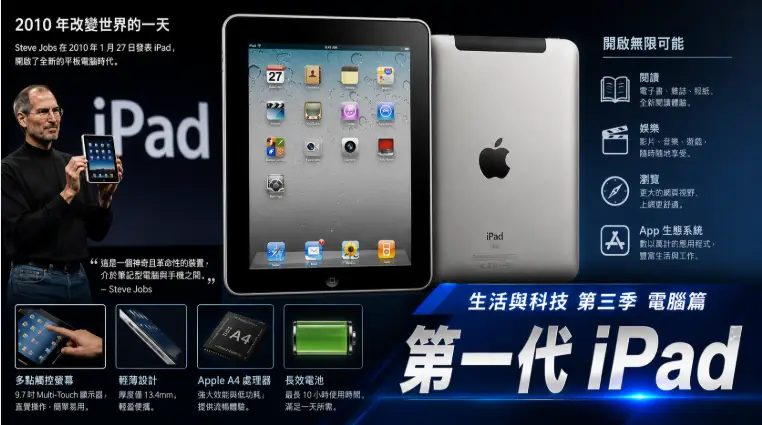
生活與科技 第三季 電腦篇 005|第一代 iPad:平板電腦時代正式來臨 | Life and Technology Season 3 Computer Series | The First iPad: The Beginning of the Tablet Era
當智能手機與筆記型電腦逐漸普及後,Apple再次提出新的數位裝置概念。2010年第一代iPad誕生,不但改變人們閱讀與娛樂方式,也正式開啟現代平板電腦時代。
After smartphones and laptops transformed modern technology, Apple introduced another revolutionary device in 2010. The first iPad reshaped digital media consumption and brought tablet computing into the mainstream around the world.
中文
2010年1月,Apple創辦人史蒂夫·喬布斯正式發表第一代iPad。這款產品推出後,很快成為全球科技界焦點。雖然在iPad之前,市場上已經存在部分平板電腦概念產品,但大多數設備操作困難、系統複雜,而且缺乏真正吸引普通消費者的體驗。Apple則以全新方式重新定義平板電腦,讓它成為介乎智能手機與筆記型電腦之間的新型數位裝置。第一代iPad採用9.7吋多點觸控螢幕,外型簡潔,取消傳統鍵盤設計,用戶主要透過手指直接操作畫面。這種直覺化介面,大幅降低一般人接觸科技產品的門檻。相比當時需要滑鼠與複雜操作的電腦系統,iPad更接近「直接觸碰內容」的概念。Apple亦利用iPhone累積的iOS系統經驗,把流暢動畫、多點觸控與App生態帶進更大尺寸裝置之中。iPad推出初期,外界對產品定位曾經抱有疑問。有人認為它只是放大的iPhone,也有人質疑平板電腦是否真的有市場需求。然而,iPad很快改變市場觀感。它在閱讀、影片播放、網頁瀏覽與遊戲娛樂方面,提供比手機更舒適的體驗,同時又比筆記型電腦更輕便。許多人開始把iPad用於沙發閱讀、旅行娛樂與日常上網,令平板電腦成為全新生活工具。第一代iPad配備Apple A4處理器,提供長時間電池續航力。Apple當時特別強調,iPad可以連續使用約十小時,這在當年已經相當出色。輕薄機身與長續航能力,令它成為真正適合隨身攜帶的數位裝置。除了娛樂用途之外,教育與商業市場亦逐漸開始採用iPad。學校利用平板進行電子教材教學,企業則開始把iPad應用於展示、銷售與流動辦公。iPad另一個重要影響,是推動App經濟進一步成長。大量開發者開始為平板設計專用應用程式,包括電子書、繪圖、音樂創作與影音播放工具。Apple App Store因此進一步擴大生態系統,也讓iPad成為不只是硬件,而是一整套數位內容平台。電子書閱讀亦因iPad而快速普及,Apple甚至推出iBooks服務,希望進一步進軍數位出版市場。第一代iPad亦深刻改變媒體與娛樂產業。雜誌、報章與影音平台開始重新思考內容呈現方式。過去以紙本為主的閱讀模式,逐漸轉向互動式數位閱讀。許多影片串流服務與遊戲公司,也開始針對平板市場開發新內容。平板電腦不再只是科技產品,而逐漸成為現代生活中的資訊與娛樂中心。雖然第一代iPad今天看來性能已十分有限,但它的重要性並不在於硬件規格,而在於它成功改變了人們對電腦的想像。它證明電腦不一定需要鍵盤與滑鼠,也不一定只能用於工作。科技可以更自然、更直覺地融入生活之中。後來的iPad Air、iPad Pro以及Apple Pencil等產品,更進一步把平板發展成創作與專業工具。今天的平板市場雖然競爭激烈,但iPad依然是其中最具代表性的產品之一。從第一代iPad開始,平板電腦正式進入主流市場,也開啟人類流動數位生活的新階段。它不只是Apple的重要產品,更是現代科技文化的重要轉折點。
English Version
In January 2010, Steve Jobs introduced the first iPad, unveiling what Apple described as a completely new category of device. Although tablet computers had existed in various experimental forms before then, most earlier models struggled with complicated software, poor usability, and limited consumer appeal. Apple approached the idea differently, creating a device positioned between the smartphone and the laptop. The result was a product that reshaped modern digital lifestyles and established the tablet market as a mainstream category. The original iPad featured a 9.7-inch multi-touch display and relied almost entirely on finger-based interaction. Unlike traditional computers that depended on keyboards, mice, and desktop-style interfaces, the iPad emphasized simplicity and direct manipulation of content. Users could browse the web, read books, watch videos, and play games simply by touching the screen. Apple combined the touchscreen technology and software experience developed for the iPhone with a larger display, creating a device that felt intuitive even for people unfamiliar with computers. When the iPad was first announced, reactions were mixed. Some critics argued that it was merely a larger iPhone, while others questioned whether consumers truly needed a tablet computer. However, public perception changed rapidly after release. The iPad delivered a comfortable experience for reading, entertainment, and internet browsing while remaining lighter and more portable than most laptops. Many users quickly adopted it for travel, casual media consumption, and everyday digital tasks. The first-generation iPad was powered by Apple’s A4 processor and offered impressive battery life for its time. Apple highlighted that the device could operate for up to ten hours on a single charge, helping make it practical for long-term mobile use. Its lightweight design and extended portability contributed significantly to its popularity. Beyond entertainment, the iPad soon found applications in education and business. Schools began experimenting with digital textbooks and interactive learning materials, while companies used iPads for presentations, mobile sales tools, and portable office tasks. Another major impact of the iPad was the expansion of the app economy. Developers rapidly created software designed specifically for tablets, including drawing tools, music production apps, e-book readers, and streaming platforms. Apple’s App Store ecosystem grew even larger as tablet applications became a new market category. The device also accelerated the rise of digital publishing. Newspapers, magazines, and publishers began redesigning content for interactive touchscreen reading experiences. The iPad transformed how media companies approached digital storytelling and content distribution. Entertainment industries adapted as well, with streaming services and game developers recognizing the tablet as a powerful new platform. The significance of the first iPad extends far beyond its technical specifications. Its greatest achievement was changing how people imagined computers. The iPad demonstrated that a computer could function without a physical keyboard or mouse while still being useful, enjoyable, and productive. Technology no longer needed to feel complicated or intimidating. Later products such as the iPad Air, iPad Pro, and Apple Pencil expanded the platform into creative and professional fields, but the original iPad laid the foundation for that transformation. Today, tablets are common across homes, schools, businesses, and creative industries worldwide. While the first-generation iPad now appears technologically outdated, its influence remains enormous. It marked the moment when tablet computing entered mainstream culture and permanently changed how people interact with digital information, entertainment, and mobile technology.
總結
中文
第一代iPad成功把平板電腦帶進主流市場,改變了閱讀、娛樂與流動科技文化。它不只是新產品,更重新定義人類與數位內容之間的互動方式。
English Version
The first iPad transformed tablets from niche concepts into everyday devices. By combining simplicity, mobility, and touch interaction, it reshaped modern digital lifestyles and influenced the future of personal technology.