
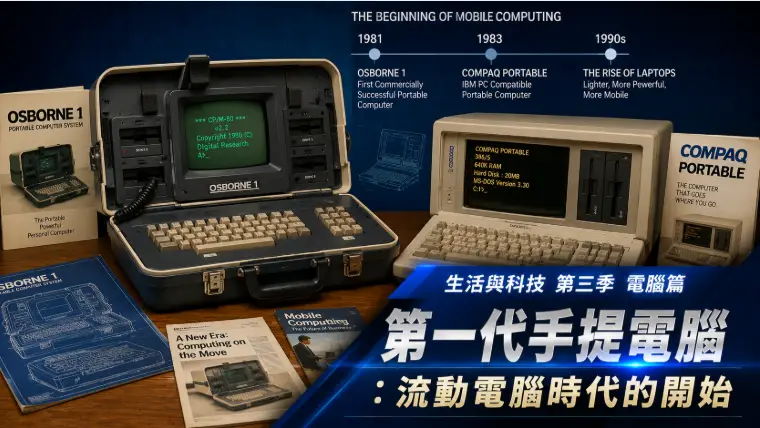
生活與科技 第三季 電腦篇 003|第一代手提電腦:流動電腦時代的開始 | Life and Technology Season 3 Computer Series | The First Generation of Portable Computers
當電腦開始由固定桌面走向可攜帶化,人類的工作與生活模式亦開始出現巨大改變。第一代手提電腦雖然笨重,但它開啟了流動計算的新時代,亦成為現代筆記型電腦的重要起點。
The arrival of portable computers changed the relationship between people and technology forever. Although early portable machines were bulky and limited, they introduced the idea that computing could travel with users, laying the foundation for today’s laptop culture.
中文
在1970年代至1980年代初期,電腦仍然主要以桌面形式存在。當時的個人電腦雖然已開始普及,但大部分都需要固定放置於辦公室或家中使用。對於商務人士、工程師與研究人員而言,若能把電腦帶到不同地方工作,將會大幅提升效率。因此,「可攜式電腦」的概念逐漸開始出現。早期的手提電腦與今天輕薄便攜的筆記型電腦完全不同,它們體積巨大、重量驚人,但在當時已經是極具革命性的產品。1981年推出的Osborne 1,經常被視為世界上第一款真正商業化成功的手提電腦。它由美國Osborne Computer Corporation推出,重量超過十公斤,外型像一個大型行李箱。雖然攜帶並不方便,但相比需要固定安裝的大型桌面電腦,它已經是一大突破。Osborne 1內建小型顯示器、鍵盤與軟件系統,使用者可以把整部電腦直接帶到不同地方工作。這種概念在當時極具未來感。Osborne 1採用CP/M作業系統,並附送大量商業軟件,包括文書處理與試算表工具,因此受到不少商務人士歡迎。雖然顯示器只有五吋,而且畫面只能顯示有限文字,但它已經證明電腦不一定只能放在固定位置使用。除了Osborne 1之外,1983年的Compaq Portable亦是重要代表之一。Compaq Portable最大的特點,是能夠兼容IBM PC軟件。由於IBM PC已成為商業市場的重要標準,因此Compaq Portable迅速受到企業界重視。它雖然同樣笨重,但成功展示了「流動商務電腦」的市場潛力。第一代手提電腦的出現,其實與當時科技進步有密切關係。微處理器性能提升、磁碟技術進步以及液晶顯示器開始發展,都令電腦有機會逐漸小型化。不過,早期手提電腦仍然存在許多限制。例如電池續航力非常短,有些甚至需要插電才能使用。此外,儲存空間與記憶體容量亦相當有限,運算能力遠遠無法與今天相比。然而,這些問題並沒有阻止市場對流動電腦的期待。進入1980年代後期與1990年代,筆記型電腦開始快速演化。液晶螢幕技術逐漸成熟,機身開始變得更輕巧,電池性能亦有所提升。Toshiba、IBM、Compaq與Apple等公司開始推出更多真正適合流動工作的產品。其中IBM ThinkPad系列更成為商務筆記型電腦的重要代表。到了1990年代中後期,手提電腦已經不再只是企業工具,而開始進入一般家庭與學校。第一代手提電腦不只是科技產品,更改變了人類工作方式。它令「隨時隨地工作」開始成為可能,影響後來的流動辦公文化。今天人們在咖啡店、機場甚至戶外使用電腦,其實都與早期手提電腦發展有關。後來WiFi、互聯網與雲端技術出現,更進一步放大流動計算的重要性。現代超薄筆記型電腦與平板裝置,看似與早期笨重電腦差距巨大,但兩者核心概念其實相同,就是把電腦從固定空間解放出來。第一代手提電腦雖然速度慢、重量重、畫面細小,但它成功開啟人類與科技的新關係,也為今天流動數位生活奠定重要基礎。從大型行李箱式電腦,到現代超輕薄裝置,流動電腦的演變,其實正是科技不斷追求自由與便利的縮影。
English Version
During the 1970s and early 1980s, computers were still largely stationary devices designed for desks and offices. Even as personal computers became more common, they remained tied to fixed locations. Business professionals, engineers, and researchers began imagining a future where computing power could travel alongside the user. This vision eventually led to the birth of portable computers. Compared with modern laptops, the first generation of portable computers was extremely large and heavy, yet they represented a revolutionary step toward mobile computing. One of the most famous early systems was the Osborne 1, released in 1981. Often considered the first commercially successful portable computer, it was designed like a suitcase and weighed more than ten kilograms. Although hardly convenient by today’s standards, it introduced the groundbreaking idea that an entire computer system could be transported from place to place. The Osborne 1 included a small built-in monitor, keyboard, and bundled software, allowing users to work outside traditional office environments. It operated on the CP/M operating system and came with useful business applications such as word processors and spreadsheets. For professionals at the time, this combination of portability and productivity felt remarkably futuristic. The tiny five-inch screen and limited display capabilities were major compromises, but the machine successfully demonstrated that computing no longer had to remain fixed in one location. Another major milestone arrived in 1983 with the release of the Compaq Portable. Its greatest advantage was compatibility with IBM PC software, which had already become the business standard. Companies quickly recognized the value of a transportable computer that could run familiar applications. Although still bulky and heavy, the Compaq Portable helped establish the concept of mobile business computing and strengthened the growing laptop industry. The emergence of portable computers became possible because of rapid technological progress during that era. Microprocessors became more powerful, storage devices improved, and display technologies slowly advanced. Even so, early portable computers had many limitations. Battery life was extremely short, and some models required direct electrical power for operation. Storage capacities and memory were tiny compared with modern devices, while processing speed remained relatively slow. Despite these weaknesses, public interest in portable computing continued to grow. By the late 1980s and 1990s, portable computers evolved rapidly into more recognizable laptop designs. Liquid crystal displays improved, batteries lasted longer, and machines became significantly lighter. Companies such as Toshiba, IBM, Apple, and Compaq introduced models aimed at professionals, students, and eventually general consumers. IBM’s ThinkPad series became especially influential in the business world and helped define the image of the modern laptop computer. The first generation of portable computers changed more than technology—they transformed work culture itself. For the first time, professionals could carry computing power beyond offices and laboratories. The idea of working while traveling, studying remotely, or using computers in public spaces became increasingly normal. Today’s mobile work culture, from coffee shop productivity to remote digital offices, can trace its roots back to those early portable systems. Later innovations such as WiFi, the internet, and cloud computing further expanded the importance of mobility in technology. Modern ultrathin laptops and tablets may appear vastly different from the heavy suitcase-sized machines of the early 1980s, but they share the same core vision: freeing computers from fixed locations. The first generation of portable computers marked the beginning of a new technological era where digital tools could move with people, shaping the connected and mobile lifestyle that defines the modern world today.
總結
中文
第一代手提電腦雖然體積龐大,但它成功改變人類對電腦的想像。從固定桌面走向流動工作,這場科技轉變不但推動筆記型電腦發展,也開啟現代數位流動生活。
English Version
Early portable computers may have been heavy and limited, but they introduced the revolutionary idea of mobile computing. Their development paved the way for modern laptops and transformed how people work, learn, and connect.