
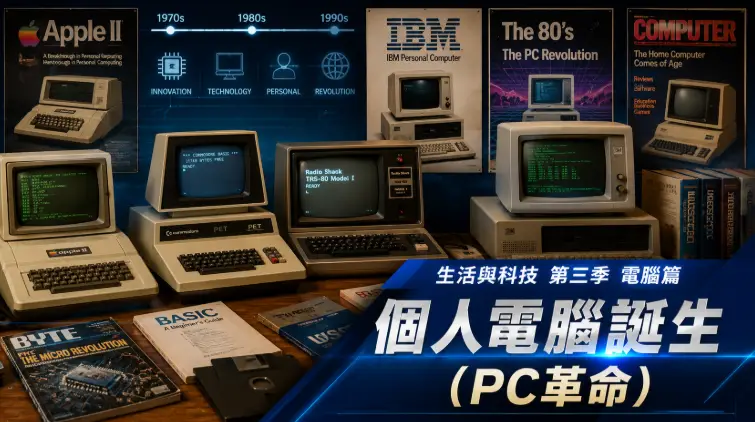
生活與科技 第三季 電腦篇 002|個人電腦誕生:PC革命如何改變世界 | Life and Technology Season 3 Computer Series | The Birth of the Personal Computer: The PC Revolution命如何改變世界 |
個人電腦的出現,徹底改變了人類與科技的距離。電腦不再只是政府、軍方或大型企業的工具,而是開始進入家庭、學校與辦公室,開啟真正屬於全民的數位時代。
The rise of the personal computer transformed technology from an industrial tool into an everyday necessity. What was once limited to laboratories and corporations suddenly became accessible to ordinary people, changing communication, education, business, and entertainment forever.
中文
在1970年代以前,電腦仍然屬於大型機器時代。當時的電腦通常體積巨大、價格昂貴,需要專業工程師操作,因此只有政府部門、大學研究機構與大型企業才能使用。對一般人而言,電腦是一種遙不可及的高科技設備。然而,隨著微處理器技術誕生,電腦開始出現重大轉變。1971年,Intel推出4004微處理器,被視為現代個人電腦的重要基礎。過去需要大量電子零件才能完成的運算工作,如今可以集中於一塊小型晶片之中,令電腦開始朝小型化發展。到了1970年代中後期,多款早期個人電腦陸續誕生。其中Altair 8800被很多人視為PC革命的重要起點。它雖然功能簡單,但成功吸引大量電子愛好者與程式設計者投入個人電腦世界。後來年輕的比爾·蓋茲與保羅·艾倫更為Altair開發BASIC語言,亦成為日後Microsoft的重要開端。1977年,Apple II正式推出,個人電腦開始真正進入家庭市場。相比早期需要自行組裝的電腦,Apple II更容易使用,也提供彩色畫面與外接設備支援,令普通人首次感受到個人電腦的實際價值。除了Apple之外,Commodore PET與TRS-80亦被稱為「1977三大個人電腦」,象徵PC時代正式來臨。1981年,IBM推出IBM PC,更進一步推動整個電腦產業。由於IBM本身具有強大商業影響力,IBM PC很快成為商業市場標準。更重要的是,它採用相對開放架構,令其他公司能夠生產兼容電腦,形成後來龐大的PC產業鏈。這種「IBM PC相容機」模式,大幅降低電腦價格,也讓個人電腦快速普及全球。與此同時,Microsoft的MS-DOS作業系統亦開始普及,後來Windows出現,更進一步改變人類使用電腦的方式。圖形化介面令操作變得更直覺,即使不懂程式設計的人,也能學習使用電腦。從文書處理、試算表到遊戲娛樂,個人電腦逐漸成為現代生活不可缺少的一部分。PC革命不只改變科技產業,更改變整個社會結構。辦公室開始進入數位化,文件由紙本轉向電子化,企業管理效率大幅提升。學校開始教授電腦知識,新一代從小接觸數位世界。互聯網後來的普及,更讓個人電腦成為全球資訊交流的重要入口。在1980至1990年代,擁有一部個人電腦甚至成為現代家庭的重要象徵。遊戲產業亦因PC革命而高速發展。早期電腦遊戲從簡單像素畫面,逐漸進化為大型3D遊戲世界。許多知名遊戲公司與軟件開發者,都是在個人電腦普及時代中成長起來。同時,桌面出版、數位音樂與影像編輯亦因PC而變得普及,讓普通人首次擁有創作與發表內容的能力。PC革命的另一個重要影響,是改變了創業文化。許多科技公司最初只是由幾位年輕人在車庫或小辦公室中創立,例如Apple與Microsoft。個人電腦降低了科技創作門檻,也令軟件產業快速崛起。今天的網絡世界、智能手機與雲端科技,其實都與當年的PC革命密切相關。雖然現代人使用手機和平板的時間可能比傳統電腦更多,但個人電腦依然是現代資訊世界的重要核心。無論是辦公、設計、程式開發、遊戲還是人工智能研究,PC仍然發揮關鍵作用。從大型主機到家用電腦,PC革命不只是科技產品演變,更代表人類正式把計算能力帶進每個人的日常生活之中。
English Version
Before the 1970s, computers were enormous machines used mainly by governments, universities, and major corporations. They occupied entire rooms, required specialized operators, and cost fortunes to maintain. For ordinary people, computers seemed distant and almost unimaginable. Everything changed with the invention of the microprocessor. In 1971, Intel introduced the 4004 processor, a breakthrough that condensed computing power into a single chip. This innovation allowed computers to become smaller, cheaper, and more practical for wider use. During the mid-1970s, early personal computers began appearing on the market. One of the most influential was the Altair 8800, often regarded as the spark that ignited the PC revolution. Although primitive by modern standards, it captured the imagination of hobbyists and programmers across the United States. Two young developers, Bill Gates and Paul Allen, created a BASIC programming language for the Altair, laying the foundation for what would later become Microsoft. In 1977, Apple introduced the Apple II, one of the first successful mass-market personal computers. Unlike earlier kits that required technical assembly, the Apple II was more user-friendly and visually appealing. It featured color graphics, expandable hardware, and practical software applications that helped ordinary households recognize the usefulness of personal computing. Around the same period, the Commodore PET and TRS-80 also entered the market, together marking the arrival of the consumer PC era. The real turning point came in 1981 when IBM released the IBM PC. Because IBM was already a powerful name in business technology, its computer quickly became an industry standard. More importantly, IBM used a relatively open architecture, allowing other manufacturers to create compatible machines. This led to the explosive growth of the PC clone market and dramatically reduced computer prices worldwide. As compatible systems spread, personal computers became increasingly common in homes, schools, and offices. Microsoft’s MS-DOS operating system played a crucial role during this period, and later the introduction of Windows transformed computing even further. Graphical user interfaces made computers easier to use for non-technical users, allowing millions of people to interact with software through icons and menus rather than typed commands. Word processing, spreadsheets, educational software, and entertainment applications quickly became part of daily life. The PC revolution reshaped society far beyond the technology industry. Offices shifted from paper-based systems to digital workflows, increasing productivity and changing how businesses operated. Schools began teaching computer literacy, preparing younger generations for a digital future. When the internet became widely available in the 1990s, personal computers turned into gateways to global communication and information sharing. Owning a computer soon became a symbol of modern life. The gaming industry also expanded rapidly because of personal computers. Simple pixel-based games evolved into immersive 3D worlds, while software developers and creative industries flourished alongside PC technology. Desktop publishing, digital art, music production, and video editing became accessible to ordinary users for the first time. The PC revolution empowered individuals not only to consume content but also to create it. Another major impact was the rise of startup culture. Companies such as Apple and Microsoft famously began in garages and small offices, fueled by the opportunities created by personal computing. The availability of affordable computers lowered barriers for innovation and helped launch the modern software industry. Even today, despite the popularity of smartphones and tablets, personal computers remain central to programming, design, business operations, gaming, and artificial intelligence development. The PC revolution was more than a technological milestone—it was the moment computing power moved from isolated institutions into the hands of everyday people, permanently transforming modern civilization.
總結
中文
個人電腦革命讓科技真正走進每個人的生活。從大型企業設備到家庭工具,PC改變了工作、學習與娛樂方式,也為今天的網絡與智能科技世界奠定重要基礎。
English Version
The personal computer revolution brought digital technology into ordinary homes and workplaces. By making computing accessible to millions, it reshaped modern society and laid the groundwork for today’s connected technological world.