一丘之貉意思解析|形容同樣惡劣的一類人 | The Meaning of “Beasts from the Same Hill” Explained | 成語
「一丘之貉」是一個帶有批評意味的成語,用來形容品行、作風或本質相同的一類人,尤其多指同樣奸詐、虛偽或惡劣的人。這個成語語氣強烈,常用於揭露表面不同、實際卻沒有差別的人與團體,也反映人們對虛假與不良行為的警惕。
The Chinese idiom “一丘之貉” refers to people who may appear different on the surface but are essentially the same in character, especially in negative ways. Often used critically, the phrase describes individuals who share similar dishonesty, selfishness, or bad behavior despite pretending otherwise.
「一丘之貉」字面上的意思是「同一座山丘上的貉」。貉是一種類似狐狸的動物,古人認為牠們習性相近,因此若生活在同一山丘,便代表屬於同一類。後來,這個成語逐漸演變成用來比喻本質相同的人,尤其是那些品行不佳、彼此勾結或作風惡劣的人。這個成語通常帶有明顯的貶義,用來批評某些人雖然表面立場不同,但實際上都同樣自私或虛偽。例如在社會上,有些人彼此公開爭吵,私下卻互相利用;又或者某些團體口口聲聲說為人民著想,實際上卻只關心自身利益,這時人們便可能用「一丘之貉」來形容他們。這個成語之所以深刻,在於它揭示了人性中的偽裝與利益關係。很多時候,人們容易被外表、言語或立場所迷惑,但真正重要的,其實是內在品格與行為。現代社會資訊繁雜,人們每天接觸大量言論與形象,更需要保持判斷能力,不要只看表面。從另一角度來看,「一丘之貉」也提醒人們交友與合作時必須慎重。與什麼樣的人相處,往往會影響自己的價值觀與行為。若長期與品行不佳的人為伍,即使原本立場不同,也可能逐漸受到影響。因此,這個成語除了用來批評,也具有警示作用。真正值得信任的人,不在於說了多少漂亮話,而在於是否能長久保持正直與誠信。
English Version
The idiom “一丘之貉” literally means “animals from the same hill.” The word “貉” refers to a raccoon dog-like creature in ancient Chinese descriptions. Since animals living on the same hill were believed to share similar habits and nature, the phrase eventually became a metaphor for people who are fundamentally alike, especially in negative or dishonest ways. Today, the idiom is strongly critical and usually refers to individuals or groups who may appear different externally but actually share the same selfish motives, corruption, or immoral behavior. It is often used when people pretend to oppose one another publicly while secretly benefiting from the same interests. For example, politicians, business rivals, or public figures who seem different on the surface but ultimately act for personal gain may be described as “一丘之貉.” The expression reflects a deep awareness of hypocrisy and human deception. It warns people not to judge others solely by appearances, words, or public images. In modern society, this lesson remains highly relevant. Social media, advertising, and public relations allow individuals and organizations to carefully shape how they appear to others. However, actions and long-term behavior often reveal true character more clearly than slogans or promises. The idiom therefore encourages careful observation and independent thinking. On a personal level, “一丘之貉” also reminds people to choose friends and partners wisely. The company one keeps can gradually influence values, habits, and moral judgment. Even someone with good intentions may slowly change if surrounded by dishonest or unethical influences. This idea explains why the idiom carries both criticism and warning. True integrity is not measured by attractive words or public reputation, but by consistent honesty and responsible actions over time. The phrase continues to endure because it captures a timeless truth about human nature: people who share the same values and motives will often reveal their similarities eventually, no matter how different they first appear.
小故事:
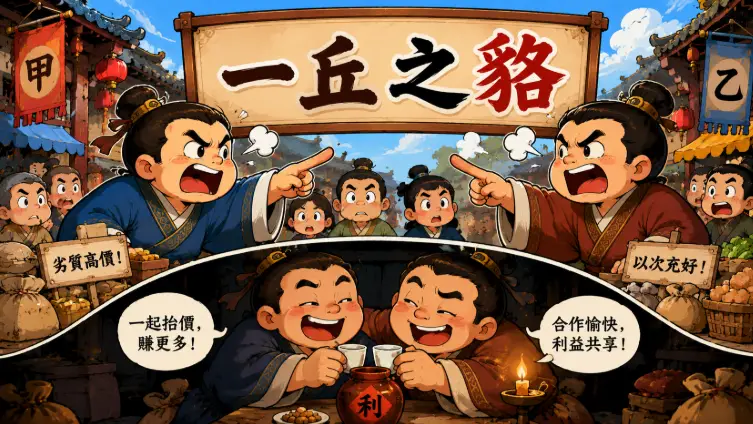
古代有兩位商人,平日總在市集上互相爭吵,彼此指責對方價格不公、貨品質量不好。百姓起初以為他們是真正的競爭對手,因此常相信其中一人的說法。然而,有位老掌櫃卻始終冷眼旁觀。他發現,每當夜深人靜時,兩人竟會偷偷聚在一起喝酒談笑。原來,他們白天故意爭執,只是為了吸引顧客注意,實際上卻暗中合作,一同抬高價格。後來,城裡糧食短缺,兩人更聯手囤積貨物,導致百姓買不起糧食。消息傳開後,大家終於看清真相。有位老人憤怒地說:「原來他們根本是一丘之貉!」這句話很快在市集中流傳,成為人們批評虛偽與勾結的話語。事情被官府查明後,兩位商人都受到懲罰,而百姓也從中得到教訓:有些人雖然表面對立,但背後其實有共同利益。從此之後,城裡的人不再輕易相信誇張表演,而會更仔細觀察一個人的真正行為。多年後,老掌櫃對年輕學徒說:「真正重要的,不是別人如何表現自己,而是他在利益面前會做出什麼選擇。」這個故事後來流傳下來,也讓「一丘之貉」成為揭露虛偽與同流合污的重要成語。它提醒人們,在複雜的人際與社會關係中,保持清醒與判斷力始終十分重要。
English Version
Long ago, two merchants in a busy marketplace constantly argued in public. Every day they accused each other of selling poor-quality goods and charging unfair prices. The townspeople believed they were fierce competitors and often chose sides between them. However, an experienced old shopkeeper quietly observed something unusual. Late at night, after the market closed, the two merchants would secretly meet to drink wine and laugh together. In truth, their public arguments were merely performances designed to attract customers and manipulate attention. Behind the scenes, they worked together to control prices and increase profits. One year, a food shortage struck the city. The two merchants secretly stored large amounts of grain and sold it at extremely high prices, causing great hardship for ordinary families. When the truth was finally exposed, the townspeople were furious. An elderly man pointed at them angrily and declared, “They are nothing but beasts from the same hill!” The phrase quickly spread throughout the market and became a symbol of hypocrisy and collusion. Eventually, government officials investigated the matter, punished the merchants, and forced them to release the grain fairly. The people of the city learned an important lesson from the incident. Those who appear to oppose each other publicly may still share hidden interests behind closed doors. Afterward, the townspeople became more cautious and less easily influenced by dramatic displays or persuasive words. Years later, the old shopkeeper told his young apprentice, “What matters most is not how people present themselves, but the choices they make when profit and temptation appear.” The story survived because it revealed a timeless truth about human behavior. “一丘之貉” became an enduring idiom used to expose false appearances and remind people to judge others by actions rather than outward performance.
結語
「一丘之貉」提醒人們,不要只被表面形象與言語迷惑。真正了解一個人,需要觀察他的行為與價值觀。在複雜的社會關係中,保持理性與判斷力,才能看清真正的本質。
English Version
The idiom “一丘之貉” encourages people to look beyond appearances and recognize true character through actions and values. In both personal relationships and society, careful judgment and independent thinking remain essential for seeing reality clearly.