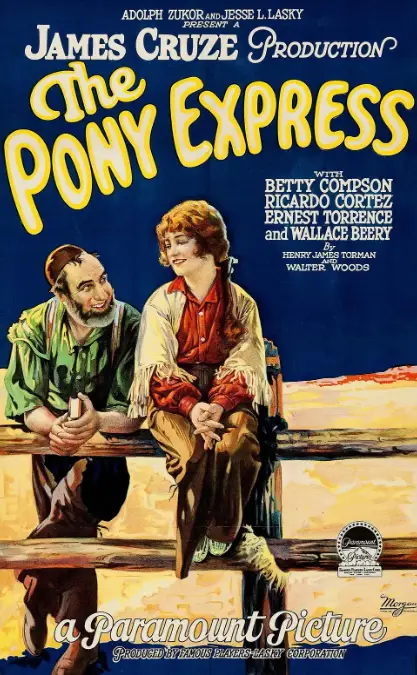
《飛馬傳書》是1925年美國西部默片的重要代表作品,由著名導演James Cruze執導,並由西部明星Ricardo Cortez主演。電影以美國歷史上的「Pony Express」郵遞制度為背景,結合冒險、歷史與西部英雄元素,描繪19世紀美國拓荒時代的危險與理想。影片以壯闊場景與史詩氣氛聞名,展現默片時代對西部傳奇與國家精神的浪漫想像。
Released in 1925, The Pony Express stands as one of the major western epics of silent Hollywood. Directed by James Cruze, the film dramatizes the legendary Pony Express mail service that connected the American frontier during a period of national uncertainty and expansion. Combining historical drama, frontier adventure, and patriotic mythology, the movie captures the spirit of endurance and risk that shaped the mythology of the American West.
電影內容
《飛馬傳書》的故事設定於19世紀美國西部拓荒年代。當時美國正面臨東西部聯繫困難、內戰陰影與政治動盪,而「Pony Express」郵遞系統則成為維繫國家與傳遞消息的重要生命線。電影中的主角是一名充滿正義感與冒險精神的男子,他因個人際遇被捲入危險任務,負責穿越廣闊荒野與敵對勢力控制地區,確保重要情報能安全送達。隨著旅程展開,他必須面對盜匪襲擊、自然險境與政治陰謀,同時在動盪局勢中尋找自己的榮譽與使命。影片最大特色在於它對西部世界的宏大描寫。導演透過大量戶外拍攝與壯觀景觀,展現美國西部荒野的遼闊與危險。無論是塵土飛揚的馬隊、狂奔於荒原的騎士,還是孤立邊境小鎮,都充滿史詩氣氛。電影中的 Pony Express 不只是郵遞制度,更象徵美國拓荒精神與國家統一的理想。騎手們冒著生命危險奔馳於荒野之中,代表一種對責任與信念的堅持。影片同時帶有強烈愛國色彩。故事背景接近美國內戰前夕,角色們不只是為個人利益而戰,更肩負維護國家未來與社會秩序的使命。電影中的英雄形象非常典型,他勇敢、忠誠、富有正義感,即使面對危險依然選擇完成任務。這種理想化英雄設定,反映1920年代荷里活對美國歷史與民族精神的浪漫化想像。除了動作與冒險元素,電影亦描寫邊境生活的孤獨與不安。西部世界充滿暴力與不確定性,人們隨時可能在荒野中失去生命,而文明秩序仍十分脆弱。這種荒涼氣氛使電影不只是英雄故事,也帶有對拓荒年代艱辛生活的描寫。默片時代的視覺敘事在本片中特別突出,快速騎馬追逐、荒野場景與大規模群眾畫面營造出強烈動感。雖然缺乏聲音,電影仍能讓觀眾感受到馬蹄奔馳與危機逼近的緊張感。《飛馬傳書》也延續早期西部電影的神話色彩,把西部描繪成英雄誕生之地,同時象徵自由、危險與國家成長。即使今日觀看,電影依然具有濃厚歷史魅力與冒險感,展現默片年代大型西部史詩的雄偉氣勢。
English Version
Set during the turbulent years of America’s westward expansion, The Pony Express dramatizes the creation of the legendary mail delivery system that connected the eastern and western territories before the arrival of the transcontinental telegraph. At a time when communication across the frontier was dangerous and unreliable, the Pony Express became a vital symbol of national unity and survival. The film follows a courageous young man who becomes involved in a dangerous mission to transport critical information across hostile territory. As he travels through vast wilderness landscapes, isolated settlements, and regions threatened by violence and political unrest, he faces bandits, betrayal, harsh environmental conditions, and constant danger. His journey gradually transforms into both a personal test of character and a larger struggle connected to the future of the nation itself. One of the film’s greatest strengths is its sweeping portrayal of the American frontier. Director James Cruze fills the screen with enormous outdoor landscapes, galloping horsemen, dusty trails, and rugged frontier towns, creating a sense of scale rarely matched during the silent era. The western setting becomes more than a backdrop; it represents both opportunity and danger, freedom and isolation. The Pony Express riders are portrayed almost as mythic figures, risking their lives to maintain communication across an untamed continent. Their determination symbolizes the idealized frontier spirit associated with courage, sacrifice, and perseverance. The film also carries strong patriotic undertones. Set against the growing tensions leading toward the American Civil War, the story frames the mail service as essential to preserving national stability and connection. The protagonist embodies the classic western hero: brave, honorable, resourceful, and willing to risk everything for a greater cause. This heroic portrayal reflects Hollywood’s romantic vision of American history during the 1920s, when western films often celebrated frontier expansion as a defining national achievement. Yet beneath the adventure and spectacle lies an atmosphere of uncertainty and hardship. Frontier life is shown as dangerous and emotionally isolating, where survival depends on endurance and courage. Civilization appears fragile, surrounded by wilderness and violence that could erupt at any moment. These elements give the film emotional weight beyond simple action entertainment. Visually, the movie demonstrates the power of silent-era storytelling through movement and imagery. Long horse chases, large-scale crowd scenes, and expansive landscapes create a vivid sense of motion and tension despite the absence of spoken dialogue. The pounding rhythm of riders racing across the plains feels almost audible through the film’s visual energy alone. The Pony Express also reinforces the mythology of the western frontier as a place where heroes are tested and national identity is forged. Nearly a century later, the film remains an impressive example of early Hollywood epic filmmaking, capturing both the grandeur of the American West and the emotional excitement of classic frontier adventure.
影片簡介(預告片/片段)
荒野奔馳與國家命運交織的西部默片史詩。
A sweeping silent western epic of frontier riders, danger, and national destiny.
電影資料
導演:James Cruze
類型:西部、歷史、冒險、默片
製片公司:Paramount Pictures
上映年份:1925
主要演員
Ricardo Cortez
Betty Compson
Wallace Beery
George Bancroft
總結
《飛馬傳書》是默片時代最具規模的西部電影之一,它以壯觀場景與英雄冒險描繪美國拓荒時代的危險與理想。電影不僅重現 Pony Express 的歷史傳奇,也展現1920年代荷里活對西部精神與國家神話的浪漫想像。
The Pony Express remains one of silent Hollywood’s great western epics, combining historical spectacle with adventurous storytelling and patriotic mythology. Its grand frontier imagery and heroic themes continue to capture the timeless fascination of the American West.