
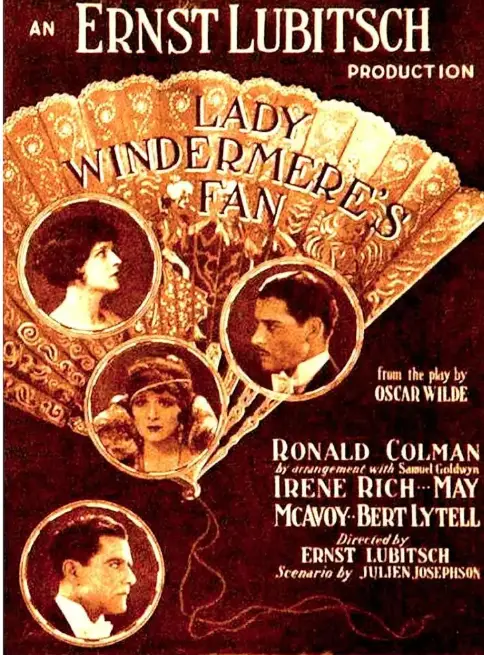
《溫德米爾夫人的扇子》是1925年由電影大師Ernst Lubitsch執導的默片經典,改編自Oscar Wilde著名戲劇作品。電影以英國上流社會為背景,融合愛情、誤會、婚姻與社交諷刺,展現1920年代成熟而優雅的喜劇風格。導演以細膩幽默與充滿暗示性的敘事手法,成功把舞台劇轉化為極具電影感的社會喜劇,成為「Lubitsch Touch」風格的重要代表之一。
Directed by Ernst Lubitsch and released in 1925, Lady Windermere’s Fan is a sophisticated silent adaptation of the famous play by Oscar Wilde. Set within the refined yet deeply judgmental world of British high society, the film explores marriage, scandal, reputation, and emotional misunderstanding through wit, elegance, and subtle irony. The movie remains one of the finest examples of Lubitsch’s celebrated ability to combine humor with emotional complexity.
電影內容
《溫德米爾夫人的扇子》圍繞年輕貴婦Lady Windermere展開。她生活於看似優雅完美的上流社會之中,與丈夫擁有令人羨慕的婚姻。然而,一名神秘女性Mrs. Erlynne突然出現在社交圈,並與Lady Windermere丈夫產生曖昧聯繫,引發流言與懷疑。Lady Windermere開始相信丈夫對自己不忠,情感上的不安與社會壓力逐漸令她陷入混亂。當她在失望與嫉妒中作出衝動決定時,一連串誤會與情感衝突亦隨之展開。電影最大的魅力,在於它並不單純描寫婚姻危機,而是透過輕巧幽默方式揭露上流社會的虛偽與道德矛盾。角色們表面維持禮貌與優雅,實際卻充滿八卦、猜疑與隱藏秘密。導演Ernst Lubitsch擅長利用眼神、物件與空間暗示人物關係,而不是直接說明情節,因此電影充滿含蓄與機智感。片中的扇子不只是裝飾品,更象徵身份、秘密與女性情感。它在不同角色手中流轉,也成為誤會與真相之間的重要象徵。電影同時深入探討女性在社會中的處境。Lady Windermere雖然年輕純真,卻受到嚴格道德規範束縛;而Mrs. Erlynne則是一位帶有神秘過去的女性,她既受到社會排斥,又擁有成熟世故的一面。兩名女性形成鮮明對比,也反映不同年齡與經歷下女性面對社會評價的方式。影片對「名譽」的描寫尤其重要。在上流社會裡,人們往往更重視外界觀感,而非真正情感。角色們不斷隱藏內心與真相,只為維持體面與社交地位。這種壓抑氣氛使電影雖然帶有喜劇元素,卻同時流露淡淡憂傷與孤獨感。Lubitsch的導演風格亦令電影充滿優雅節奏。畫面構圖精緻,角色互動流暢自然,即使沒有對白,觀眾依然能從細節感受到情感張力。與一般默片誇張表演不同,本片更偏向成熟細膩的成人喜劇風格。它透過幽默與誤會描寫愛情與婚姻的不安,同時以輕柔筆觸諷刺上流社會的虛榮與偽善。《溫德米爾夫人的扇子》不只是文學改編作品,更是一部極具現代感的社會電影。即使經過百年,它對婚姻、信任與社會眼光的描寫依然真實而深刻,也讓電影成為默片時代最優雅的喜劇經典之一。
English Version
Lady Windermere’s Fan centers on the seemingly perfect life of Lady Windermere, a young aristocratic woman admired within British high society for her beauty, grace, and respectable marriage. Her comfortable world begins to unravel when a mysterious older woman named Mrs. Erlynne suddenly enters fashionable society and develops a suspicious connection with Lord Windermere. Rumors spread quickly, and Lady Windermere becomes convinced that her husband is betraying her. Consumed by jealousy, insecurity, and emotional confusion, she makes impulsive choices that trigger a chain of misunderstandings and emotional complications. Beneath its elegant surface, the film explores the fragile relationship between love, trust, reputation, and public perception. Rather than presenting a straightforward melodrama, director Ernst Lubitsch transforms the story into a sophisticated social satire filled with wit, irony, and emotional subtlety. One of the film’s most distinctive qualities is its restrained storytelling style. Lubitsch rarely explains emotions directly. Instead, he relies on gestures, glances, objects, and carefully staged situations to reveal hidden tensions and relationships. This famous “Lubitsch Touch” gives the film a sense of intelligence and sophistication rarely found in early cinema. The fan itself becomes an important symbol throughout the narrative, representing secrecy, femininity, reputation, and emotional misunderstanding. As it moves between characters, it silently carries emotional meaning and social consequences. The film also offers a nuanced exploration of women’s roles within a rigid social hierarchy. Lady Windermere embodies innocence and idealism, believing deeply in moral purity and romantic loyalty. Mrs. Erlynne, by contrast, is worldly, independent, and socially controversial due to her past. Yet the older woman possesses emotional depth and sacrifice hidden beneath her glamorous exterior. Through these two contrasting female figures, the film examines how society judges women differently depending on age, experience, and reputation. The theme of social appearance is central to the story. In aristocratic society, maintaining respectability often matters more than truth or emotional honesty. Characters conceal feelings, suppress desires, and manipulate appearances to protect their status. This creates an atmosphere where elegance masks emotional loneliness and fear. Although the film contains many comedic misunderstandings and witty situations, it also carries a quiet emotional sadness beneath its polished surface. Visually, the movie is remarkably refined. Lubitsch uses graceful compositions, fluid movement, and expressive visual detail to create emotional nuance without spoken dialogue. Unlike the exaggerated performances common in many silent comedies, the acting here feels mature and restrained, emphasizing subtle emotional shifts rather than broad theatricality. More than a simple adaptation of Oscar Wilde’s play, Lady Windermere’s Fan becomes a cinematic reflection on marriage, trust, hypocrisy, and emotional vulnerability. Even today, its observations about relationships and social judgment remain strikingly modern, proving why it continues to be regarded as one of the great sophisticated comedies of silent cinema.
影片簡介(預告片/片段)
優雅與秘密交錯的默片時代上流社會喜劇。
A sophisticated silent comedy of romance, scandal, and social appearances.
電影資料
導演:Ernst Lubitsch
類型:喜劇、愛情、劇情、默片
製片公司:Warner Bros.
上映年份:1925
主要演員
May McAvoy
Bert Lytell
Irene Rich
Ronald Colman
總結
《溫德米爾夫人的扇子》是默片時代最具優雅氣質的社會喜劇之一。它以幽默與細膩情感描寫婚姻與名譽,同時諷刺上流社會的虛榮與道德矛盾。Lubitsch充滿機智的導演風格,更讓電影成為世界電影史上的經典作品。
Lady Windermere’s Fan remains one of silent cinema’s most elegant and intelligent comedies. Through its sophisticated humor, emotional subtlety, and sharp social observation, the film continues to showcase Ernst Lubitsch’s mastery of cinematic storytelling and human relationships.