撒路溪錢 – 引死人 Scatter Funeral Paper by the Roadside – Attracting Troublet|廣東話歇後
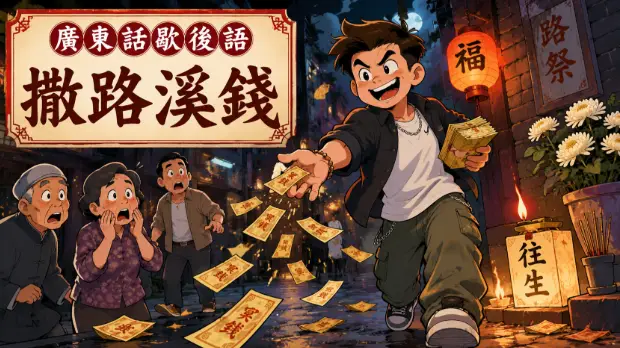
「撒路溪錢 – 引死人」是一句帶有濃厚民間色彩的廣東話歇後語,通常用來形容某些行為主動招惹麻煩,或者明知危險仍故意引人注意。所謂「溪錢」,即傳統喪葬儀式中撒在路上的冥紙,過去民間相信這些紙錢是給亡魂使用,因此一般人都會避忌亂碰。當有人故意在路邊撒溪錢,自然令人聯想到招陰、惹事或自找麻煩,因此這句歇後語便慢慢演變成形容人「自己惹禍上身」。這種說法既帶點陰森氣氛,又充滿廣東民間幽默,反映出傳統文化對禁忌與處世智慧的結合。
“Scatter Funeral Paper by the Roadside – Attracting Trouble” is a vivid Cantonese saying rooted in traditional folk beliefs and superstition. It describes situations where people knowingly invite danger, trouble, or unnecessary complications through their own actions. In old Chinese funeral customs, paper offerings were scattered along roads for wandering spirits, and many believed such objects carried spiritual meanings that ordinary people should avoid. Because of this association, intentionally scattering funeral paper symbolized drawing unwanted attention or inviting misfortune. Over time, the phrase evolved into a colorful metaphor for people who create problems for themselves or recklessly provoke trouble without thinking about the consequences.
意思
「撒路溪錢 – 引死人」的意思,是指一個人做事太高調、太冒險,甚至故意招惹麻煩,結果最終惹禍上身。這句歇後語源自傳統喪葬習俗。在過去的華人社會,出殯時會沿路撒冥紙,希望亡魂有錢使用,也有引路之意。由於溪錢與死亡、鬼魂等概念有關,因此民間一般對它帶有敬畏與避忌心理。如果有人無故在街上撒溪錢,就會令人覺得是在故意「引死人」,象徵招來不吉利的事物。後來,這句話便逐漸引申成為形容某些人明知有危險,仍偏偏做出容易惹事的行為。例如有人故意挑釁別人、亂說話得罪人、或者在敏感場合高調炫耀,都可以用這句歇後語來形容。它背後其實帶有一種警告意味,提醒人做人做事要低調,不要主動製造問題。有時候麻煩本來不會出現,但因為自己太愛出風頭、太衝動,反而把危險吸引過來。廣東話中的歇後語往往以生活畫面作比喻,因此聽起來既生動又有畫面感。「引死人」並非真正指鬼怪,而是一種誇張說法,用來強調事情會變得麻煩甚至失控。這句話至今仍然常見,尤其在形容那些「自己攞嚟衰」的人時,更顯貼切。
English Version
The phrase “Scatter Funeral Paper by the Roadside – Attracting Trouble” refers to actions that deliberately invite problems, conflict, or danger. It often describes people who act recklessly, show off excessively, or provoke others without considering the consequences. The saying comes from traditional Chinese funeral practices, where paper offerings were scattered along the road during funeral processions. These papers symbolized offerings to spirits and carried strong associations with death and the supernatural. Because of these beliefs, ordinary people avoided disturbing or playing with such objects. Therefore, someone intentionally scattering funeral paper would be seen as inviting dark or unlucky forces toward themselves. Over time, the expression became a metaphor for people who create unnecessary trouble through foolish behavior. It may refer to someone provoking arguments online, showing arrogance in dangerous situations, or exposing themselves to risk simply for attention. The phrase contains humor, exaggeration, and a touch of superstition, which are common features of Cantonese folk sayings. Importantly, “attracting the dead” is not meant literally. Instead, it emphasizes how certain behaviors can lead to chaos, conflict, or self-inflicted problems. The saying also reflects a traditional value found in Cantonese culture: the importance of staying humble, avoiding unnecessary attention, and understanding limits. Even in modern life, the phrase remains highly relevant because many problems still begin when people knowingly cross boundaries or invite conflict through careless actions.
用法
這句歇後語多數用來形容別人故意惹麻煩,或者做一些明知危險卻偏偏要試的事情。例如有人不停挑釁脾氣暴躁的人、在網上故意發表爭議言論,又或者明知犯法仍高調炫耀,都可以被人形容為「撒路溪錢,引死人」。語氣通常帶有警告或者調侃意味,提醒對方不要自找麻煩。由於畫面感強,所以在廣東話日常對話中相當生動有趣。
English Version
This expression is commonly used when describing someone who knowingly invites trouble or behaves recklessly. For example, a person who constantly provokes angry individuals, posts controversial comments online for attention, or shows off illegal activities may be described with this saying. The phrase usually carries a humorous but cautionary tone, warning others not to create unnecessary problems for themselves. Because of its dramatic imagery and folk-culture roots, it remains memorable and expressive in everyday Cantonese conversation.
小故事:
阿傑平時最喜歡在網上留言挑釁別人,尤其見到熱門話題時,總愛故意講些刺激說話吸引注意。有一次,一間餐廳因服務問題被網民討論,阿傑竟然公開亂作故事,說老闆曾經打客人,結果帖子很快瘋狂流傳。朋友阿榮看到後,立刻勸他:「你咁樣亂講,小心出事呀。」阿傑卻笑著回答:「網上邊有人知係我。」沒想到幾日後,餐廳老闆真的報警追查,更找到相關帳戶來源。阿傑頓時嚇得面青,開始不停刪帖。阿榮見狀,只能搖頭說:「你真係撒路溪錢,引死人。」後來事情雖然最終和解,但阿傑花了不少時間與金錢處理問題,也因此失去幾位朋友對他的信任。自此之後,他終於明白,不是所有事情都可以靠「玩笑」帶過。有些麻煩,本來完全可以避免,只因自己貪刺激、愛出風頭,最後才弄得一身蟻。這句歇後語,也成了他之後經常提醒自己的說話。
English Version
Kit loved stirring up arguments online. Whenever a trending topic appeared, he enjoyed posting provocative comments just to attract attention. One day, people on social media began criticizing a local restaurant for poor service. Wanting more attention, Kit invented a fake story claiming the restaurant owner had physically attacked customers. The rumor spread rapidly across discussion forums. His friend Wing immediately warned him, “You’re asking for trouble doing this.” But Kit laughed confidently and replied, “Nobody knows who I am online.” A few days later, the restaurant owner reported the case to the authorities and investigators eventually traced the source of the posts back to Kit’s account. Panic quickly replaced his confidence. He rushed to delete comments and apologize privately. Watching the chaos unfold, Wing shook his head and said, “That’s exactly what ‘scattering funeral paper and attracting trouble’ means.” Although the matter was eventually settled, Kit lost money, time, and the trust of several friends. More importantly, he realized that careless actions and attention-seeking behavior could create consequences far bigger than expected. From then on, he became much more cautious about what he said and posted online. The old Cantonese saying stayed with him as a reminder that some troubles are completely self-inflicted.
結語
「撒路溪錢 – 引死人」透過民間喪葬文化的畫面,比喻人主動招惹麻煩的行為。它不單帶有廣東話特有的幽默感,也提醒人們做人做事要有分寸,不要因一時衝動而惹禍上身。
English Version
“Scatter Funeral Paper by the Roadside – Attracting Trouble” is a striking Cantonese expression that uses funeral imagery to warn against reckless behavior and self-created problems. Beneath its humor lies practical wisdom about caution, humility, and understanding the consequences of one’s actions.