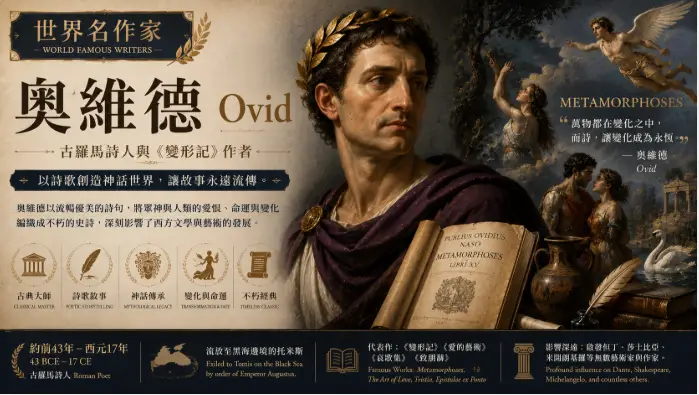
奧維德是古羅馬最具影響力的詩人之一,以《變形記》建立西方神話文學的重要基礎。他擅長描寫愛情、人性與命運變化,透過充滿幻想與戲劇性的故事,塑造出跨越千年的文學魅力與藝術影響力。
Ovid remains one of the defining voices of classical Roman literature. Through imaginative storytelling, emotional depth, and vivid mythological imagery, he transformed ancient legends into timeless literary art. His masterpiece Metamorphoses became a foundation for Western mythology, inspiring centuries of poetry, painting, theater, and modern storytelling.
中文
奧維德約於西元前43年出生於古羅馬帝國的蘇爾莫納,成長於羅馬政治與文化最繁榮的時代。他出身富裕家庭,自幼接受良好教育,學習修辭學、法律與演說技巧。雖然家人期望他成為政治家或官員,但奧維德對詩歌與文學有著強烈熱情,最終選擇走向創作之路。他生活的年代正值羅馬帝國建立初期,社會充滿權力、享樂與文化繁盛的氣息,而這種環境也深深影響他的作品風格。奧維德的早期創作多以愛情為主題,他以輕鬆幽默又帶有挑逗意味的筆調描寫男女關係,迅速成為羅馬最受歡迎的詩人之一。《愛的藝術》更因大膽討論戀愛技巧與情感遊戲而引起巨大話題。他的文字不像許多古典作家般嚴肅,而是充滿流暢節奏、戲劇性與人性魅力,讓讀者能從神話與愛情故事中看見真實情感。然而真正讓奧維德名留千古的,是史詩巨作《變形記》。這部作品以超過二百五十個神話故事串連而成,描述眾神、人類與英雄因愛情、嫉妒、憤怒或命運而發生變形的過程。有人變成樹木、花朵、星辰、河流或動物,每一場變化都象徵情感、懲罰或生命循環。《變形記》不只是神話合集,更像對人性與世界變動的深層描寫。奧維德透過流暢敘事,把希臘與羅馬神話重新整理成宏大的文學宇宙,其中包括著名的納西瑟斯、水仙花傳說、伊卡洛斯飛天、皮格馬利翁與奧菲斯等經典故事,後來成為西方藝術與文學的重要靈感來源。他擅長描寫人物情感與心理變化,即使是神話角色,也充滿嫉妒、愛戀、恐懼與悲傷,使故事具有強烈人性與戲劇張力。然而奧維德的人生並非一直風光。西元8年,羅馬皇帝奧古斯都突然下令將他流放至黑海邊境的托米斯。奧維德在詩中提到「一首詩與一個錯誤」導致流放,但真正原因至今仍充滿謎團。有人認為與《愛的藝術》觸怒皇帝有關,也有人推測他捲入皇室醜聞。離開繁華羅馬後,他在偏遠寒冷地區度過餘生,長年思念故鄉與昔日生活。他晚年的作品充滿孤獨、懊悔與對命運無常的感嘆,展現與早期截然不同的情感深度。奧維德最終於流放地去世,但他的文學影響卻跨越兩千年。從中世紀、文藝復興到現代藝術,無數畫家、詩人與作家都受到《變形記》啟發,包括莎士比亞、但丁與卡夫卡等重要文學人物。奧維德成功把古代神話轉化為充滿生命力的人性故事,也讓「變化」成為理解世界與人生的重要象徵。直到今天,他仍被視為西方神話文學與古典詩歌最重要的代表人物之一。
English Version
Ovid, born in 43 BCE in the Roman town of Sulmo, emerged during one of the most culturally vibrant periods of the Roman Empire. Raised in a wealthy and educated family, he received formal training in rhetoric, law, and public speaking, skills expected of future political leaders. Yet despite these expectations, Ovid was irresistibly drawn toward poetry and artistic expression. Rather than pursuing power or government office, he chose literature, a decision that would eventually secure his place among the greatest poets of the ancient world. Living during the reign of Augustus, Ovid experienced an era defined by imperial ambition, luxury, artistic growth, and shifting social values. His early poetry reflected the playful and sophisticated atmosphere of Roman high society. Works centered on romance, seduction, and emotional intrigue quickly gained popularity because of their wit, elegance, and conversational style. Unlike more solemn classical writers, Ovid approached love with irony, charm, and psychological insight. His controversial work The Art of Love explored relationships and seduction with a boldness that fascinated readers while unsettling conservative authorities. Yet the achievement that immortalized Ovid was Metamorphoses, an epic poetic masterpiece weaving together hundreds of myths into a single sweeping narrative about transformation. In these stories, gods, mortals, and heroes are changed into trees, rivers, birds, flowers, stars, and countless other forms through love, punishment, jealousy, grief, or divine intervention. Transformation in Ovid’s world is never merely physical; it reflects emotional truth, inner conflict, and the unpredictable forces shaping human existence. Through fluid storytelling and vivid imagery, Ovid connected Greek and Roman mythology into a living literary universe filled with passion and tragedy. Many legendary tales familiar today—including Narcissus, Icarus, Pygmalion, Daphne, and Orpheus—reached later generations largely through his retelling. His gift lay not only in imagination but in his ability to humanize mythological figures, giving gods and heroes recognizable emotions such as longing, rage, vanity, and heartbreak. This emotional realism made ancient myths feel immediate and timeless. Despite his enormous fame, Ovid’s life changed dramatically in 8 CE when Emperor Augustus unexpectedly banished him to the remote frontier town of Tomis near the Black Sea. Ovid famously described the cause as “a poem and a mistake,” though historians still debate the exact reason for his exile. Some believe The Art of Love offended Augustus’s moral reforms, while others suspect the poet became entangled in political scandal within the imperial family. Far removed from the cultural brilliance of Rome, Ovid spent his final years in isolation, longing desperately for his homeland. The tone of his later poetry shifted toward sorrow, regret, loneliness, and reflections on fate, revealing a more vulnerable side of the writer once celebrated for wit and elegance. Although he died far from Rome, Ovid’s literary influence continued to expand across centuries. Medieval scholars, Renaissance painters, playwrights, and modern novelists all drew inspiration from his storytelling. Writers such as Dante and Shakespeare, along with generations of artists, adapted his myths and themes into new forms. Ovid transformed mythology into an exploration of human emotion and perpetual change, making transformation itself a symbol of existence. Today, he remains one of the foundational figures of Western literature, admired for turning ancient legends into timeless reflections on identity, desire, loss, and imagination.