在宮崎駿的作品裡,時間總是靜靜流動,而記憶則在其中慢慢改變形狀,有些東西會消失,有些則被留下,但真正重要的,往往不是記得多少,而是記憶如何改變了我們。
In Miyazaki’s films, time moves quietly while memory shifts and reshapes itself, some things fade while others remain, yet what truly matters is not how much we remember, but how memory transforms who we become.
中文
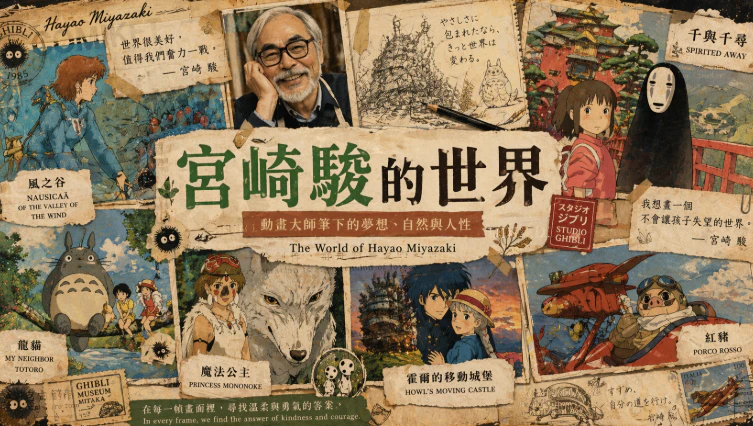
宮崎駿筆下的時間並不急促,它不像現實中的時間那樣被切割與計算,而更像一種流動的狀態,在這種流動之中,記憶成為連接過去與現在的方式,在千與千尋中,名字與記憶之間的關係被清楚地呈現,當千尋失去名字,她也逐漸失去對自己的認知,這不只是記憶的消失,而是一種存在的動搖,而她之所以能夠回到原來的世界,並不是因為她找回所有記憶,而是因為她保留了某些關鍵的連結,例如對父母的情感與對自我的感知,宮崎駿在這裡所描繪的記憶,並不是完整與精確的,而是片段與選擇性的,它會改變,也會被遺忘,但仍然在某種程度上影響著人,而在龍貓中,時間則呈現出另一種樣貌,鄉村的日常生活緩慢而重複,孩子的時間與成人的時間並不相同,對皋月與小梅而言,每一天都是新的體驗,而對大人來說,時間則帶著責任與壓力,這種差異讓同一個世界呈現出不同的節奏,而龍貓的存在,正好處於這兩種時間之間,它既屬於童年的想像,也像是一種被保留下來的記憶,而在霍爾的移動城堡中,時間甚至成為可以被打破的結構,蘇菲在不同年齡之間變化,她的外貌隨著內心狀態而改變,這種變化顯示時間並非固定,而是與自我認知密切相關,宮崎駿透過這些不同的表現方式,讓時間不再只是背景,而成為故事的一部分,而記憶也不再只是過去的記錄,而是一種持續影響現在的力量,在他的作品裡,角色並不需要記住所有事情,他們甚至會忘記重要的經歷,但這些經歷仍然會在他們身上留下痕跡,影響他們的選擇與情感,這種描寫讓記憶變得更接近真實,因為現實中的人也無法完整地保留過去,而是透過片段與感受來理解自己,而宮崎駿所關注的,正是這種不完整的記憶如何構成一個人,他沒有強調記憶的準確性,而是強調記憶的重量,那些被留下來的部分,往往不是最清晰的,而是最深刻的,而這些深刻的部分,會在無形之中塑造人的性格與選擇,而時間則在這個過程中持續流動,不會因為個體的停留而停止,這種流動讓一切都顯得短暫,也讓每一個瞬間變得珍貴,宮崎駿沒有試圖對抗時間,他也沒有試圖讓記憶永恆,他只是讓角色在流動之中生活,在變化之中前進,而這種對時間與記憶的理解,使他的作品帶著一種淡淡的哀愁,也帶著一種溫柔的接受
English Version
In Miyazaki’s work, time is not rigid or segmented but fluid and atmospheric, creating a space where memory becomes the thread that connects past and present, in Spirited Away the relationship between identity and memory is central, as Chihiro’s loss of her name leads to a gradual erosion of her sense of self, this is not merely forgetfulness but a deeper instability of existence, and her return does not depend on recovering every detail but on holding onto essential emotional connections, such as her bond with her parents and her awareness of who she is, memory here is portrayed as selective and evolving, rather than complete or fixed, in My Neighbor Totoro time unfolds differently, reflecting contrasting experiences between children and adults, for Satsuki and Mei each day is filled with discovery, while for the adults time is structured by responsibility and concern, this divergence creates multiple layers of temporal experience within the same setting, and Totoro himself seems to exist between these layers, embodying both imagination and a form of preserved memory, in Howl’s Moving Castle time becomes even more fluid, as Sophie’s age shifts according to her emotional state, suggesting that time is intertwined with self-perception rather than bound to physical reality, through these varied portrayals, Miyazaki transforms time into an active element of storytelling, while memory becomes a force that continuously shapes the present, characters do not need to retain every detail of their experiences, and often they forget significant moments, yet those moments leave traces that influence their emotions and decisions, this reflects a more authentic understanding of memory, as real human experience is not defined by perfect recall but by fragments and impressions that form a sense of identity, Miyazaki emphasizes not the accuracy of memory but its weight, the parts that remain are not necessarily the clearest but the most meaningful, and these fragments quietly shape how individuals perceive themselves and the world, meanwhile time continues to move forward, indifferent to individual attachment, reinforcing the transient nature of life while also giving each moment its significance, Miyazaki does not attempt to resist time or preserve memory in a permanent form, instead he allows his characters to exist within this flow, adapting and continuing despite change, and this perspective gives his work a subtle melancholy balanced by acceptance, where loss and continuity coexist, and where the passage of time becomes not something to fear but something to understand.