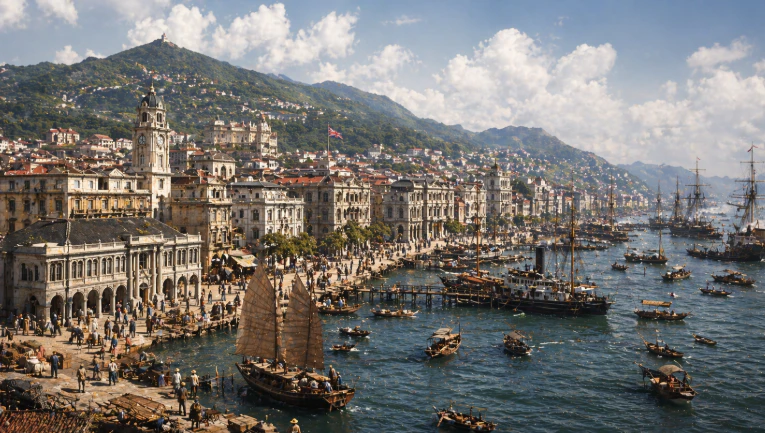
維多利亞城的建立標誌香港城市發展的開端,奠定行政、商業與港口運作的核心基礎。
The creation of Victoria City marked the beginning of structured urban life in Hong Kong, shaping its administrative and commercial identity.
中文
在香港成為英國殖民地後,隨著人口增長與貿易活動迅速發展,建立一個具備行政與城市功能的核心區域變得勢在必行,而維多利亞城正是在這樣的背景下誕生。維多利亞城位於香港島北岸,依山面海,沿著維多利亞港展開,其地理位置不僅方便船隻停泊與貨物運輸,也有利於城市防禦與管理。英國政府在此地進行有系統的城市規劃,劃分不同功能區域,包括行政、商業及住宅用途,使城市發展具備秩序與效率。中環逐漸成為政府與商業活動的中心,各類政府建築、銀行、洋行及商業機構相繼設立,使維多利亞城迅速發展為香港的核心區域。與此同時,港口設施亦不斷完善,碼頭與倉庫沿海岸線建立,支援日益頻繁的航運與貿易活動,使維多利亞港成為區域重要的航運樞紐。基礎建設方面,道路、排水系統及公共設施逐步興建,使城市逐漸具備現代化特徵。然而,在快速發展的同時,城市亦面臨人口密集與衛生問題,尤其在華人聚居區,居住環境較為擁擠,反映出殖民地早期發展的不平衡。維多利亞城的社會結構亦呈現明顯分層,歐洲人多居於較高地勢地區,而華人則主要集中於商業區與低地,形成空間與階層上的差異。儘管如此,維多利亞城仍成為中西文化交流的重要場所,不同族群在此互動,促進經濟與文化的融合。隨著時間推移,維多利亞城不僅成為香港的行政中心,也逐漸發展為金融與貿易重地,其影響力延伸至整個東亞地區。維多利亞城的建立不僅象徵城市化的開始,更代表香港由殖民據點轉型為現代城市的重要一步,為日後香港的繁榮與國際地位奠定基礎。這一城市的形成,是地理優勢、殖民政策與全球貿易發展共同作用的結果,成為理解香港早期城市發展與現代化進程的重要關鍵。
English Version
As Hong Kong evolved under British rule, the need for a centralized urban hub became increasingly evident, leading to the establishment of Victoria City as the colony’s administrative and commercial heart. Situated along the northern shore of Hong Kong Island and facing the expansive waters of Victoria Harbour, the city was strategically positioned to support maritime trade while maintaining effective governance and security. Colonial authorities implemented structured urban planning that divided the area into designated zones for government operations, business activities, and residential use, creating an organized framework that facilitated rapid growth. Central emerged as the focal point of administration and commerce, where government offices, financial institutions, and trading houses clustered together, forming a dense network of economic activity. Along the waterfront, piers and warehouses were constructed to accommodate the increasing volume of shipping traffic, reinforcing Hong Kong’s role as a vital node in regional and international trade. Infrastructure development followed closely, with roads, drainage systems, and public facilities gradually introduced to support the expanding population and improve living conditions. Despite these advancements, the city also faced significant challenges, including overcrowding and sanitation issues, particularly in districts inhabited by Chinese residents, highlighting disparities in colonial urban development. Social stratification became evident in the spatial arrangement of the city, as European communities often occupied elevated and more spacious areas, while Chinese populations concentrated in lower-lying commercial zones, creating distinct patterns of segregation. Nevertheless, Victoria City became a dynamic site of cultural interaction, where diverse communities engaged in trade and daily life, contributing to a unique blend of Eastern and Western influences. Over time, the city solidified its position as the administrative and financial core of Hong Kong, with its influence extending beyond the colony to the wider region. The establishment of Victoria City represented more than the creation of an urban settlement; it marked a critical step in Hong Kong’s transformation into a modern city, driven by strategic planning, economic ambition, and global connectivity. Its development laid the foundation for Hong Kong’s future as a leading international center, illustrating how colonial urban design and geographic advantage combined to shape one of the world’s most significant port cities