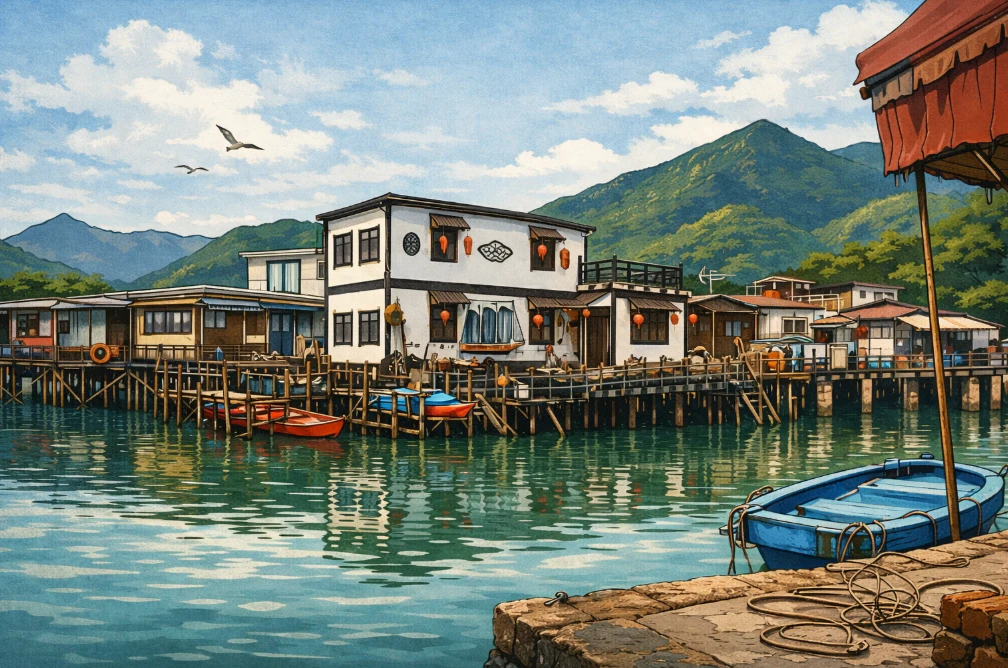
大澳以水上棚屋聞名,這些建於海面的傳統建築見證漁民世代生活。簡樸卻充滿智慧的設計,反映人與自然共存的方式,也承載著香港漁村文化的深厚記憶。
Tai O is best known for its iconic stilt houses, a unique architectural form rooted in generations of fishing life. Built above tidal waters, these homes embody resilience, adaptation, and a deep connection between people and the sea, preserving a distinct cultural identity.
中文
位於大澳的特色房屋——棚屋,是香港最具代表性的傳統建築之一,也是新界漁村文化的重要象徵。這些房屋以木柱支撐,建於水道之上,形成獨特的水上聚落景觀,遠看如同漂浮在海面。棚屋的歷史可追溯至早期蜑家人定居時期,他們以捕魚為生,選擇在水上建屋,不僅方便出海,也可避開土地限制與潮汐變化。這種建築方式體現了對自然環境的靈活適應,亦反映出當地居民與海洋之間密不可分的關係。棚屋多以木材與鐵皮搭建,結構簡單卻講求實用,地板架高以防海水倒灌,屋與屋之間以木橋相連,形成一個緊密的社區網絡。走在這些狹窄的木橋上,可以看到晾曬的魚乾、停泊的小艇,以及居民日常生活的片段,彷彿時間在此緩慢流動。棚屋不僅是居所,更是生活與工作的結合空間,許多家庭在屋旁設置小型碼頭,方便捕魚與運輸。隨著時代變遷,漁業逐漸式微,部分棚屋被改建為商店或觀光用途,但仍保留原有結構與風貌,成為旅客認識香港傳統文化的重要窗口。政府與社區亦開始重視棚屋的保育價值,透過修繕與文化推廣,讓這項獨特建築得以延續。大澳的棚屋不只是建築形式,更是一種生活方式的象徵,它記錄了香港由漁村走向城市的歷程,也提醒人們珍惜仍然存在的文化根源。在現代都市的快速節奏之外,這片水上村落提供了一種截然不同的視角,讓人重新思考人與自然、傳統與發展之間的平衡。
English Version
In the coastal village of Tai O, stilt houses stand as one of Hong Kong’s most distinctive architectural traditions, offering a vivid reflection of its fishing heritage. Elevated above tidal waterways on wooden stilts, these homes create a floating village landscape that has endured for generations. Their origins trace back to the Tanka people, who relied on fishing for survival and developed this adaptive housing style to live in harmony with the sea. Constructed primarily from timber, metal sheets, and simple materials, the houses are designed for practicality—raised floors protect against flooding, while interconnected walkways form a close-knit community layout. Life in Tai O unfolds along these narrow wooden paths, where everyday scenes reveal a rhythm shaped by tides and tradition. Boats dock just outside homes, seafood dries in the open air, and domestic spaces blend seamlessly with working environments. Unlike modern urban housing, these structures reflect a lifestyle rooted in self-sufficiency and environmental awareness. Over time, as Hong Kong transformed into a global city, Tai O experienced changes as well. Fishing declined, and some stilt houses were repurposed into shops, cafés, or guesthouses catering to visitors. Yet despite these shifts, the essential character of the village remains intact. Preservation efforts have gradually emerged, recognizing the cultural and historical significance of the stilt houses as living heritage rather than relics of the past. Today, Tai O offers more than a scenic destination; it provides a tangible connection to a way of life shaped by water, community, and resilience. The stilt houses symbolize not only architectural ingenuity but also the enduring spirit of a people who built their world between land and sea, maintaining identity even as the surrounding city evolved rapidly.