
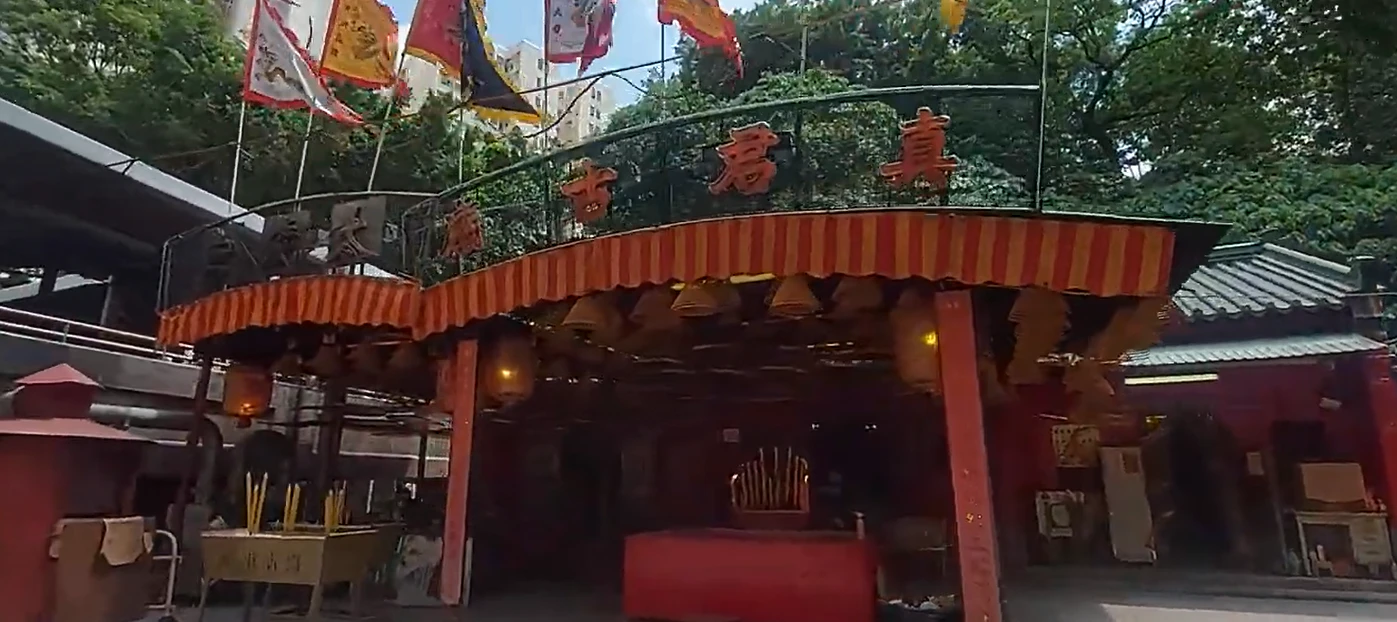
EP03 青衣真君古廟:隱於山林的道教靜修之境與地方信仰記憶|Tsing Yi Zhenjun Ancient Temple: A Hidden Taoist Sanctuary in the Hills【內附短片】
位於青衣山林之間的真君古廟,是一座遠離城市喧囂的傳統道教廟宇。古樸建築與自然環境相互融合,營造出寧靜而沉穩的氛圍,展現出香港少見的山林宗教空間與地方信仰文化。
Hidden within the hills of Tsing Yi, Zhenjun Ancient Temple is a traditional Taoist shrine that offers a peaceful escape from urban life. Its rustic architecture blends seamlessly with the surrounding forest, creating a tranquil atmosphere that reflects local spiritual traditions and cultural heritage.


在香港這個以高樓與密集城市聞名的地方,很少人會聯想到青衣這個地區仍然保留著山林與傳統信仰交織的空間,而真君古廟正是這種少見存在的代表之一。當人們提起青衣,多數會想到住宅區、交通樞紐或大型基建,但只要稍微離開主要道路,走入山坡與林間小徑,就會發現另一個截然不同的世界。真君古廟並不位於顯眼的位置,它沒有大型牌坊,也沒有商業化的包裝,甚至在地圖上也不算突出,但正正是這種低調,使它保留了一種接近原始的宗教氛圍。前往古廟的過程本身就像一段轉換,從城市的聲音逐漸過渡到自然的寧靜,腳步聲取代了車聲,風聲與鳥鳴開始變得清晰。當你抵達廟宇時,首先感受到的往往不是視覺上的震撼,而是一種情緒上的沉澱。真君古廟的建築風格樸實無華,多以傳統中式結構為主,紅牆、灰瓦與木構形成穩定而內斂的視覺語言,沒有過多裝飾,但每一個細節都帶有時間的痕跡。廟內供奉的真君,屬於道教體系中的重要神祇之一,象徵守護與正氣,對於地方居民而言,這裡不只是宗教場所,更是一個與生活緊密相連的精神據點。與市區中香火鼎盛的大型廟宇不同,這裡的人流不多,香煙不濃,整體氣氛更加安靜與內斂,信徒多為附近居民,他們的祭拜行為也顯得自然且日常,沒有儀式上的誇張,而是一種長期累積的信仰習慣。從空間角度來看,古廟與周圍山林形成了一種共生關係,樹木不只是背景,而是整個場域的一部分。陽光透過樹葉灑落在廟前空地與屋頂之上,形成斑駁的光影,使整個空間帶有一種流動感。風從山谷吹來,帶著淡淡的草木氣息,與香火的味道混合在一起,構成一種獨特的感官記憶。這種環境讓人很容易放慢節奏,甚至開始注意到一些平時忽略的細節,例如木門的紋理、香爐的痕跡,或是地面上細小的落葉。這些看似微不足道的元素,實際上共同構成了古廟的氛圍。從文化角度來看,真君古廟代表了一種地方性信仰的延續,在快速發展的城市之中,這樣的空間往往面臨被忽略甚至消失的風險,但同時它們也提醒著我們,城市的歷史並不只是由大型建築或重大事件構成,還包括這些細小而持續存在的文化節點。對於攝影者而言,這裡同樣具有獨特的吸引力。沒有過多的人群干擾,使得畫面更為純粹,而自然光的變化則為影像帶來不同層次。清晨時分,光線柔和,整個空間顯得清新而寧靜;中午則光影對比強烈,突顯建築與自然的結構;到了傍晚,暖色調的光線讓古廟更顯沉靜與歷史感。每一個時間點,都能呈現出不同的氛圍。當我們習慣以「景點」的方式去理解一個地方時,很容易忽略這些沒有明顯標籤的空間,但真君古廟正正提醒我們,真正有價值的地方,往往不在於它是否被廣泛認識,而在於它所承載的時間與記憶。當你離開這裡,重新回到青衣的城市節奏之中,也許會發現自己對於這個地區有了不同的理解,不再只是交通與住宅的集合,而是一個同時擁有自然、歷史與信仰的地方。。

English Version
In a city widely recognized for its dense skyline and fast-paced urban life, it is easy to overlook places like Tsing Yi as merely residential or infrastructural zones, yet hidden within its hills lies Zhenjun Ancient Temple, a rare example of how nature and traditional belief systems continue to coexist within Hong Kong. Most people associate Tsing Yi with housing estates, highways, and transport networks, but stepping away from the main roads and moving into the quieter hillside paths reveals a completely different environment, one that feels detached from the usual rhythm of the city. The journey to the temple itself becomes part of the experience, as the sounds of traffic gradually fade and are replaced by footsteps, wind, and birds, creating a transition that prepares visitors for a different state of mind. Unlike major temples in urban areas, Zhenjun Ancient Temple does not stand out with grand entrances or commercial elements; instead, it remains understated and almost hidden, preserving a sense of authenticity that is increasingly rare. Upon arrival, the impact is not dramatic but subtle, characterized by a feeling of calmness and grounding that emerges naturally from the surroundings. The architecture of the temple is simple and traditional, featuring red walls, grey tiled roofs, and wooden structures that reflect a restrained aesthetic, where every detail carries traces of time rather than decorative excess. The temple is dedicated to Zhenjun, an important figure in Taoist belief associated with protection and righteousness, and for local residents, this site functions as more than a religious space, serving as a spiritual anchor connected to everyday life. Unlike heavily visited temples filled with incense smoke and crowds, this temple maintains a quieter atmosphere, where worshippers engage in rituals that feel personal and unforced, representing a continuity of belief rather than a spectacle. The relationship between the temple and its natural environment is particularly significant, as the surrounding forest is not merely a backdrop but an integral part of the spatial experience. Sunlight filters through the trees, casting shifting patterns across the ground and the temple structures, while the breeze carries the scent of vegetation mixed with incense, creating a layered sensory environment that encourages slower observation. Visitors may find themselves paying attention to small details such as the texture of wooden doors, the wear on incense burners, or fallen leaves scattered across the ground, all of which contribute to the atmosphere of the place. From a cultural perspective, Zhenjun Ancient Temple represents the persistence of local belief systems within a rapidly modernizing city, highlighting how smaller, less visible spaces continue to hold significance despite being overshadowed by larger and more prominent landmarks. These spaces challenge the dominant narrative of urban development by preserving elements of history, identity, and community that might otherwise be lost. For photographers, the temple offers a unique opportunity to capture images free from the distractions of crowds, allowing for a focus on composition, light, and detail. Different times of day bring different moods, from the gentle clarity of morning light to the strong contrasts of midday and the warm tones of evening, each revealing new aspects of the environment. When we approach places solely as tourist attractions, we risk missing the deeper layers that define them, and Zhenjun Ancient Temple serves as a reminder that the true value of a place often lies in its subtlety and continuity rather than its visibility. Returning from the temple to the urban environment of Tsing Yi, one may begin to see the area differently, not just as a functional space of infrastructure and housing, but as a landscape that also contains nature, history, and spiritual meaning intertwined in quiet yet enduring ways.