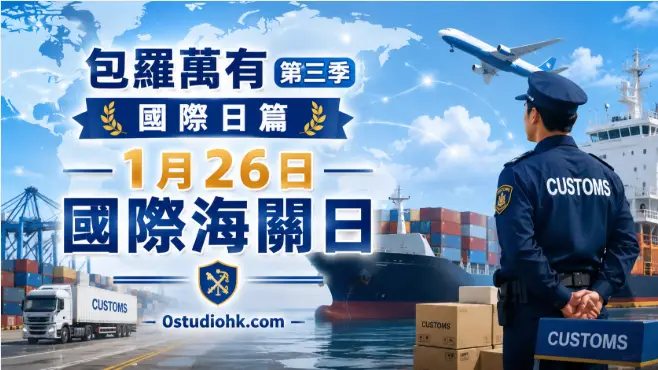
包羅萬有 Season 3|世界國際日 | 國際海關日|認識1月26日國際海關日的由來與使命 International Customs Day | Understanding January 26 and the Role of Customs
每年1月26日是國際海關日,旨在表揚全球海關人員維護邊境安全、促進國際貿易及打擊走私犯罪的重要貢獻,亦提醒大眾了解海關在現代社會中的關鍵角色。
Observed annually on January 26, International Customs Day recognizes the vital work of customs administrations worldwide in facilitating legitimate trade, protecting borders, and combating illegal activities in an increasingly connected world.
(中文)
國際海關日(International Customs Day)定於每年1月26日,由世界海關組織(World Customs Organization,WCO)設立,以紀念1953年1月26日首屆海關合作理事會(Customs Co-operation Council)會議召開。該理事會其後於1994年正式更名為世界海關組織,總部設於比利時布魯塞爾,現時已擁有超過180個成員海關機構,涵蓋全球絕大部分國際貿易活動。設立國際海關日的目的,是提高社會對海關工作的認識,並表揚全球海關人員在保障公共安全、促進合法貿易及維護國家經濟利益方面所作出的努力。很多人認為海關的工作只是檢查旅客行李或徵收關稅,但現代海關的職責遠比想像中廣泛。隨著全球化發展,每天有大量貨物、郵件及旅客穿梭世界各地,海關除了負責徵收關稅及稅項外,更肩負防止毒品、武器、瀕危野生動植物、假冒商品及違禁品流入市場的重要責任。同時亦會打擊洗黑錢、跨境犯罪、知識產權侵權及非法貿易等活動,保障市民安全及公平營商環境。近年電子商務迅速發展,跨境網購已成為全球消費模式之一,大量包裹每日經由航空、海運及陸路運輸往來各國,令海關工作更加複雜。各地海關積極引入人工智能、大數據分析、電子報關、自動化風險管理及智能掃描設備,提高通關效率,同時加強高風險貨物的檢查能力,在便利貿易與安全管理之間取得平衡。世界海關組織每年亦會公布一個年度主題,鼓勵各地海關因應新形勢推動改革,例如數碼轉型、綠色海關、誠信管理、青年人才培育及智慧邊境等,讓全球海關能夠共同應對日益複雜的國際挑戰。此外,世界海關組織亦積極促進各國合作,透過情報交流、專業培訓及聯合執法,加強打擊跨境犯罪。由於犯罪集團往往跨越多個國家活動,因此單靠一個國家的力量並不足夠,只有建立全球合作網絡,才能有效阻止非法貨物流通及維護國際供應鏈安全。國際海關日亦是一個向海關人員致敬的日子。他們每天在港口、機場、陸路口岸及郵件中心執行各項檢查工作,既要確保貨物流通順暢,也要防止危害公共安全的物品流入社會。面對全球貿易持續增長及科技快速發展,海關工作的重要性將持續提升。國際海關日提醒人們,安全、高效及公平的國際貿易並非理所當然,而是有賴世界各地海關機構長期合作與努力,共同守護全球經濟秩序及人民福祉。
English Version
International Customs Day is celebrated every year on January 26 to recognize the essential role customs administrations play in protecting borders, facilitating international trade, and ensuring global security. The date commemorates the inaugural meeting of the Customs Co-operation Council held on January 26, 1953. The organization later became the World Customs Organization (WCO), headquartered in Brussels, Belgium, and today represents more than 180 customs administrations responsible for overseeing the vast majority of global trade. The observance aims to increase public awareness of the many responsibilities carried out by customs officers while acknowledging their contribution to economic development and public safety. Although many people associate customs primarily with collecting duties or inspecting luggage at airports, modern customs agencies perform a much broader range of functions. They help prevent the smuggling of illegal drugs, firearms, counterfeit goods, endangered wildlife, hazardous materials, and other prohibited products. Customs authorities also work to combat money laundering, intellectual property violations, organized crime, and customs fraud while ensuring businesses can compete fairly in international markets. The rapid expansion of e-commerce has significantly transformed customs operations. Millions of parcels now cross international borders every day, requiring customs administrations to process shipments efficiently without compromising security. To meet these demands, many countries have adopted digital customs declarations, automated risk assessment systems, artificial intelligence, advanced scanning technologies, and data analytics to identify high-risk cargo while allowing legitimate goods to move more quickly. Each year, the World Customs Organization selects a specific theme highlighting priorities such as digital transformation, customs modernization, environmental protection, integrity, innovation, or international cooperation. These annual themes encourage customs administrations to exchange knowledge, improve operational standards, and prepare for emerging global challenges. International cooperation is one of the cornerstones of modern customs work. Criminal organizations often operate across multiple jurisdictions, making information sharing and coordinated enforcement essential. Through joint investigations, intelligence exchanges, and professional training, customs agencies strengthen their collective ability to disrupt illicit trade and protect global supply chains. International Customs Day also provides an opportunity to recognize the dedication of customs officers working at airports, seaports, land border crossings, and postal facilities. Their efforts ensure that legitimate trade continues efficiently while dangerous or illegal goods are intercepted before reaching consumers. As international trade, technology, and global connectivity continue to evolve, customs administrations will remain indispensable to economic stability, national security, and international cooperation. The observance reminds the world that secure and efficient global commerce depends on skilled professionals working together across borders to build a safer and more prosperous future.
總結(中文)
國際海關日肯定海關人員在促進合法貿易、保障邊境安全及打擊跨境犯罪上的重要貢獻。透過國際合作與科技創新,海關持續守護全球經濟秩序與公共安全。
Summary (English)
International Customs Day honors customs professionals whose work supports secure trade, protects societies, and strengthens international cooperation. Their dedication helps create a safer, fairer, and more connected global economy.