
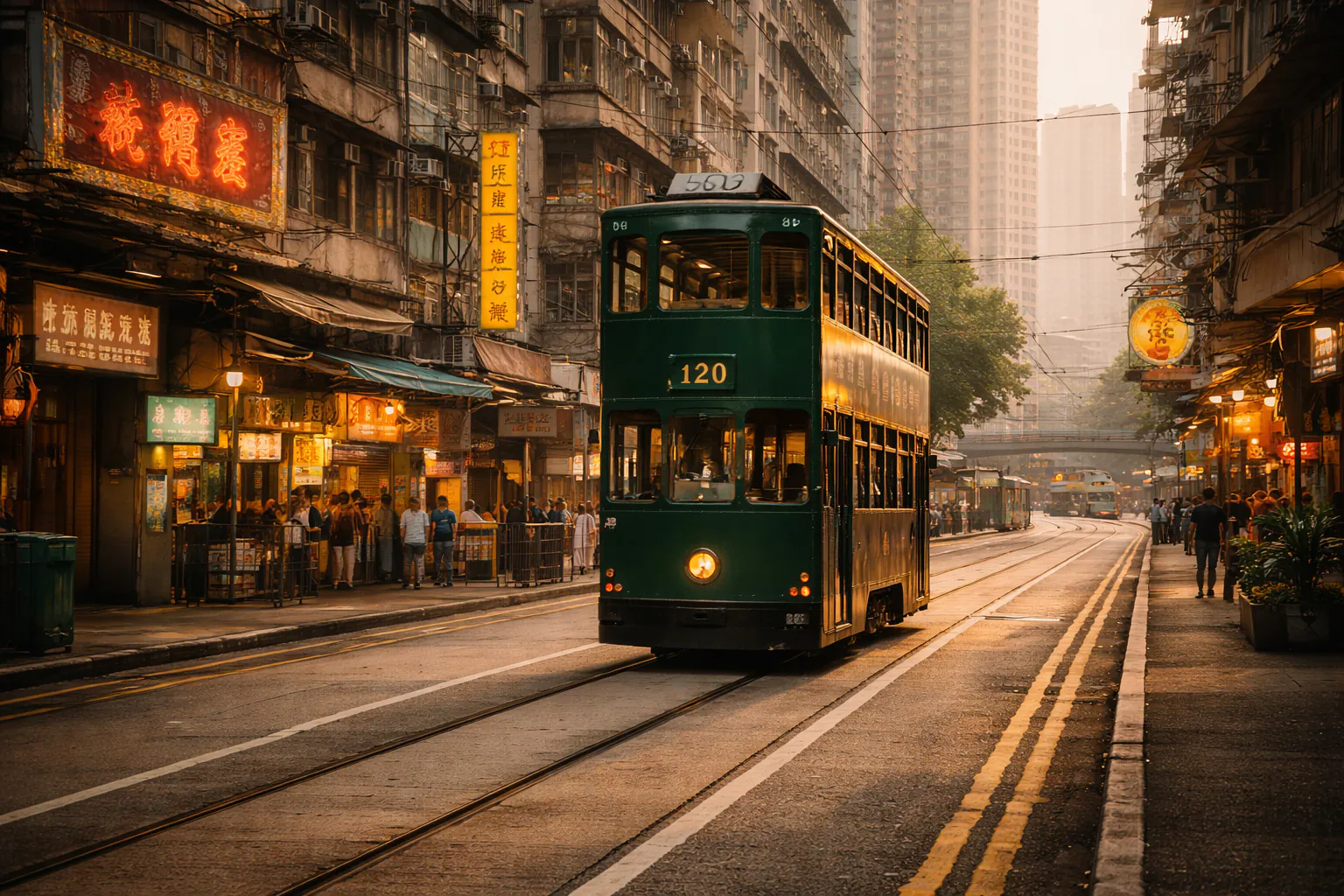
香港電車的慢時代:叮叮車陪伴城市走過的百年歲月 | The Slow Era of Hong Kong Trams: Ding Ding Rides and the Gentle Rhythm of the City | 今日回望 | 第十二章
在香港這座節奏極快的城市裡,有一種交通工具卻始終保持著緩慢的節奏。它沒有地鐵的速度,也不像巴士那樣穿梭不同地區,但它卻在城市的記憶裡留下了極深的痕跡。
In Hong Kong’s fast-paced landscape, trams once offered a slower, more reflective way to move through the city. Known affectionately as the “Ding Ding,” these rides carried passengers not just across districts, but through moments of quiet observation. With their steady pace and open views, they became part of a shared urban memory shaped by time and motion.
很多香港人習慣叫它「叮叮」,因為當電車接近路口或人群時,司機會按下鈴聲,發出清脆的「叮叮」聲。這種聲音,幾乎成為港島街道的象徵。
對不少人來說,只要聽到這個聲音,就知道電車正在經過。
香港電車的歷史可以追溯到二十世紀初。當時香港正逐漸發展,港島北岸成為商業與居住的重要地帶。為了連接不同地區,一條沿海岸線運行的電車系統逐漸建立。
從上環到銅鑼灣,再到筲箕灣,電車軌道沿著主要道路鋪設,成為港島交通的重要一環。
在那個年代,電車是很多市民最常使用的交通工具之一。
早期的電車與今天相比有不少不同。車身設計較為簡單,車廂內部多為木質結構。座椅、扶手、地板都帶著一種舊時代的氣息。
很多老香港人仍然記得,過去的電車上層座位,往往是最受歡迎的位置。
坐在上層前排,可以看到整條街道的景色。當電車慢慢前進,城市的畫面也隨之展開。
街道兩旁的店舖、行人、招牌與建築,都在窗外慢慢經過。
這種速度,使電車旅程成為一種特別的體驗。
電車不像其他交通工具那樣追求效率,它更像是在城市裡慢慢移動。
在電車的車廂裡,常常可以看到不同的人。
上班族在早晨匆匆趕路,學生背著書包聊天,老人家坐在靠窗的位置看街景。對很多人而言,電車不只是交通工具,也是一段日常生活的片段。
早年的電車票價非常便宜,因此也被視為最親民的交通方式之一。
不少人會選擇搭電車走短程路線,例如從灣仔到中環,或從北角到銅鑼灣。
電車路線雖然固定,但它連接了港島最繁忙的街道。
在上世紀的香港街道上,電車與其他交通工具一起構成城市的流動景象。巴士、的士、小巴與電車並行,而電車總是以自己的節奏前進。
即使道路擁擠,它仍然沿著軌道慢慢行駛。
電車的另一個特色,是它的開放感。
與封閉的地鐵不同,電車讓乘客更接近街道。窗外的城市聲音、街道氣味與生活畫面,都能直接感受到。
很多遊客第一次乘坐香港電車時,也會被這種體驗吸引。
因為在現代城市裡,能夠保留百年電車系統的地方並不多。
隨著時間推移,香港的交通系統不斷進步。地鐵網絡快速發展,新的交通方式也陸續出現。
然而,電車卻一直保留下來。
雖然車輛設計經過多次更新,但整體系統仍然沿用原有的軌道與路線。
這使電車成為香港歷史最悠久的交通工具之一。
在許多城市更新的過程中,很多舊事物都逐漸消失。但電車仍然每天在港島街道上運行,像是一條連接過去與現在的線。
對很多香港人來說,電車象徵著一種舊日的生活節奏。
那是一種不急不忙的城市節奏。
當電車慢慢經過中環、金鐘、灣仔與銅鑼灣時,窗外的城市也在變化。高樓大廈越來越多,街道越來越繁忙。
但電車依然保持著自己的步調。
有時候,當人們坐在電車上層,看著街道慢慢後退,會感到一種難得的寧靜。
在快速變化的城市裡,這種慢節奏顯得格外珍貴。
香港電車不只是交通工具,也是一種城市文化。
電影、照片與旅遊介紹中,經常可以看到電車的身影。它的車身、軌道與鈴聲,構成了香港城市形象的一部分。
對很多香港人而言,電車的記憶往往與某些特定時刻連在一起。
放學後與同學一起乘電車回家、週末坐電車到銅鑼灣逛街、或者在雨天裡坐在車窗旁看街道。
這些畫面,看似平凡,卻構成了城市的生活故事。
當城市不斷變化,很多熟悉的地方逐漸消失,但電車仍然在港島街道上前進。
叮叮的鈴聲仍然會在路口響起。
那是一種提醒,也是一種記憶。
提醒人們,在這個快速前進的城市裡,曾經有一段屬於電車的慢時代。
而這段慢時代,也將繼續陪伴香港走向未來。
English Version
In the movement of Hong Kong’s urban life, trams have long represented a different rhythm—one that contrasts with the speed and intensity often associated with the city. Running along the northern shore of Hong Kong Island, these double-decker vehicles, commonly known as “Ding Ding” trams, offered a mode of transport that emphasized continuity rather than urgency. Their steady pace allowed passengers to experience the city in a way that was both grounded and observant, transforming travel into a moment of quiet engagement with the surrounding environment. Unlike faster forms of transportation, trams encouraged a slower form of movement that invited reflection. The experience of riding a tram was shaped by its physical design. Wooden seats, narrow staircases, and open windows created an environment that felt both simple and intimate. Passengers often chose the upper deck for its elevated perspective, where the city unfolded in a continuous visual sequence. Streets, shops, and pedestrians passed by at a pace that allowed details to be noticed—signage, architecture, and the subtle changes in atmosphere from one district to another. This visual connection to the city distinguished tram travel from more enclosed or rapid modes of transport, where the journey often becomes secondary to the destination. The sound of the tram itself contributed to its identity. The rhythmic clatter of wheels along tracks, combined with the distinctive “ding” of its bell, created an auditory presence that became embedded in the city’s soundscape. These sounds were not intrusive but familiar, marking the tram’s passage through different neighborhoods. For many residents, they became part of daily life, signaling both movement and continuity within the urban environment. The tram was not just a vehicle; it was a presence that connected different parts of the city through both sound and motion. Historically, the tram system developed alongside Hong Kong’s urban growth, providing an accessible and reliable form of public transport. Its affordability made it widely used, serving people from various backgrounds and occupations. Over time, it became integrated into daily routines, carrying commuters, students, and visitors along consistent routes. The predictability of its path and schedule contributed to a sense of stability, offering a dependable way to navigate the city. At the same time, its slower speed allowed it to coexist with the evolving urban landscape, adapting without losing its essential character. As Hong Kong modernized, the contrast between the tram and other forms of transport became more pronounced. Buses, the MTR, and other rapid systems introduced greater efficiency and speed, reshaping how people moved through the city. In this context, the tram’s slower pace might have seemed outdated. Yet, rather than disappearing, it retained its relevance by offering a different kind of experience—one that prioritized observation and continuity over speed. It became not only a functional mode of transport but also a cultural symbol, representing a connection to the city’s past. The tram also holds a particular place in the emotional memory of Hong Kong. For many, it is associated with specific periods of life—childhood journeys, daily commutes, or moments of quiet reflection. The act of sitting by the window, watching the city pass by, creates a personal space within a shared environment. This duality—being both part of the crowd and apart from it—gives the tram experience a unique quality. It allows passengers to engage with the city while maintaining a sense of individual perspective. Even today, as the city continues to evolve, trams remain a visible and active part of Hong Kong’s transport system. Their presence serves as a reminder that not all aspects of urban life need to accelerate. In a landscape defined by efficiency and speed, they offer an alternative rhythm, one that values continuity and awareness. The experience of riding a tram becomes a form of connection—to the city, to its history, and to the passage of time itself. Reflecting on the slow era of Hong Kong’s trams reveals the importance of pace in shaping experience. It highlights how movement is not only about reaching a destination, but about how the journey is perceived and remembered. The “Ding Ding,” with its steady motion and familiar sound, continues to carry more than passengers—it carries a sense of place, a continuity of memory, and a reminder that even in a fast-moving city, there is space for moments of stillness within motion.