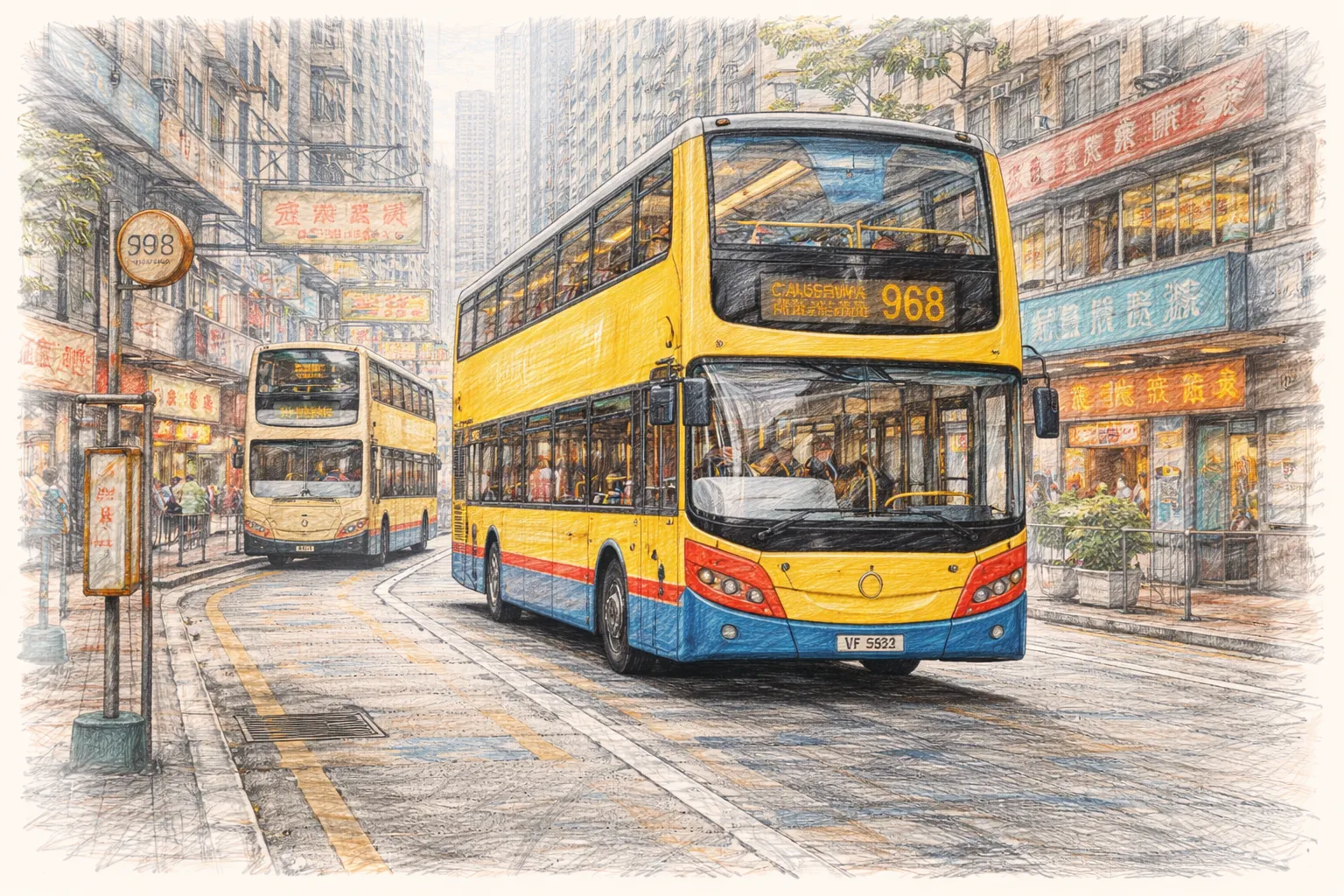
巴士作為城市交通的重要組成部分,承載著居民日常出行的需求,同時也反映了城市運作的特性與文化內涵。相較於地鐵系統的高效與精準,巴士展現了更多的靈活性和適應性,能夠深入城市的各個角落,無論是繁華的商業區還是偏遠的住宅區。巴士路線的設計考量了城市的地理特徵與居民需求,使其成為一種不可或缺的交通工具。
搭乘巴士的過程中,乘客有機會以緩慢且細膩的方式觀察城市的日常面貌。街道上的商舖、行人的步伐、建築物的外觀變遷,這些細節構成了城市生活的真實場景。巴士車廂內部則是一個微縮版的社會空間,來自不同背景的人們在這裡短暫地聚集,共同經歷一段旅程。這種共享空間的特性,使巴士成為一個交流與觀察的場域,讓人們在日常生活中感受到城市的多樣性。
巴士運行依賴於一種獨特的默契。乘客自覺遵守一些不成文的規則,例如讓座給有需要的人、提前準備下車等,這些行為反映了城市居民之間的一種無形合作。儘管巴士的運行可能會受到交通狀況等外部因素影響,但這種不確定性也為乘客提供了一種重新審視周遭環境的機會。在塞車或等待時,人們得以觀察街道上的細節,進一步加深對城市的理解與連結。
在高度都市化的香港,巴士已成為居民生活中不可或缺的一部分。許多市民對巴士路線的熟悉程度甚至超過對地名的了解,這反映了巴士在城市文化中的深厚根基。雖然巴士並非最快速的交通工具,但它卻能提供獨特的旅程體驗。搭乘巴士時,人們得以放慢腳步,感受城市脈搏,並在移動中欣賞沿途風景。
巴士不僅是交通工具,更是城市記憶與故事的載體。它見證了城市的變遷,記錄著每位乘客短暫而真實的一段旅程。在當今追求效率與速度的時代,巴士提醒我們,有時候慢下腳步,才能更深刻地體會生活的美好與城市的真實。這種獨特的交通方式,不僅連結了城市中的不同人群,也讓我們重新思考與周遭環境之間的關係。
English Version
In the structure of Hong Kong’s urban life, where movement is constant and space is densely interconnected, buses form one of the most essential yet often overlooked systems that sustain the city’s daily rhythm, operating not as a spectacle or symbol, but as a continuous and reliable presence that carries people through routines, transitions, and the unfolding of everyday life. Unlike transportation systems that are defined by speed or iconic status, buses occupy a middle ground, balancing efficiency with accessibility, reaching areas that are not always served by rail and adapting to the varied geography of the city, from dense urban corridors to residential neighborhoods and hillside communities. This flexibility allows buses to function as a connective tissue within the urban network, linking different layers of the city and enabling movement that is both practical and inclusive. The experience of traveling by bus is shaped by its relationship to the surface of the city, where routes follow roads that wind through changing environments, offering a continuous visual narrative of urban life that evolves with each stop. Passengers witness transitions between commercial districts, residential zones, and quieter streets, observing the city not as a series of isolated points but as a flowing sequence of spaces that are interconnected and constantly shifting. The upper deck, in particular, provides a unique perspective, allowing for a slightly elevated view that enhances awareness of surroundings while maintaining a sense of immersion within the street-level environment. Time on a bus is experienced differently from faster modes of transport, where the journey is not compressed into minimal duration but unfolds through stops, pauses, and gradual progression, creating a rhythm that reflects the pace of everyday life rather than the urgency of destination. These pauses, often seen as delays, can also be understood as moments where the city reveals itself, where movement is interrupted just enough to allow observation, reflection, or simply the awareness of being within a shared space. The diversity of passengers further defines the bus as a social environment, where individuals from different backgrounds, professions, and routines coexist temporarily, forming a microcosm of the city that reflects its complexity and inclusiveness. Conversations, silence, movement, and stillness all coexist within this space, creating an atmosphere that is at once ordinary and dynamic. Historically, buses have evolved alongside the growth of Hong Kong, adapting routes, technologies, and structures to meet changing demands, while maintaining their role as an accessible and widely used form of transportation. Their continued relevance highlights the importance of systems that prioritize coverage and adaptability over speed alone, ensuring that the city remains connected in ways that are both functional and equitable. In contrast to underground systems that separate movement from the visible environment, buses maintain a direct relationship with the streets, reinforcing the connection between transportation and place, and allowing passengers to remain aware of their surroundings throughout the journey. This visibility contributes to a sense of continuity, where movement is integrated into the experience of the city rather than detached from it. In a broader sense, buses represent the everyday infrastructure that sustains urban life, operating consistently and often unnoticed, yet playing a crucial role in enabling the patterns of movement that define the city’s existence. Their presence is not marked by moments of intensity or spectacle, but by repetition, reliability, and quiet persistence, forming the backbone of daily mobility. Ultimately, the Hong Kong bus system illustrates how a city moves not only through major events or iconic systems, but through the accumulation of ordinary journeys, where each trip contributes to a larger pattern of activity that keeps the city functioning, reminding us that the essence of urban life is found not only in its highlights, but in the continuous flow of its everyday rhythms.