
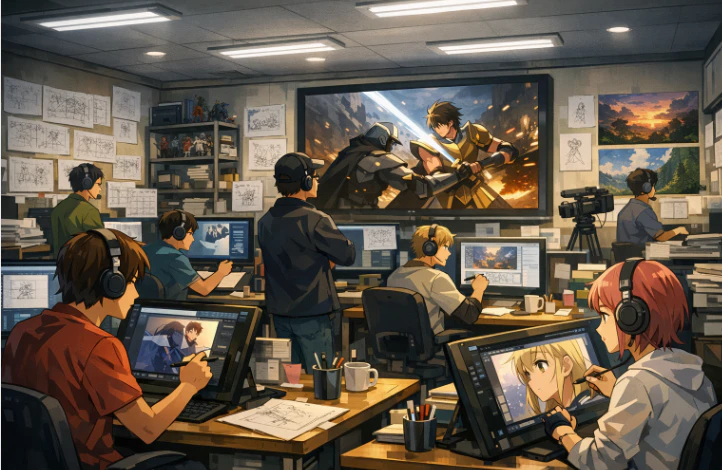
時代,確實改變了動漫的世界觀 | How the Times Reshaped Anime: The Evolution of Worldviews in Animation | 動漫遊 018
動畫作品的世界觀隨著時代的變遷而不斷演變,這種變化並非單純的技術進步或創作者能力的改變,而是整個時代價值觀和人類對自我理解方式的轉變所帶來的結果。回顧過去的動畫作品,我們會發現它們往往充滿著對未知的嚮往與探索精神。那是一個相信未來可以無限延展的時代,角色總是離開熟悉的環境,踏上冒險旅程,在與世界的互動中找尋自我。這樣的故事不僅反映了當時社會對於開拓與發現的渴望,也寄託了對未來的希望。
As time moves forward, anime does more than change in style—it reflects shifting worldviews shaped by society, technology, and culture. What once felt simple and idealistic has grown more complex and fragmented. This evolution reveals not only how anime has changed, but how our understanding of the world itself has transformed.
然而,隨著時間推移,現代動畫的世界觀逐漸收縮。當今的故事場景更多地被設定在校園、房間或城市的一隅,有時甚至僅僅侷限於螢幕前的一小塊空間。角色不再需要以冒險為手段來尋找自我,反而更傾向於在原地探索如何生存、如何面對內心的矛盾與困惑。這樣的改變並非偶然,而是因為我們所處的時代本身已經不再強調外在的征服與探索,而是更加注重內在的情感經驗和生活真實性。
科技的進步也深刻影響了動畫中的世界觀結構。即時通訊和資訊透明讓過去常見的誤會、失聯等情節漸漸失去說服力,取而代之的是對內心世界更細膩的描繪。我們看到角色們即使身處高度連結的世界,仍然感到孤獨和無助,這些情感上的張力成為了現代動畫的重要主題。觀眾也不再僅僅追求宏大的設定,而是希望看到一個能夠反映自己生活狀態的世界。他們會問:在這樣的環境中生活,是不是會感到疲憊?是不是會感到孤單?
現代動畫因此更加誠實,它們不再刻意營造一個充滿希望和夢幻的世界,而是直面現實中的限制與挑戰。角色的行動範圍可能縮小,但每一步都更加沉重,更能引起共鳴。這並不是說現代動畫比過去更好,而是它們以不同方式回應了時代的需求。當人類相信未來充滿可能性時,動畫描繪遠方;當人類學會停下腳步審視自我時,動畫則專注於當下。
因此,動畫世界觀的變遷,從來都不是預測未來,而是忠實記錄人類如何理解自己。如果你感覺動畫世界有所不同,那麼這或許正是因為我們所處的時代,已經走到了新的位置。
English Version
Anime has always been a mirror of its time, reflecting the values, anxieties, and aspirations of the society that produces it. In earlier decades, many anime series presented relatively clear moral frameworks, where the distinction between good and evil was easy to understand. Heroes fought for justice, villains represented identifiable threats, and narratives often resolved with a sense of clarity and hope. These stories resonated with audiences because they aligned with a worldview that, while not simple, felt more structured and certain. Over time, however, this clarity began to shift. As society became more complex and interconnected, so too did the stories told through anime. The boundaries between right and wrong grew less defined, and characters became more ambiguous. Modern anime often explores themes of identity, uncertainty, and moral conflict, reflecting a world where answers are not always clear and perspectives are constantly evolving. This shift is not accidental—it mirrors broader cultural changes in how people understand reality and their place within it. One of the driving forces behind this transformation is technological advancement. The rise of digital media and global communication has expanded access to information, exposing audiences to a wider range of perspectives. Platforms such as Netflix and Crunchyroll have made anime more accessible worldwide, allowing stories to reach diverse audiences with different cultural backgrounds. This global reach has influenced the themes and narratives of anime, encouraging creators to explore more universal and complex ideas. The evolution of anime’s worldview is also evident in its approach to storytelling. Earlier works often followed linear narratives with clear progression and resolution. In contrast, many contemporary series experiment with non-linear structures, open-ended conclusions, and layered storytelling. These approaches reflect a shift away from definitive answers toward exploration and interpretation. Viewers are invited not just to watch, but to think, question, and engage with the story on a deeper level. Another significant change lies in the portrayal of characters. Traditional archetypes—such as the purely heroic protagonist or the entirely villainous antagonist—have given way to more nuanced and multifaceted individuals. Characters now struggle with internal conflicts, personal doubts, and ethical dilemmas that mirror real-life complexities. This makes them more relatable, but also more challenging to define. The audience is no longer guided toward a single interpretation, but instead must navigate a spectrum of perspectives. The influence of global culture has further contributed to this shift. As anime reaches international audiences, it absorbs and reflects a broader range of ideas and storytelling techniques. This exchange enriches the medium but also introduces new layers of complexity. Themes such as globalization, technological dependence, and social fragmentation are increasingly present, highlighting the interconnected nature of the modern world. Despite these changes, certain core elements of anime remain consistent. The emphasis on imagination, emotional expression, and visual creativity continues to define the medium. What has changed is not the essence of anime, but the lens through which it views the world. The stories have become more reflective of uncertainty, diversity, and the search for meaning in a rapidly changing environment. It is important to recognize that this evolution does not represent a decline or improvement, but a transformation. Each era produces the stories it needs, shaped by its unique circumstances and challenges. The anime of the past offered clarity and direction, while the anime of today offers complexity and introspection. Both are valuable, and together they illustrate the dynamic nature of the medium. Ultimately, the changing worldview of anime reflects a broader human experience. As society evolves, so too do the stories we tell and the ways we interpret them. Anime remains a powerful medium not because it stays the same, but because it adapts—continuously redefining itself in response to the world around it. In this way, the evolution of anime is not just a reflection of time, but a dialogue with it.