《香港百貨 004》香港中華百貨與新新百貨的黃金年代|華資四大百貨公司的城市傳奇 | Chung Hwa Department Store and the Golden Age of Hong Kong Chinese Retail
香港中華百貨又稱新新百貨公司,曾是香港最具代表性的華資百貨之一。它與先施、永安及大新並列「四大百貨公司」,見證香港華人商業崛起與二十世紀繁華購物文化的重要年代。
Known also as Sun Sun Department Store, Chung Hwa Department Store became one of Hong Kong’s most influential Chinese-owned retail companies and stood alongside the city’s legendary Four Great Department Stores during the golden age of local commerce.
中文
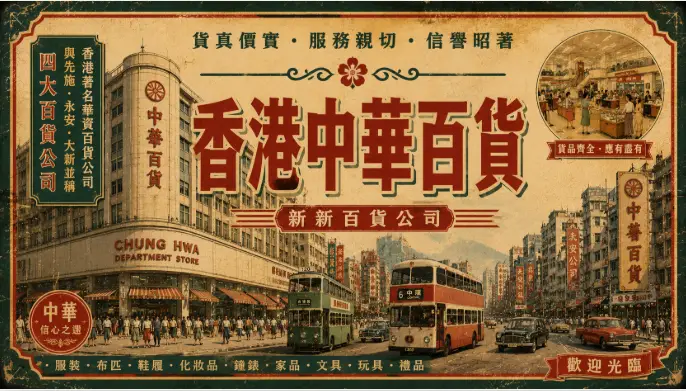
香港中華百貨又稱新新百貨公司,是二十世紀香港最具代表性的華資百貨企業之一,亦是香港早期零售業發展的重要象徵。中華百貨於1932年正式創立,由黃煥南、劉錫基及李敏周共同創辦。當時香港經濟逐漸發展,華人商界開始崛起,本地企業家希望打破洋行與外資企業壟斷市場的局面,因此大型華資百貨公司相繼成立。中華百貨與先施百貨、永安百貨及大新百貨並列為香港當年的「四大百貨公司」,代表着華人在香港商業社會中的重要地位與影響力。中華百貨主要位於香港核心商業區,店舖規模龐大,建築設計帶有當時流行的現代商業風格,成為香港繁華都市景象的重要部分。三十年代至五十年代期間,中華百貨已經是香港市民購物、娛樂與社交的重要場所之一。當年香港百貨公司不只是購物地點,更象徵現代化生活方式。很多市民會特意到大型百貨公司選購最新商品、觀賞櫥窗設計,甚至與親友聚會。中華百貨主打高品質貨品,商品種類十分廣泛,包括服裝、布料、鞋履、化妝品、鐘錶、家庭用品、文具、玩具以及節日禮品等,吸引大量中產家庭與本地市民光顧。相比街邊小店,百貨公司擁有更完善的商品陳列與服務模式,因此成為當時香港消費文化的重要代表。中華百貨亦是香港早期現代零售概念的重要推動者之一。店內設有大型展示櫥窗、固定售價制度與現代化服務方式,改變了傳統華人商店的經營模式。當時百貨公司內部燈光明亮,裝修講究,並設有升降機與大型樓層設計,對不少市民而言充滿新鮮感與現代感。除了售賣商品,中華百貨亦經常配合節日舉辦促銷活動與裝飾,例如農曆新年、中秋節及聖誕節期間,商場總是擠滿前來購物的人潮。香港在戰後經濟逐漸恢復,五十至六十年代進入高速發展時期,中華百貨依然保持一定影響力。不過隨着時代改變,香港零售市場競爭日益激烈,日本百貨、大型商場以及新型零售模式相繼出現,加上租金與經營成本上升,傳統百貨公司逐漸面對巨大壓力。到了1970年代中期,中華百貨最終結業,其原址後來由連卡佛集團接手發展。雖然中華百貨已經消失於香港街頭,但它在香港零售歷史上的地位依然重要。它不但見證華資企業在香港的黃金年代,也反映香港由傳統商埠逐步發展成國際都市的歷程。今天不少香港人提起中華百貨,仍會聯想到昔日中環繁華街景、霓虹燈廣告與香港百貨黃金時代的集體回憶。
English Version
Chung Hwa Department Store, also widely remembered as Sun Sun Department Store, played a major role in shaping Hong Kong’s early modern retail culture. Established in 1932 by Wong Woon Nam, Lau Sek Kei, and Lee Man Chow, the company emerged during a transformative period when Chinese-owned businesses were beginning to rise in prominence within Hong Kong’s commercial world. At a time when foreign trading firms dominated much of the economy, the success of large Chinese department stores symbolized the growing confidence and influence of local Chinese entrepreneurs. Chung Hwa stood alongside Sincere, Wing On, and Sun Sun as one of Hong Kong’s legendary Four Great Department Stores, representing the golden age of Chinese-owned retail enterprises in the city. Located in one of Hong Kong’s busiest commercial districts, the store quickly became a landmark associated with modern urban life. During the 1930s through the postwar decades, department stores were more than shopping venues. They were social spaces where families gathered, shoppers explored imported products, and city residents experienced a modern lifestyle inspired by global retail trends. Chung Hwa became known for offering quality merchandise and a sophisticated shopping environment that appealed to Hong Kong’s growing middle class. Customers could browse clothing, cosmetics, watches, household products, fabrics, toys, stationery, and seasonal gifts under one roof, something considered highly modern at the time. The department store also introduced new retail concepts to local consumers, including large display windows, organized product sections, fixed pricing systems, and modern customer service standards. Bright interiors, elevators, decorative layouts, and festive seasonal promotions created an exciting atmosphere that distinguished department stores from traditional street shops. During major holidays such as Lunar New Year and Christmas, crowds filled the building as shoppers searched for gifts and enjoyed the festive displays. Following World War II, Hong Kong entered a period of rapid industrial and economic growth, and Chung Hwa continued operating as one of the city’s familiar retail names. However, by the late 1960s and early 1970s, Hong Kong’s commercial landscape began changing dramatically. Competition from Japanese department stores, modern shopping malls, and evolving consumer habits placed increasing pressure on traditional retailers. Rising property costs and operational expenses further weakened many long-established department store businesses. Eventually, Chung Hwa Department Store closed during the mid-1970s, and the site was later redeveloped under the Lane Crawford Group. Despite its disappearance, Chung Hwa remains deeply connected to Hong Kong’s retail memory. The store represented a period when Chinese-owned enterprises were transforming the city’s commercial identity and when department stores stood at the center of urban culture. For many older residents, the name still evokes memories of bustling streets, glowing neon signs, elegant storefront displays, and the vibrant energy of Hong Kong’s classic shopping era.
總結
中華百貨不只是香港昔日著名百貨公司,更是華資企業崛起與香港現代零售文化形成的重要象徵。它承載着香港黃金年代的繁華記憶,也見證本地商業歷史的重要發展。
Chung Hwa Department Store remains an enduring symbol of Hong Kong’s early retail success and the rise of Chinese-owned business enterprises, preserving memories of the city’s vibrant department store era and its transformation into a modern commercial metropolis.