
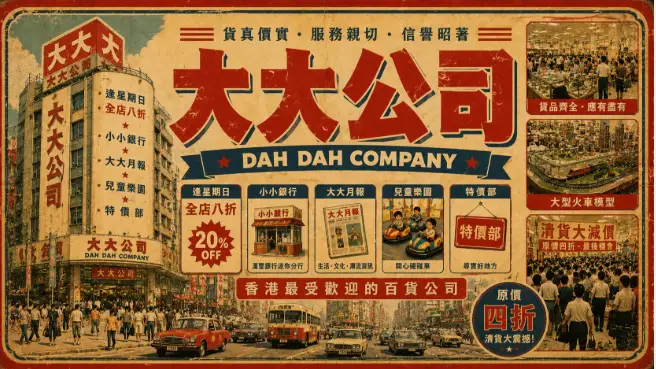
《香港百貨 005》香港大大公司與大大百貨的黃金年代|七八十年代最瘋狂的百貨傳奇 | The Golden Era of Dah Dah Department Store in Hong Kong
大大公司曾是七八十年代香港最具人氣的華資百貨集團之一,以創新營銷、星期日大減價與兒童樂園聞名,成為無數香港家庭共同的購物與童年回憶。
Dah Dah Department Store became one of Hong Kong’s most memorable retail chains during the 1970s and 1980s, famous for its bold promotions, lively shopping atmosphere, and family-friendly entertainment that captured the spirit of the era.
中文
大大公司又被香港市民稱為「大大百貨」,是七十至八十年代香港最具代表性的華資百貨公司集團之一。公司由上海來港發展的商人楊撫生於1974年4月創立,在香港經濟高速發展與消費文化迅速興起的年代,大大百貨憑藉創新營銷手法與大眾化經營模式迅速成名,成為當時香港市民最熟悉的百貨品牌之一。大大百貨總店位於旺角彌敦道與太子道交界的東海大廈基座,位置處於九龍最繁忙地段之一,人流極旺,現址已改建為聯合廣場。當年旺角正值商業與娛樂文化最蓬勃的年代,大大百貨亦因此迅速成為香港家庭假日購物熱點。除了旺角總店之外,大大公司全盛時期更於港九新界開設七間分店,包括荃灣眾安街、香港仔華富邨以及北角城市花園等地區,業務擴展速度相當驚人。大大百貨最令人難忘的,是它在當年率先推出多種極具創意的營銷策略,改變了香港零售業的推廣模式。其中最著名的便是「逢星期日全店八折」優惠。當年每逢星期日,各區分店門外都會出現長長人龍,不少家庭甚至全家出動前往購物,場面極為熱鬧。這種大型折扣推廣在當年相當少見,大大百貨亦因此成功建立親民而熱鬧的品牌形象。另一項極具話題性的設施,是總店地下設有一間由滙豐銀行經營的超小型分行,名為「小小銀行」,與「大大公司」名稱互相呼應,成為當時香港商業界一個有趣創意。此外,大大百貨亦打破傳統百貨公司只印製商品目錄的做法,於1974年創辦《大大月報》,內容不單介紹商品優惠,更涵蓋文化、娛樂、生活潮流與城市資訊,成為當時不少香港家庭喜歡閱讀的免費刊物。除了購物之外,大大百貨更是七十年代香港少見的家庭娛樂場所。旺角總店頂樓曾設有兒童樂園,包括碰碰車等機動遊戲設施,吸引大量家長帶同子女前往消遣。玩具部更設有大型火車模型展示場景,在當時香港極為罕見,對很多小朋友而言充滿夢幻感與新鮮感。頂層特價部則專門售賣包裝受損或輕微瑕疵貨品,以超低價格吸引大量市民前往「尋寶」,形成獨特購物文化。大大百貨售賣商品種類非常廣泛,包括服裝、玩具、家居用品、電器、化妝品、文具與節日用品等,以價格大眾化與商品選擇多元作為主要特色。八十年代初期香港經濟開始出現波動,加上香港前途問題引發市場不安,大大百貨因擴張速度過快而逐漸面對沉重財務壓力。最終於1986年正式清盤結業。當年結業前推出「原價四折」大型清貨活動,引發全港市民最後一次瘋狂搶購,大批市民湧入分店掃貨,場面轟動全港。隨着大大百貨正式結束營業,這個曾經紅遍香港的百貨王國亦成為歷史。不過直到今日,很多老香港人仍然對大大百貨充滿深刻回憶。它不只是百貨公司,更代表香港七八十年代最熱鬧、最有人情味與最充滿活力的消費黃金年代。
English Version
Dah Dah Department Store was one of the most recognizable local retail chains in Hong Kong during the 1970s and 1980s, remembered for transforming shopping into a lively public experience filled with promotions, entertainment, and family culture. Founded in April 1974 by Shanghai-born businessman Yeung Foo Sang, the company emerged at a time when Hong Kong’s economy was rapidly expanding and consumer culture was becoming deeply woven into daily life. The flagship branch stood at the junction of Nathan Road and Prince Edward Road in Mong Kok, one of the busiest commercial districts in Kowloon. The area was already famous for its dense crowds, neon lights, cinemas, and shopping streets, making it the perfect location for a fast-growing department store chain aimed at ordinary families. During its peak years, Dah Dah expanded aggressively across Hong Kong, opening seven branches in locations including Tsuen Wan, Aberdeen, and North Point. What truly separated Dah Dah from its competitors was its bold and innovative marketing strategy. The company became legendary for introducing the famous “20% off every Sunday” promotion, which attracted enormous crowds every weekend. Families lined up outside stores before opening hours, eager to take advantage of discounts that were considered groundbreaking at the time. The promotion quickly became one of the most iconic retail campaigns in Hong Kong history and turned Dah Dah into a household name. Another memorable attraction inside the flagship branch was the tiny HSBC mini branch known as “Little Little Bank,” a playful branding concept that matched the store’s own name and reflected the company’s creative approach to business. Dah Dah also launched the “Dah Dah Monthly,” a lifestyle publication introduced in 1974 that went far beyond ordinary product catalogues. The magazine featured shopping news, entertainment, fashion, culture, and city trends, becoming popular among local readers during a period when lifestyle media was still relatively uncommon in Hong Kong retail. Beyond shopping, Dah Dah became famous for offering family entertainment that few department stores provided at the time. The rooftop children’s playground included bumper cars and amusement facilities that made weekend visits exciting for young families. The toy department featured an elaborate railway model display that fascinated children and became one of the most unforgettable attractions for an entire generation. Another beloved feature was the “discount floor,” where customers searched through damaged-box items and clearance goods in hopes of finding bargains. This treasure-hunting atmosphere added to the store’s popularity and reflected Hong Kong’s energetic shopping culture during the era. Dah Dah sold a wide variety of products ranging from fashion and cosmetics to toys, electrical appliances, stationery, and household goods, all aimed at middle-class consumers looking for affordability and variety. However, the company’s rapid expansion eventually created serious financial strain. Economic uncertainty during the early 1980s, combined with concerns surrounding Hong Kong’s political future and rising operational costs, weakened the business significantly. In 1986, Dah Dah officially entered liquidation. Before closing, the company launched a dramatic final clearance sale offering goods at 60% off original prices, creating one last frenzy as crowds rushed into stores to buy remaining merchandise. The closure marked the end of one of Hong Kong’s most colorful department store stories. Even decades later, Dah Dah remains deeply embedded in the memories of older Hong Kong residents who remember it not simply as a retail chain, but as a symbol of the city’s vibrant, crowded, and optimistic golden shopping era.
總結
大大百貨見證了香港七八十年代消費文化最瘋狂與最繁盛的年代,它不只是百貨公司,更是一代香港人的集體童年回憶與城市文化象徵。
Dah Dah Department Store remains one of Hong Kong’s most nostalgic retail memories, representing the excitement, creativity, and energy of the city’s classic department store era.