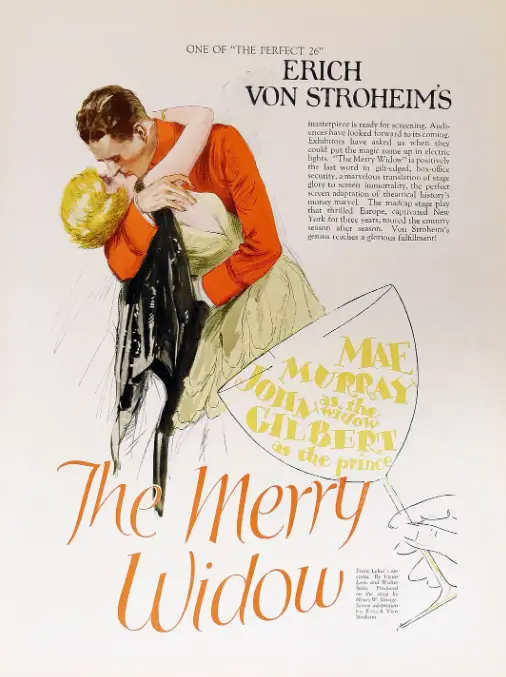
《風流寡婦》是1925年荷里活默片黃金年代最華麗的愛情歌舞電影之一,由以視覺美學與情慾敘事聞名的導演Erich von Stroheim執導。電影改編自同名歌劇,以虛構歐洲王國作背景,把宮廷、愛情、金錢與誘惑融合成一場充滿奢華感的浪漫悲喜劇。雖然屬於默片時代作品,但影片依然散發出強烈情感與戲劇張力,成為1920年代最具代表性的古典娛樂電影之一。
Released during the golden age of silent cinema, The Merry Widow remains one of the most lavish romantic spectacles of the 1920s. Directed by Erich von Stroheim, the film transforms operetta elegance into a visually extravagant cinematic experience filled with passion, satire, royal intrigue, and emotional longing. Even without spoken dialogue, the movie captures complex emotions through expressive performances and elaborate imagery, making it one of the defining romantic dramas of silent Hollywood.
電影內容
《風流寡婦》的故事發生於一個帶有中歐色彩的虛構王國。王國表面繁華,但背後其實隱藏著財政危機與貴族階層的虛偽。片中的女主角是一位擁有巨大財富的年輕寡婦,她因丈夫離世而成為全國最受矚目的女性,不僅因為她的美貌與魅力,更因為她掌握著足以影響國家命運的財產。王室與貴族們擔心她嫁給外國人後會帶走財富,因此設法安排她與本國軍官接近,希望透過婚姻維持國家利益。故事中的男主角是一位風流不羈、遊走於情場與軍隊之間的軍官,他原本對感情抱持輕浮態度,卻在與寡婦接觸後逐漸產生真正情感。電影在浪漫喜劇的框架下,同時描繪權力與慾望的拉扯。片中舞會、宮廷宴席與華麗服裝營造出夢幻世界,但在奢華背後,角色其實都被身份、金錢與社會期待所束縛。導演透過大量細膩鏡頭與龐大場景設計,將默片時代的視覺表現推向高峰。不同於一般單純的愛情故事,《風流寡婦》還帶有濃厚諷刺意味,貴族們看似高雅,實際卻充滿算計與虛榮,而愛情也在利益與政治之間變得模糊。影片中男女主角的情感發展並非單純童話式浪漫,而是一種在誘惑與真心之間反覆搖擺的情緒。女主角一方面享受被追逐的快感,另一方面又害怕再次陷入不可靠的愛情;男主角則在玩世不恭外表下逐漸展露脆弱與真誠。電影氣氛時而幽默,時而憂鬱,在歡樂與孤獨之間形成強烈對比。默片年代特有的表演方式讓角色情緒更加直接而濃烈,誇張卻充滿感染力。作為一部歌舞改編作品,電影雖然沒有真正聲音,但透過節奏感極強的畫面調度與群眾場面,依然讓觀眾感受到舞台劇般的華麗魅力。《風流寡婦》不只是愛情電影,更像是對歐洲貴族文化的一場浪漫幻夢與諷刺凝視,它既迷人又帶有淡淡哀愁,反映出1920年代電影工業對奢華世界的迷戀,也呈現默片藝術最成熟時期的視覺創造力。
English Version
Set within a fictional European kingdom filled with aristocratic glamour and political anxiety, The Merry Widow tells the story of a wealthy young widow whose fortune becomes the center of national concern. After the death of her husband, she suddenly becomes the most desired woman in society, admired not only for her beauty but also for the immense wealth she controls. The kingdom fears that if she marries a foreign nobleman, her fortune will leave the country, threatening an already fragile economy. To prevent this, influential figures attempt to guide her toward a charming military officer known for his reckless romantic lifestyle and carefree attitude toward love. At first, the officer treats relationships as entertainment, moving easily through parties, flirtations, and social games. Yet his encounter with the widow gradually changes him, transforming what begins as manipulation into genuine emotional attachment. Beneath its elegant surface, the film explores the tension between romance and social expectation. Lavish ballroom sequences, luxurious costumes, and grand palace interiors create an atmosphere of fantasy and decadence, but behind the spectacle lies a world driven by status, greed, and emotional loneliness. The widow herself becomes trapped between freedom and obligation. While she enjoys the power that comes with admiration, she also fears emotional vulnerability and the possibility of betrayal. The officer, meanwhile, hides uncertainty beneath his confident persona, revealing a deeper longing for authenticity. Director Erich von Stroheim turns the operetta source material into a visually rich cinematic experience that blends comedy, romance, satire, and emotional drama. The film constantly shifts between playful elegance and quiet melancholy, making the audience aware that beneath the luxurious fantasy lies a sense of emotional emptiness. The aristocrats appear refined, yet many are shallow and opportunistic, using marriage and affection as tools for survival or advantage. This contrast gives the movie a surprisingly modern emotional complexity. Even without spoken dialogue, the performances communicate intense feeling through gesture, facial expression, and carefully staged visual storytelling. The film’s pacing and elaborate crowd scenes create a rhythm similar to musical theater, allowing viewers to feel the energy of dance and celebration despite the silence. More than a romantic comedy, The Merry Widow becomes a reflection on illusion, desire, and the fragile relationship between love and power. It captures both the glamour and emotional uncertainty of the silent era, standing today as one of the great examples of Hollywood’s fascination with aristocratic fantasy and visual excess during the 1920s.
影片簡介(預告片/片段)
華麗宮廷與浪漫誘惑交織的默片經典。
A lavish silent-era romance filled with royal intrigue and emotional seduction.
電影資料
導演:Erich von Stroheim
類型:愛情、歌舞、劇情、默片
製片公司:Metro-Goldwyn-Mayer
上映年份:1925
主要演員
Mae Murray
John Gilbert
Roy D’Arcy
Tully Marshall
總結
《風流寡婦》代表了默片時代對浪漫與奢華的極致追求。它不僅擁有華麗視覺與經典愛情元素,更透過角色之間的情感與權力關係,呈現出人性中的孤獨與虛榮。即使經過百年,電影依然保有濃厚魅力,成為研究1920年代電影文化與默片藝術的重要作品。
The Merry Widow remains a dazzling example of silent-era filmmaking at its most extravagant and emotionally expressive. Beyond its glamorous romance and elaborate visual design, the film offers a subtle exploration of desire, loneliness, and social performance. Nearly a century later, it continues to captivate audiences as both a historical masterpiece and a timeless reflection on love within a world obsessed with wealth and appearances.