
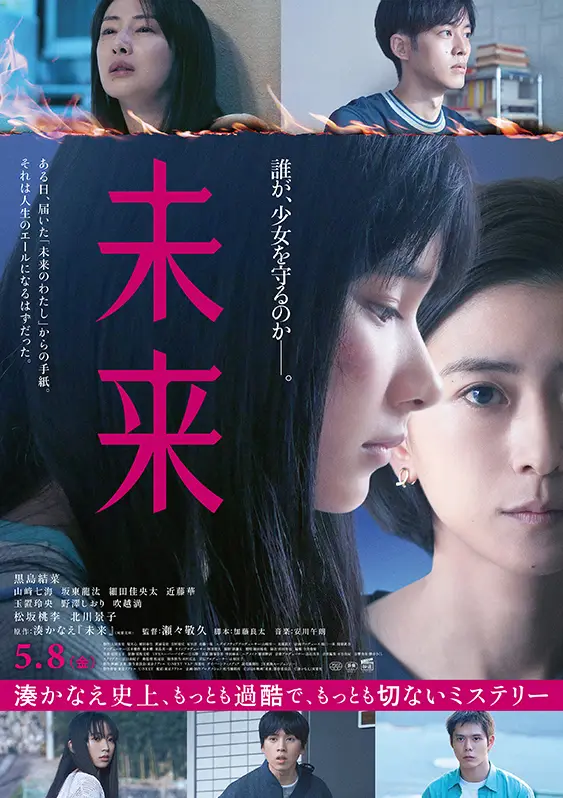
《未来》改編自湊かなえ備受讚譽的同名小說,由擅長描寫社會陰影與人性掙扎的瀬々敬久執導。電影以一封來自「20年後自己」的神秘來信為起點,把家庭暴力、校園霸凌與親子創傷交織成一部沉重卻充滿情感力量的懸疑人性劇。
Future, adapted from Kanae Minato’s acclaimed novel, is a deeply emotional mystery drama directed by Takahisa Zeze, known for portraying social injustice and psychological suffering. Beginning with a mysterious letter from the future, the film explores abuse, loneliness, and survival through an intense story about children struggling against a cruel world.
電影內容
《未来》的故事以一封不可思議的信件展開。年幼少女佐伯章子某天收到一封署名為「20年後的我」的來信,對方知道她的痛苦、恐懼與無法向人訴說的秘密,彷彿真正來自未來。對於生活在絕望中的章子而言,這封信成為她唯一能夠依靠的情感出口。她開始與未來的自己通信,試圖從那些文字之中找到活下去的力量。然而,電影真正令人心碎的地方,在於章子所處的現實世界。父親離世後,她與母親的關係逐漸崩壞,母親陷入自我封閉與情緒失控之中,對女兒既冷漠又疏離。更可怕的是,母親的戀人對章子施加暴力,使她長期活在恐懼與壓抑之下。學校也並非避風港,霸凌與孤立讓她越來越失去對世界的信任。電影細膩描寫兒童在大人世界中的無力感,那些原本應該保護孩子的人,卻往往成為傷害最深的存在。在這種近乎窒息的環境裡,章子與唯一好友亜里沙逐漸萌生「殺死父母」的念頭。這個禁忌計畫不是單純的犯罪衝動,而更像孩子在被逼到絕境後,對痛苦現實發出的絕望反抗。電影並沒有把角色簡單區分成善與惡,而是讓觀眾看見創傷如何一層層延續。另一方面,教師篠宮真唯子成為故事中的重要支點。她自身同樣背負複雜家庭過去,卻努力成為能夠理解孩子痛苦的大人。真唯子相信教育與陪伴能改變命運,因此即使面對體制冷漠與社會現實,她仍試圖拯救章子。黑島結菜把這名教師演得充滿溫柔與疲憊感,彷彿她也在與自己的過去對抗。電影中的「未來來信」帶有懸疑色彩,但真正核心並不在超自然設定,而是探討人在深淵中是否仍能相信未來。湊かなえ擅長描寫人性的黑暗,而《未来》則進一步把焦點放在創傷如何影響下一代,以及「被理解」對孩子而言有多重要。導演瀬々敬久延續《護られなかった者たちへ》中的社會批判視角,把家庭暴力、貧困、心理創傷與教育問題交織成極具現實感的情感壓力。影片整體氣氛沉重壓抑,但同時又保留微弱卻珍貴的希望感。因為電影想傳達的,也許並不是世界會變得美好,而是在最黑暗時刻,仍有人願意伸出手。這份渺小卻真實的善意,成為《未来》最動人的力量。
English Version
Future begins with a mysterious letter received by a young girl named Akiko Saeki. The sender claims to be “Akiko from twenty years in the future,” writing with intimate knowledge of her fears, loneliness, and painful reality. For Akiko, who lives surrounded by emotional isolation and despair, the letter becomes the only source of comfort she can trust. As she begins exchanging responses with her future self, the correspondence slowly transforms into a fragile lifeline that helps her endure the cruelty of everyday life. Beneath the mystery, however, lies an emotionally devastating portrait of childhood trauma and social neglect. After the death of her father, Akiko’s relationship with her mother deteriorates into silence and emotional distance. Her mother, overwhelmed by grief and instability, becomes incapable of protecting her daughter, while her new boyfriend subjects Akiko to violence and fear inside her own home. School offers no safety either. Bullying and alienation gradually convince Akiko that the world is fundamentally hostile and that adults cannot be trusted. The film portrays childhood suffering with painful realism, emphasizing how children are often trapped inside environments they cannot escape. In this suffocating reality, Akiko and her only friend Arisa begin discussing an unimaginable plan — killing their parents. The idea emerges not from evil but from desperation, becoming a horrifying expression of children pushed beyond emotional endurance. One of the film’s greatest strengths is its refusal to present simple morality. Instead, it reveals how pain and trauma pass from one generation to the next, creating cycles of violence and emotional abandonment. Standing at the emotional center of the story is teacher Maiko Shinomiya, a woman carrying deep scars from her own complicated upbringing. Despite her personal struggles, she genuinely wants to protect her students and become the kind of adult she herself once needed. Maiko believes that compassion and understanding can still change lives, even in a society shaped by indifference and institutional failure. Actress Yuina Kuroshima portrays her with remarkable emotional restraint, balancing warmth, exhaustion, and quiet determination. While the concept of letters from the future introduces a layer of mystery, the film’s true focus is not supernatural intrigue but the question of whether hope can survive in a world filled with cruelty. Kanae Minato is famous for exploring the darkness of human nature, and Future expands that exploration into a deeply emotional study of abuse, loneliness, and emotional inheritance. Director Takahisa Zeze continues the socially conscious storytelling style seen in his previous works, weaving together themes of domestic violence, poverty, mental trauma, and educational failure into a realistic and emotionally overwhelming drama. The atmosphere throughout the film remains heavy and oppressive, yet it never completely abandons the possibility of hope. Ultimately, Future suggests that salvation may not come through miracles or dramatic change, but through small acts of empathy — moments when someone chooses to listen, understand, and reach out before it is too late.
影片簡介(預告片/片段)
一封來自未來的信,成為少女在絕望世界中唯一的希望。
A mysterious letter from the future becomes a lonely girl’s final source of hope.
電影資料
導演:瀬々敬久
類型:懸疑、劇情、人性、社會
製片公司:日本電影製作團隊
上映年份:2026
主要演員
黑島結菜
山﨑七海
松坂桃李
北川景子
坂東龍汰
細田佳央太
近藤華
總結
《未来》是一部充滿情感衝擊力的作品,它透過懸疑結構揭開家庭創傷與社會冷漠對孩子造成的傷害。電影雖然沉重,卻始終保留對人性善意的相信,讓人在絕望中仍感受到微弱卻珍貴的光。
Future is a heartbreaking yet compassionate drama that confronts abuse, trauma, and emotional isolation with painful honesty. Through its mystery-driven narrative and deeply human characters, the film ultimately becomes a story about the fragile possibility of hope in the darkest circumstances.