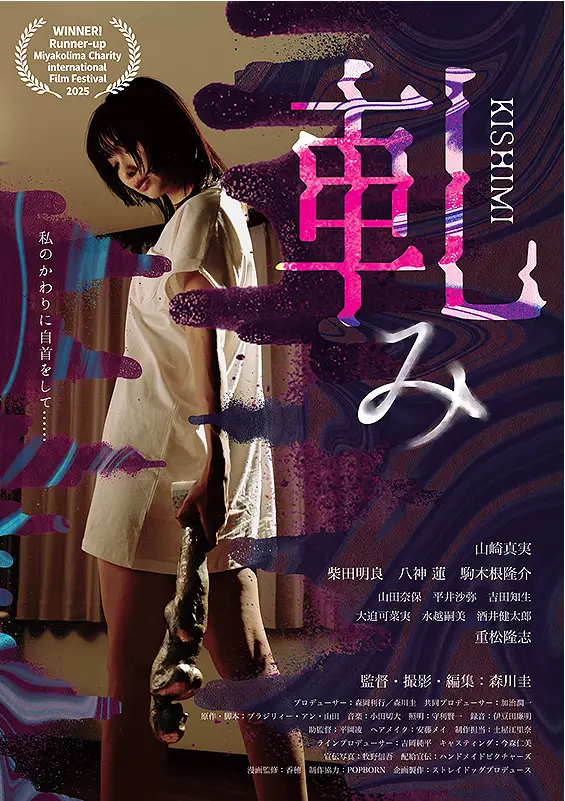
《軋み KISHIMI》以單一公寓空間為舞台,透過一宗突如其來的命案,揭開婚姻、依賴、慾望與自私之間逐漸扭曲的人性關係。電影結合黑色幽默、密室懸疑與群像心理劇,在狹窄空間中不斷堆積壓力與情緒衝突。
KISHIMI is a tense one-location drama that transforms a single apartment room into a battlefield of lies, fear and emotional collapse. Blending dark humor, crime suspense and psychological tension, the film explores how fragile relationships unravel when desperation and hidden truths collide.
電影內容
《軋み KISHIMI》以一間高級公寓作為唯一主要場景,在極度封閉的空間裡描寫人與人之間逐漸崩壞的情感與利益關係。故事圍繞人氣漫畫家由美子與丈夫坂下潤展開。由美子是備受矚目的暢銷漫畫家,擁有名氣與收入,而丈夫潤則長年依賴妻子生活,三年間幾乎沒有工作,始終活在對現實逃避與自我否定之中。這種失衡婚姻表面上維持著平靜,但實際早已充滿壓抑與裂痕。某天,潤回到家中時,赫然發現客廳出現令人窒息的景象——妻子、出版社編輯,以及自己外遇對象ひとみ的屍體同時存在於房間裡。原來,由美子在衝動之下殺死了丈夫的情人,而眼前最迫切的問題,已經不是婚姻破裂,而是如何隱藏這場命案。編輯擔心事件曝光後會摧毀漫畫家的事業與出版社利益,因此試圖控制局勢並掩蓋真相。然而就在眾人慌亂之際,由美子的助手突然到訪,使情況變得更加失控。隨後,一名正在尋找ひとみ的神秘男子也出現在門外,讓原本就充滿不安的空間逐漸陷入近乎崩潰的壓力狀態。電影最大特色在於「ワンシチュエーション」形式,也就是幾乎全程限制在單一場景內進行。導演森川圭利用有限空間不斷增加角色之間的心理壓迫感,使客廳不只是案發現場,更像是一個逐漸封閉的人性牢籠。角色們被迫共同待在同一空間裡,每個人都懷抱不同目的與秘密,導致氣氛愈來愈緊繃。有人想保護名聲,有人只想逃避責任,也有人試圖趁混亂隱藏自身真相。電影透過快速交錯的對話與不斷變化的人際立場,展現人類在極端情況下如何變得自私、脆弱與荒謬。除了犯罪與懸疑元素外,《軋み KISHIMI》其實更像是一部關於失衡關係的黑色人性劇。由美子雖然擁有成功與才能,卻長期壓抑對婚姻的不滿與孤獨;潤則因對自身失敗感到無力,選擇逃進外遇與依賴之中。每個角色都在利用彼此,同時又渴望被理解。電影中的「軋み」不只是物理上的摩擦聲,更象徵人際關係逐漸扭曲時發出的心理裂痕。導演森川圭延續過往擅長的密室群像風格,以舞台劇般的節奏推動劇情,讓角色衝突成為最大看點。原作與劇本由ブラジリィー・アン・山田創作,也使作品帶有濃厚戲劇感與黑色幽默。觀眾在觀看過程中會不斷感受到壓迫與荒謬並存,彷彿所有角色都被困在一場無法停止的情感崩塌之中。
English Version
KISHIMI is a tightly contained psychological crime drama set almost entirely inside a luxury apartment, where a sudden act of violence exposes the fragile and distorted relationships hidden beneath an outwardly successful life. The story centers on Yumiko, a famous manga artist whose talent and popularity financially support her husband Jun Sakashita, a man who has spent the last three years unemployed and emotionally dependent on his wife. Their marriage appears stable on the surface, but underneath lies resentment, emotional exhaustion and quiet alienation. One day, Jun returns home to discover a horrifying scene waiting inside the living room: his wife, her editor and the corpse of Hitomi, the woman with whom he had been having an affair. In a moment of rage and emotional collapse, Yumiko impulsively killed her husband’s lover, instantly transforming their home into a crime scene filled with panic and desperation. Rather than contacting authorities, the editor immediately becomes obsessed with protecting Yumiko’s career and the financial interests tied to her success, pushing everyone into a tense conspiracy to conceal the murder. As the characters struggle to maintain control over the situation, unexpected visitors begin arriving at the apartment one after another. Yumiko’s assistant enters the room completely unaware of the crime, while a mysterious man searching for Hitomi soon appears as well, causing the emotional pressure inside the apartment to intensify. The film’s greatest strength lies in its one-location structure, trapping every character within the same confined environment and forcing their fears, lies and frustrations to collide without escape. Director Kei Morikawa carefully uses the limited space to create increasing psychological suffocation, turning the apartment into more than just a murder scene—it becomes a prison built from human weakness and emotional instability. Every character hides a personal motive. Some want to preserve their reputation, others want to avoid responsibility, and some see the chaos as an opportunity to conceal deeper truths about themselves. Through rapid dialogue exchanges, shifting alliances and escalating paranoia, the film examines how ordinary people begin to unravel under extreme emotional pressure. Beneath its crime and suspense elements, KISHIMI functions as a dark exploration of broken relationships and emotional dependency. Yumiko, despite her success and creativity, has spent years suppressing loneliness and resentment within her marriage. Jun, consumed by insecurity and failure, escapes through infidelity and passive dependence on others. No one inside the apartment is completely innocent, yet every character desperately seeks validation and understanding. The title itself suggests friction, creaking tension and emotional strain, symbolizing the invisible cracks forming between people trapped together. Morikawa, known for his ensemble-style confined-space storytelling, directs the film with a theatrical intensity that constantly shifts between suspense, absurd comedy and emotional collapse. Written by Brazily Anne Yamada, the screenplay combines dark humor with human tragedy, creating a claustrophobic cinematic experience where every conversation threatens to push the characters further toward destruction.
影片簡介(預告片/片段)
一具屍體、一間公寓,多個秘密在密閉空間裡逐漸失控。
A murder inside a confined apartment unleashes secrets, fear and psychological chaos among trapped strangers.
電影資料
導演:森川圭
類型:懸疑、黑色喜劇、人性劇情
製片公司:日本獨立電影製作團隊
上映年份:2026
主要演員
山崎真實
柴田明良
八神蓮
駒木根隆介
重松隆志
總結
《軋み KISHIMI》利用單一場景與群像衝突,成功營造出濃厚壓迫感與黑色幽默。電影不只是密室犯罪故事,更深入描寫婚姻失衡、人性自私與情感依賴所造成的心理裂縫,是一部充滿舞台劇張力的日本獨立人性電影。
Conclusion
KISHIMI transforms a simple one-room premise into an intense psychological ensemble drama filled with tension, dark comedy and emotional collapse. More than a murder mystery, the film becomes a sharp examination of toxic relationships, selfishness and the fragile emotional structures people build around themselves.