
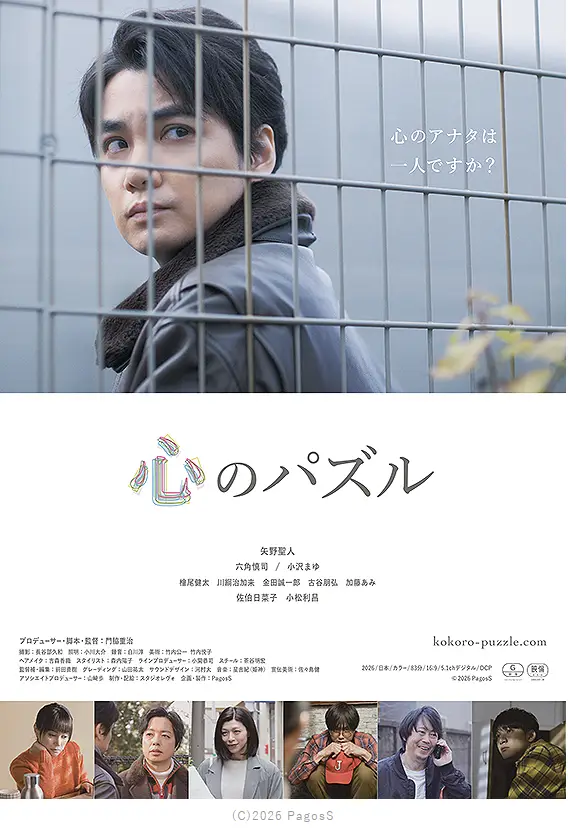
《心のパズル》以解離性同一性障害為核心題材,透過一名前舞台演員的內心掙扎,描寫人類心理深處無法被輕易看見的裂痕與矛盾。電影融合心理懸疑、人物劇與社會壓力元素,在真相與幻覺之間逐步拼湊出關於自我認同的複雜拼圖。
Kokoro no Puzzle is a psychological drama centered around dissociative identity disorder, exploring the hidden contradictions and emotional fractures buried deep within the human mind. Blending mystery, personal trauma and emotional tension, the film slowly unravels a haunting puzzle about identity, violence and the fragile boundaries of the self.
電影內容
《心のパズル》以內心分裂與人格矛盾作為故事核心,描寫一名曾經懷抱舞台夢想的男子,在心理創傷與壓力之中逐漸失去對自身情感的控制。主角湯淺公彥原本是一名舞台演員,對戲劇與表演懷抱強烈熱情,也曾憧憬知名演出家柳本清。然而某次排練期間,他體內那個充滿暴力衝動的「另一個自己」突然失控,導致他當眾揮拳攻擊柳本,徹底毀掉自己的演藝人生。從那之後,湯淺開始被內在的異常人格所困擾,他無法確定哪些情緒屬於自己,也害怕再次失控傷害他人。離開舞台後,他轉而從事偵探工作,在替別人調查秘密的同時,也像是在試圖尋找自己的真相。某天,一名叫高山的男子前來委託。他曾與湯淺一樣遭受柳本的精神壓迫與權力霸凌,因此懷疑柳本其實也是多重人格患者,希望湯淺能找到相關證據。這個看似普通的調查,卻逐漸變成一場深入心理迷宮的危險旅程。當湯淺再次接觸柳本時,他驚訝發現對方與過去判若兩人。曾經冷酷、高壓且令人畏懼的柳本,如今卻顯得溫和而沉靜,甚至散發出一種完全不同的人格氣息。隨著調查深入,電影開始模糊現實與心理層面的界線。觀眾無法確定眼前發生的一切究竟是真相,還是角色精神狀態產生的投射。電影並未將多重人格單純當作驚悚元素,而是藉由不同人格之間的碰撞,探討人類壓抑情緒、自我否定與社會壓力如何逐漸侵蝕心靈。湯淺體內暴力人格的存在,也像是他長期壓抑憤怒與挫敗感後誕生出的另一面自我。柳本則成為一個象徵權力與控制的存在,他究竟是真正的加害者,還是同樣被內心折磨的人,電影始終刻意保持曖昧。導演門脇重治以低調而壓抑的影像風格營造不安感,大量使用沉默、陰暗空間與角色凝視,讓觀眾逐步進入角色破碎的內心世界。由於導演本身並非傳統電影產業出身,而是從飲食產業跨界進入創作,因此作品帶有一種不受既有類型限制的個人風格。他將自己對內心矛盾與情緒壓力的感受投射進電影,使整部作品更接近一種自我剖析式的人性實驗。飾演主角湯淺的矢野聖人則透過壓抑而細膩的演出,呈現角色內心逐漸崩裂的狀態。電影並不急於揭露答案,而是像拼圖般慢慢讓觀眾看見每一塊心理碎片,最終形成一幅關於創傷、自我與黑暗情感的完整圖像。
English Version
Kokoro no Puzzle is a psychological mystery that explores the fragmented nature of identity through the story of a former stage actor haunted by a violent alter ego living inside his mind. The film follows Kimihiko Yuasa, a once passionate performer who dreamed of dedicating his life to theater and deeply admired the famous director Kiyoshi Yanagimoto. During a rehearsal, however, Yuasa suddenly loses control when the aggressive personality hidden within him erupts violently, causing him to physically attack the very man he once respected. The incident destroys his acting career and leaves him emotionally isolated, consumed by fear toward the uncontrollable presence inside himself. Unable to trust his own emotions or memories, Yuasa abandons the stage and begins working as a private detective, investigating the secrets of others while desperately trying to understand his own fractured psyche. One day, a man named Takayama approaches him with a strange request. Having also suffered from Yanagimoto’s psychological abuse and manipulation, Takayama becomes convinced that the director himself may suffer from dissociative identity disorder and asks Yuasa to uncover proof. What initially appears to be a simple investigation gradually transforms into a disturbing journey through unstable memories, emotional trauma and blurred realities. When Yuasa encounters Yanagimoto again after many years, he is shocked to discover a completely different person from the one he remembers. The once intimidating, cold and oppressive director now appears calm, gentle and almost unrecognizable, as though another personality has entirely replaced the man from the past. As the investigation deepens, the film intentionally blurs the line between objective truth and psychological projection. Viewers are constantly left uncertain whether what they are witnessing is real or simply a manifestation of the characters’ fractured mental states. Rather than using dissociative identity disorder merely as a sensational thriller device, the film examines how suppressed anger, fear, shame and social pressure can fracture a person’s sense of self. Yuasa’s violent alter ego becomes symbolic of emotions he spent years repressing, while Yanagimoto represents both authority and psychological domination. The film carefully avoids offering simple answers about who is truly guilty and who is merely another victim trapped inside their own mind. Director Shigeharu Kadowaki creates a tense atmosphere through restrained visual storytelling, relying heavily on silence, shadow-filled interiors and long emotional pauses to immerse audiences in the instability of the characters’ inner worlds. Coming from outside the traditional film industry, Kadowaki brings a highly personal perspective to the project, treating cinema almost as a form of emotional self-examination. His own struggles with contradiction and internal conflict are reflected throughout the narrative, giving the film a raw and intimate quality beneath its psychological mystery structure. Actor Masato Yano delivers a subtle yet emotionally intense performance as Yuasa, portraying the gradual collapse of a man struggling to distinguish his true self from the darkness within him. Like a slowly assembled puzzle, the story reveals fragmented pieces of memory and emotion until a haunting portrait of trauma, identity and hidden violence finally emerges.
影片簡介(預告片/片段)
一場調查,逐漸揭開人格裂縫與壓抑情緒背後的黑暗真相。
A private investigation spirals into a disturbing journey through fractured identities and hidden psychological scars.
電影資料
導演:門脇重治
類型:心理劇情、懸疑、人性
製片公司:日本獨立電影製作團隊
上映年份:2026
主要演員
矢野聖人
總結
《心のパズル》是一部帶有濃厚心理壓迫感的獨立電影,它並不依靠誇張驚悚效果,而是透過角色內心矛盾與人格裂痕,慢慢滲透出不安與悲傷。電影對自我認同與心理創傷的描寫,使它成為一部兼具懸疑氣氛與情感深度的人性作品。
Conclusion
Kokoro no Puzzle is an intimate psychological drama that builds tension not through spectacle but through emotional instability and inner conflict. By exploring fractured identity, trauma and suppressed emotion, the film creates a haunting meditation on the complexity of the human mind and the darkness people struggle to hide within themselves.