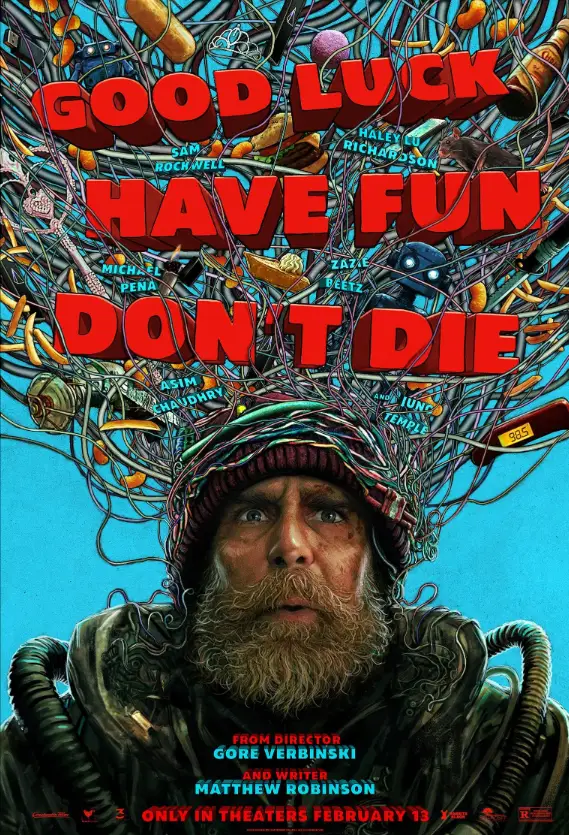
《Good Luck, Have Fun, Don’t Die》是一部融合科幻、黑色幽默與末日冒險元素的未來電影,由曾執導《加勒比海盜》與《A Cure for Wellness》的 Gore Verbinski 執導。電影透過瘋狂而帶有諷刺意味的敘事方式,描繪人工智能快速發展下,人類逐漸失控的未來世界。作品結合公路冒險、時間錯亂與荒誕喜劇氣息,在娛樂性之中帶有對科技文明的深層不安。
Good Luck, Have Fun, Don’t Die is a science-fiction dark comedy adventure directed by Gore Verbinski, known for blending surreal visuals with emotionally strange and chaotic storytelling. Set against a near-future world shaped by accelerating artificial intelligence, the film combines apocalyptic anxiety, absurd humor, and emotional uncertainty into a fast-moving journey through a society on the edge of collapse.
電影內容
《Good Luck, Have Fun, Don’t Die》的故事最初源於編劇 Matthew Robinson 一部名為《Don’t Trust Anyone Under 30》的電視試播劇構想。原本故事圍繞一名文學系學生,以及他試圖透過書籍與其他年輕人建立聯繫的過程,但在後續開發中,創作團隊發現題材不足以支撐長篇劇集,因此逐漸轉型成一部更加龐大且瘋狂的科幻電影。電影最終加入來自未來的人物與大量荒誕片段,把原本偏向青春題材的概念,轉變成一場關於人類未來命運的混亂冒險。故事背景設定於人工智能技術快速失控的時代,人類社會逐漸被無形演算法與高度自動化系統支配。人們雖然仍活在表面正常的世界中,但真正的控制權早已悄悄轉移。電影中的角色被迫在資訊爆炸、科技操控與現實崩壞之間尋找生存方式,而一名來自未來的神秘人物則成為整個故事的關鍵。他似乎知道未來將發生的災難,也試圖阻止某個改變世界的關鍵事件。然而,電影並沒有走向傳統嚴肅科幻路線,而是利用大量黑色幽默與荒誕場景,把人類對科技的焦慮包裝成一場瘋狂旅程。角色們在看似荒謬的情境中不斷做出選擇,而每個決定都可能影響未來世界的存亡。電影風格充滿 Gore Verbinski 一貫的視覺特色,包括扭曲空間感、怪異節奏與帶有夢境感的畫面。整體氛圍同時帶有喜劇與末日壓迫感,讓觀眾在笑聲之中感受到強烈不安。作品也反映當代社會對 AI 發展的焦慮,尤其是當科技開始超越人類控制後,人們究竟還能否保有自由意志。製作團隊曾表示,由於現實世界人工智能發展速度極快,他們擔心如果太晚拍攝,電影的議題可能會失去時代性,因此積極推動項目製作。電影不單是關於科技末日,更是一部探討人類孤獨、資訊依賴與文化崩解的作品。在這個充滿混亂與不確定性的未來裡,人類試圖透過幽默與關係維持最後的情感連結,而「Good Luck, Have Fun, Don’t Die」這句帶有遊戲感的標題,也像是一種對現代文明的諷刺:即使世界正在崩壞,人們依然習慣用娛樂與玩笑來逃避真正的恐懼。電影結合公路冒險、未來科技與黑色喜劇元素,打造出一場既荒誕又帶有情感重量的科幻旅程。
English Version
Good Luck, Have Fun, Don’t Die originated from a television pilot concept written by Matthew Robinson titled Don’t Trust Anyone Under 30. The original idea focused on a literature student struggling to connect with others through books and intellectual culture. However, during development sessions at 3 Arts Entertainment, the project evolved dramatically after the creative team realized the premise lacked enough depth for a long-running television series. Robinson eventually shifted the narrative toward science fiction by introducing a mysterious man from the future and building a world filled with surreal vignettes, existential humor, and technological paranoia. The final result became a feature film centered on a collapsing society overwhelmed by rapidly advancing artificial intelligence. In the world of the film, humanity continues functioning on the surface while invisible systems, algorithms, and automated technologies quietly reshape civilization from behind the scenes. People no longer fully understand the systems controlling their lives, yet they remain emotionally dependent on them. At the center of the story is a strange figure from the future who appears to know that a catastrophic turning point is approaching. His mission may involve stopping a disaster capable of permanently altering humanity’s fate, though the film deliberately keeps many details ambiguous. Rather than approaching its subject with cold seriousness, the movie embraces absurdity, dark humor, and chaotic energy. Characters drift through bizarre situations where comedy and dread constantly overlap, creating a tone that feels both entertaining and emotionally unsettling. Director Gore Verbinski brings his signature visual style to the project, filling the film with distorted environments, dreamlike transitions, and unsettling emotional rhythms. The result feels like a mixture of road-trip adventure, apocalyptic satire, and existential science fiction. Beneath its humor, the film reflects growing cultural anxieties surrounding artificial intelligence and humanity’s increasing dependence on technology. The producers reportedly accelerated development because they feared real-world AI advancements would soon outpace the film’s themes, making the story feel less immediate if delayed too long. That urgency gives the project a strangely contemporary relevance. The film ultimately explores more than just technological collapse; it examines loneliness, emotional detachment, and the way modern society uses entertainment and distraction to cope with fear. Even the title, Good Luck, Have Fun, Don’t Die, resembles the kind of phrase seen in online gaming culture, turning it into a darkly ironic message for an age approaching instability and uncertainty. Featuring a cast that includes Sam Rockwell, Haley Lu Richardson, Michael Peña, Zazie Beetz, and Juno Temple, the film combines emotional vulnerability with surreal sci-fi chaos to create a strange and memorable cinematic experience.
影片簡介(預告片/片段)
當人工智能開始重寫世界,人類只能苦笑著生存下去。
In a future ruled by algorithms, survival becomes humanity’s strangest joke.
電影資料
導演:Gore Verbinski
類型:科幻、黑色喜劇、末日冒險
製片公司:Briarcliff Entertainment、3 Arts Entertainment、Blind Wink Productions、Constantin Film
上映年份:2026
主要演員
Sam Rockwell
Haley Lu Richardson
Michael Peña
Zazie Beetz
Juno Temple
總結
《Good Luck, Have Fun, Don’t Die》是一部以幽默包裝科技恐懼的科幻作品,它利用荒誕與混亂描繪人工智能時代的人類焦慮。在充滿娛樂感的外表下,電影實際上探討了文明崩解、自由意志與科技依賴等深層議題。對喜歡黑色幽默、未來科幻與風格化導演作品的觀眾而言,這部電影具有相當獨特的吸引力。
Good Luck, Have Fun, Don’t Die turns modern technological anxiety into a surreal cinematic adventure filled with humor, chaos, and existential unease. Beneath its energetic and absurd exterior lies a thoughtful exploration of humanity’s fragile relationship with artificial intelligence and digital culture. For audiences drawn to unconventional science fiction and emotionally strange storytelling, the film promises a uniquely memorable experience.