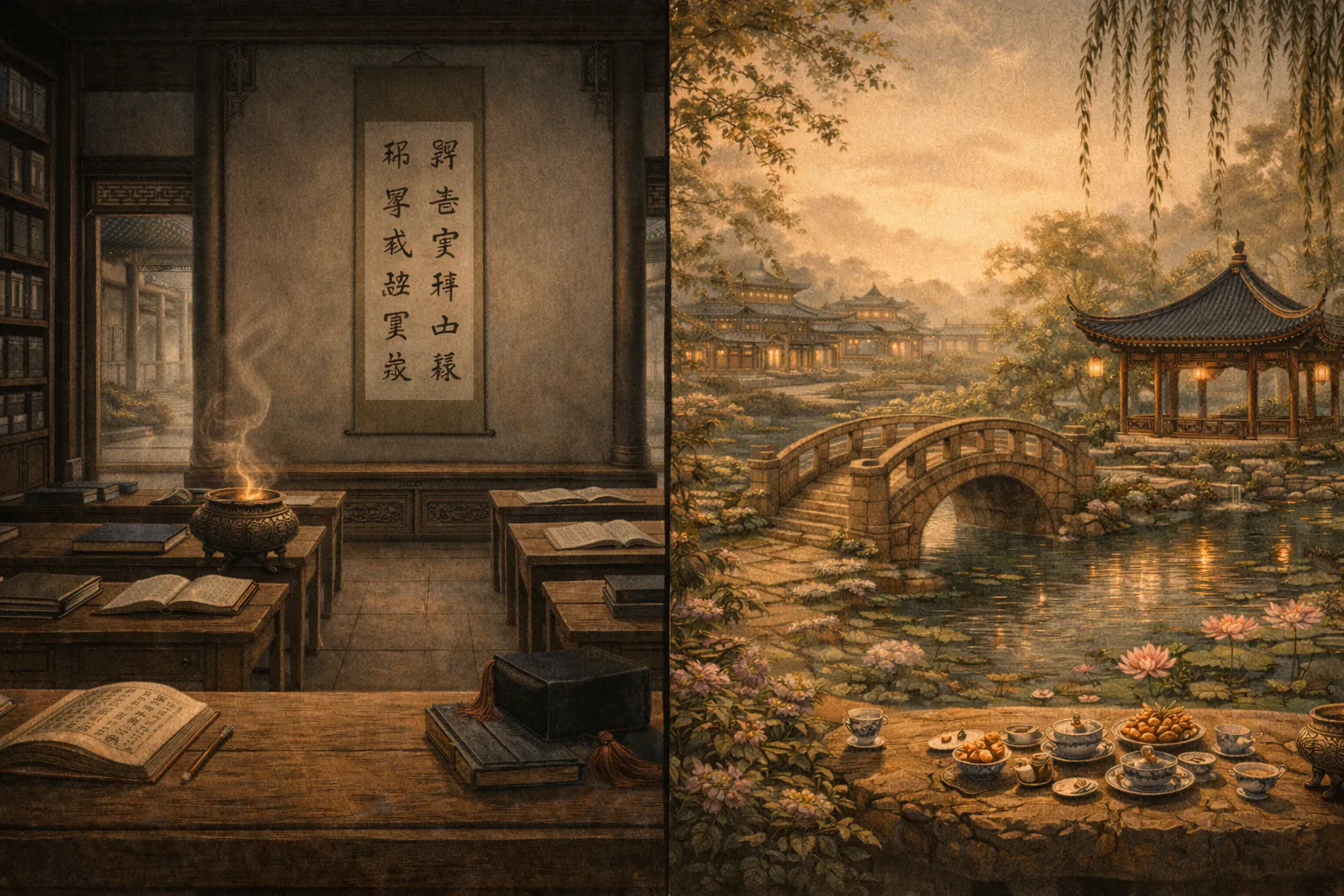
沉默,有時並非無話可說,而是被視為一種回應。《紅樓夢》第八章延續前章的失衡狀態,進一步揭示人際關係中未被說出口的意義如何被他人解讀與定義。當沉默開始被當成答案,誤解與距離也隨之形成,而一切仍在表面的平靜之中持續運行。
Silence is not always the absence of words—it is often interpreted as a response. In Chapter 8 of Dream of the Red Chamber, the imbalance established earlier deepens as unspoken emotions begin to take on meaning in the eyes of others. When silence is treated as an answer, misunderstanding quietly grows, reshaping relationships without confrontation. Beneath the surface calm, distance forms—not through what is said, but through what remains unspoken.
一日清晨,寶玉起身梳洗,丫鬟替他整理衣裳時,忽然將那寶玉取下擦拭。寶玉接過寶玉,細細觀看,只見玉面上隱隱刻著幾個古字,光澤柔和。
他看了片刻,忽然皺眉說:「這玉日日佩在身上,卻不知究竟從何而來。」
旁邊的丫鬟笑道:「二爺出生時便含在口中,這是天生的寶物,哪裡還有什麼來歷?」
寶玉聽了,卻仍覺疑惑。他常聽長輩說這玉來歷不凡,卻從未有人說得清楚。
不久,他便帶著寶玉到園中散步。春日陽光明媚,花木繁盛。林黛玉正坐在亭中讀書。
寶玉走近說道:「妹妹可曾細看過我這寶玉?」
黛玉抬頭看了一眼,淡淡說道:「不過一塊玉罷了,有什麼稀奇?」
寶玉笑道:「旁人都說此玉靈異,我卻覺得與尋常玉石也差不多。」
黛玉輕聲說:「世人總喜歡把事情說得神奇,未必都是真的。」
寶玉聽了,不禁笑了起來。他覺得黛玉說話總帶著幾分清醒,與府中其他人不同。
兩人坐在亭中談了一會兒。寶玉忽然將寶玉遞給黛玉說:「妹妹替我看看,上面刻的是什麼字。」
黛玉接過玉石,仔細端詳。只見玉面上隱約刻著幾行細字,似乎是古老的字體。她雖識得一些,卻並不完全明白其中含義。
她把玉還給寶玉說:「字倒像是舊時文字,只是含義難解。」
寶玉聽了,更覺得奇妙。他將寶玉重新掛回胸前,說道:「也許真如長輩所說,此玉自有來歷。」
正說話間,園中幾位姑娘也走了過來。大家見寶玉與黛玉坐在亭中談笑,便一同加入。
有人說起近日府中準備舉辦宴會,又有人談起新來的戲班。園中頓時熱鬧起來。
寶玉雖然與眾人說笑,心中卻仍在想著那塊寶玉。他隱隱覺得,這玉似乎與自己的命運有著某種聯繫。
夕陽西下時,眾人各自散去。寶玉獨自走在園中小徑上,手中輕輕握著那塊通靈寶玉。玉石在晚霞中微微發亮,仿佛在默默訴說著一段尚未展開的故事。
而這塊神秘的寶玉,也正牽引著榮國府眾人的命運,慢慢走向一段繁華與悲歡交織的人生。
English Version
Silence does not remain neutral for long.
In the Jia household, what is left unsaid rarely stays without meaning. It is noticed, interpreted, and quietly assigned a place within the structure of relationships.
Chapter 8 explores what happens when silence begins to speak—not through intention, but through perception.
A pause becomes hesitation.
Hesitation becomes distance.
Distance becomes something harder to undo.
No one declares these changes.
They unfold in the space between words.
Once silence is taken as an answer, it no longer belongs to the one who remains quiet. It becomes something shaped by others—by their expectations, their assumptions, and their need to understand what was never clearly expressed.
Baoyu feels the tension but struggles to define it. His instinct resists the idea that silence should carry such weight, yet he cannot escape how others respond to it.
Daiyu understands more than she reveals.
She knows that silence can protect—but it can also mislead.
And once it is misunderstood,
it begins to reshape everything around it.
No argument is needed.
No voice is raised.
Because the answer has already been assumed.