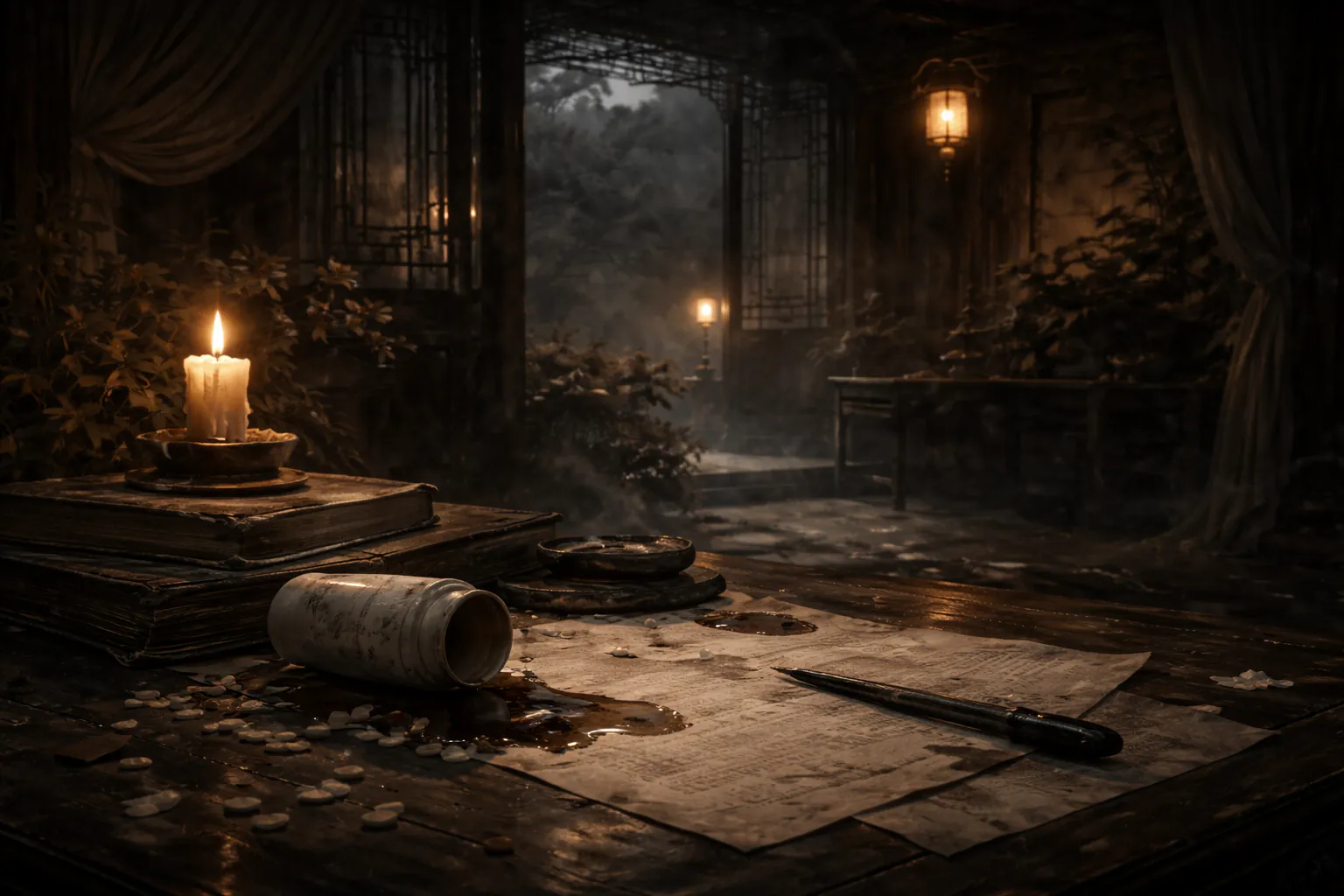
在靜謐的月夜之中,對話不再只是當下,而開始觸及未來。《紅樓夢》第二十章以園中夜談為背景,人物在柔和的氛圍中交流,看似隨意,卻隱含對未來的想像與不確定。那些未被說明的方向,往往已在言語之外悄然形成。
In the quiet of a moonlit night, conversation begins to reach beyond the present. In Chapter 20 of Dream of the Red Chamber, gentle exchanges in the garden subtly turn toward thoughts of the future. What seems casual carries deeper uncertainty, as possibilities begin to form not through direct statements, but through implication and tone.
中文
卻說榮國府新園修成之後,眾人常在園中遊賞。白日裡或吟詩作對,或賞花飲茶,日子過得十分悠閒。
這日夜裡,天氣格外清朗。月色如水,照在園中亭台與湖面上,景致顯得格外幽靜。
賈寶玉晚間閒來無事,便獨自走入園中。月光下的小徑安靜無聲,池水映著月影,微風拂過柳枝,帶來淡淡清香。
寶玉沿著湖邊慢慢行走,心中忽然生出幾分寧靜。他望著水中月影,輕聲說道:「若能長久如此,也算人生樂事。」
正說話間,他聽見身後有人輕輕走來。回頭一看,原來是林黛玉。
黛玉披著薄披風,在月光下顯得格外清秀。她見寶玉站在湖邊,便問:「怎麼一個人在這裡?」
寶玉笑道:「夜色如此好,不出來走走倒可惜。」
黛玉走到湖邊,望著水面月影,輕聲說:「月色雖美,也只是一夜。」
寶玉說:「妹妹總喜歡說些令人傷感的話。」
黛玉淡淡一笑:「我不過說實話罷了。」
兩人並肩站在湖邊。遠處府中燈火仍亮,卻顯得十分遙遠。
寶玉忽然說:「你說將來我們會變成什麼樣?」
黛玉微微一怔,似乎沒有想到他會問這個問題。
她沉思片刻,說道:「人長大之後,自然各有去處。」
寶玉說:「若能一直在這園中相聚,倒也不錯。」
黛玉沒有回答,只望著湖面。水中的月影微微晃動,像是隨風漂移。
過了一會兒,她輕聲說:「世間事,往往不能如人所願。」
寶玉聽了,心中忽然有些不安。他說:「我倒不信一定如此。」
黛玉看著他,微微一笑:「等到將來,也許就知道了。」
夜風輕輕吹過,湖面泛起細細波紋。月光在水中碎成無數光點。
兩人又在湖邊走了一會兒,談起詩句與園中景色。語氣雖然輕鬆,卻隱約帶著一絲對未來的疑問。
不久,府中丫鬟前來尋人,說夜深應當回房歇息。兩人這才慢慢離開花園。
月光仍然照在榮國府的亭台樓閣上,一切看似安穩而寧靜。
然而在這樣的月夜之中,關於未來的問題已經悄然出現。那些還未發生的故事,也正像湖面月影一般,在命運的水波之中慢慢浮現。
English Version
Under the moonlight, time feels different.
The present loosens its hold, and thought begins to move forward—quietly, cautiously, without certainty.
Chapter 20 unfolds in this delicate space, where conversation drifts toward what has not yet happened.
Nothing is declared.
No plans are firmly made.
And yet, the future begins to take shape.
Not in clear outlines,
but in suggestion.
A possibility mentioned lightly.
A direction implied rather than chosen.
A feeling that something is approaching, even if no one can name it.
Baoyu listens, drawn to the softness of the moment, where everything still feels open.
Daiyu senses something more fragile.
She understands that the future is not something that arrives suddenly.
It forms gradually—
in thoughts,
in words,
in the spaces between them.
And once it begins to form,
it quietly influences the present.
Because even before it happens,
the future is already there.