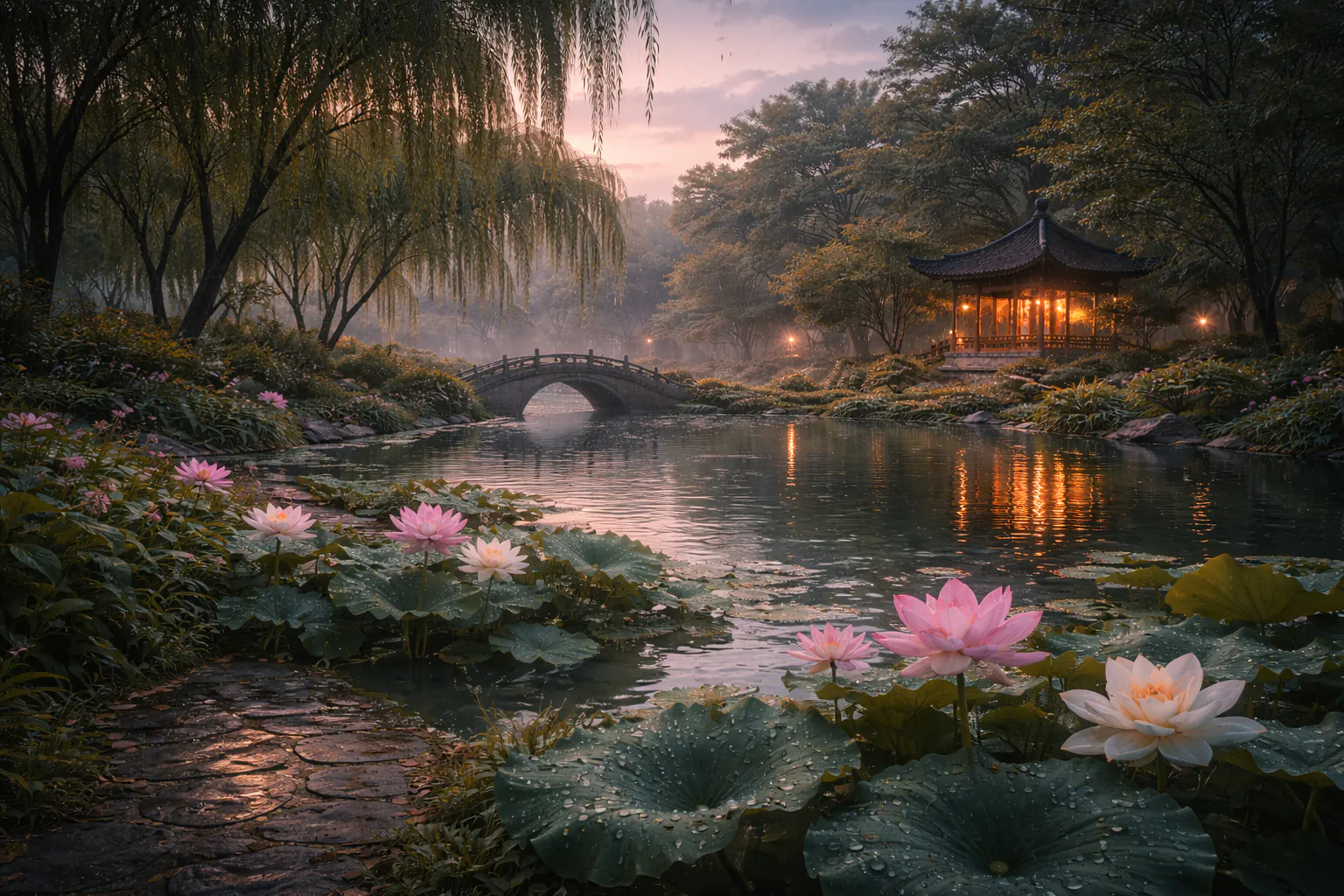
當內心逐漸沉靜,外在的氣息卻再次喚起情感。《紅樓夢》第二十四章以雨後荷香為背景,描繪自然之美如何重新觸動人物的內心。情緒不再只是靜止,而是在感受與記憶之間流動,使人重新面對那些尚未消散的感覺。
Just as the mind settles, the world reawakens it. In Chapter 24 of Dream of the Red Chamber, the fragrance of lotus after rain stirs emotions once more. Nature becomes a quiet catalyst, drawing out feelings that had only begun to rest. What seemed calm is set in motion again, revealing how deeply environment and memory are intertwined.
卻說夏日天氣多變,這一日午後忽然下起一陣細雨。雨聲落在榮國府園中的荷葉與石徑上,聲音清脆,整座花園彷彿被洗得更加清新。
雨過之後,雲氣漸散,空氣中帶著濕潤的泥土氣息。湖中的荷花經過雨水滋潤,顏色更加鮮豔。粉白花瓣映著翠綠荷葉,景色十分動人。
傍晚時分,賈寶玉從房中走出。雨後天氣涼爽,他便信步走入園中。
沿著湖邊石徑行走,只見水面上荷葉微動,幾朵荷花正盛開。微風吹來,帶著淡淡荷香。
寶玉停在湖邊,望著水中花影,不禁說道:「雨後荷花,倒比平日更美。」
正在此時,身後傳來輕輕腳步聲。
寶玉回頭一看,原來是林黛玉。
黛玉手中拿著一把小扇,似乎也是來園中散步。她看見湖中荷花,輕聲說道:「雨後花香最濃。」
寶玉點頭說:「若在此處作詩,倒是好題目。」
黛玉微微一笑:「你又想到詩了。」
寶玉笑道:「如此景色,不寫詩可惜。」
兩人沿著湖邊慢慢走著。雨水尚未完全乾透,石徑上還留著點點水痕。湖面偶有水鳥掠過,蕩起細小波紋。
寶玉忽然說:「我總覺得園中景色日日不同。」
黛玉說:「四時變化,本就如此。」
寶玉說:「只是有些景色,看過之後便難忘。」
黛玉看著湖中荷花,輕聲道:「美景往往最短。」
寶玉聽了,心中微微一動。
此時夕陽從雲間透出光線,照在湖面上。荷花與水影交錯,顯得格外柔和。
遠處幾位姑娘也走入園中,說是來看雨後荷花。丫鬟們提著燈籠,園中漸漸熱鬧起來。
眾人在湖邊小亭坐下,談論花景。有人說荷花最為清雅,有人說雨後景色最動人。
寶玉忽然提議:「不如以『雨後荷花』為題,各寫幾句詩。」
眾人聽了都覺得有趣,便紛紛拿出紙筆。
林黛玉稍作沉思,便寫下幾句詩。她的詩句既寫荷花清香,也帶著淡淡情思。
眾人看過之後,都稱讚不已。
寶玉笑著說:「妹妹的詩總像這湖中荷花一般。」
黛玉輕輕一笑,沒有多說。
天色漸暗,湖面映著微弱燈光。荷香隨著夜風慢慢飄散。
眾人散去之後,寶玉回頭望了一眼湖中荷花。那幾朵花在夜色中靜靜盛開,彷彿不受世事影響。
然而他心中卻隱約感覺到,這樣的平靜日子也許並不會永遠持續。
榮國府依舊燈火輝煌,園中花木依然繁盛。只是在人心深處,一些關於時光與命運的思索,已經悄悄出現。
English Version
Stillness does not last.
Even when the mind begins to settle, the world finds ways to reach in again.
In Chapter 24, it is not conversation or action that stirs emotion—but scent.
The fragrance of lotus, carried through the air after rain, moves quietly, almost imperceptibly.
And yet, it changes everything.
Because scent does not ask for attention.
It arrives directly, bypassing thought, touching memory before it can be understood.
What was calm begins to shift again.
Not dramatically,
but unmistakably.
Baoyu feels the change as a soft return of feeling—something familiar, something he cannot fully name.
Daiyu understands it more deeply.
She knows that the mind does not control emotion as much as it believes.
That the world outside continues to shape what is felt within.
And that even when one thinks something has passed,
it can return—
in a moment,
in a scent,
in something as simple as the air after rain.