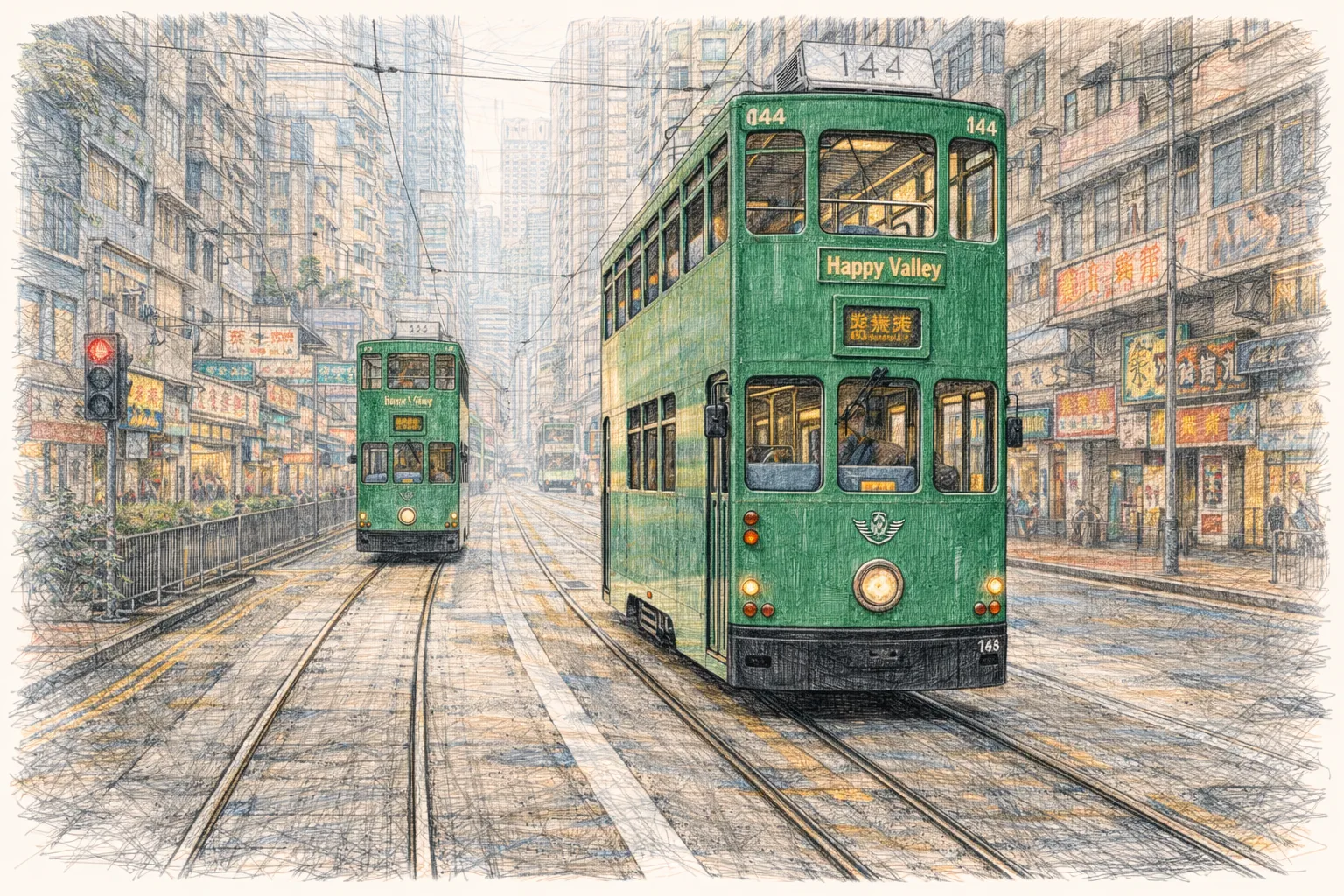
電車作為一種傳統的公共交通工具,即使在現代化的都市中,也依然具有重要的地位。它不僅是城市交通系統的一部分,更是歷史與文化的象徵。與其他交通工具相比,電車的獨特性在於其固定的軌道與穩定的運行方式,展現出對城市結構與節奏的尊重。這種穩定性雖然無法提供快速移動的效率,但卻能讓乘客在旅途中有更多時間去觀察周遭環境,感受城市的細微變化。
搭乘電車是一種對「慢」的接受,這並非懈怠,而是對時間的一種重新分配。透過電車敞開的車窗,乘客能夠感受到城市的脈動,無論是街道兩旁的商店、建築,還是日常生活的細節,都能在這緩慢的行進中被捕捉。這種經驗使得人與城市之間的連結更加緊密,也讓人重新審視快節奏生活中容易被忽略的美好。
此外,電車的低碳排放特性使其成為現代都市中環保的重要選擇。在全球氣候變遷議題日益受到關注的背景下,電車提供了一種更可持續發展的交通解決方案。相比於私家車,其不僅能有效減少碳排放,還能緩解交通擁堵問題。同時,清晰明瞭的路線設計也為旅客提供了探索城市的新方式。
然而,隨著科技進步與都市化加速發展,傳統交通工具如電車面臨著挑戰。如何在現代化需求與文化保留之間取得平衡,是每個城市需要思考的重要課題。一方面,我們應接受技術進步帶來的便利;另一方面,也需珍視那些能夠喚起歸屬感與歷史記憶的元素。電車正是這樣一種象徵,它提醒我們,城市不僅僅是功能性的空間,更是文化與情感交織而成的生命體。
因此,電車不僅是一種交通工具,更是一種生活態度的體現。它讓我們在繁忙中找到一絲從容,在快速變遷中感受恆久之美。保留電車,意味著保留了城市的一部分靈魂,也為未來留下了一份珍貴的文化遺產。在每一次緩慢前行中,我們得以重新找回內心深處對生活本質的思考與熱愛。
English Version
In a city widely recognized for its speed, efficiency, and constant motion, the presence of the Hong Kong tramways introduces a different rhythm that runs quietly alongside the dominant pace, offering an alternative way of moving through urban space where time unfolds more gradually and observation becomes part of the journey. Operating along the northern corridor of Hong Kong Island, the tram system follows a linear path that connects districts while maintaining a consistent, unhurried tempo, creating a mode of transport that is less about rapid arrival and more about continuous passage. Unlike underground systems that prioritize efficiency and separation from the surface, trams remain embedded within the visible city, moving through streets where everyday life unfolds in real time, allowing passengers to witness layers of urban activity as they travel. This surface-level movement creates a sense of proximity and awareness, where the boundaries between passenger and environment are less defined, and where the journey becomes an experience of the city itself rather than a transition between points. The design of the tram, with its narrow structure and upper deck, further shapes this experience, encouraging a perspective that is both elevated and intimate, offering views that shift gradually as the vehicle progresses through different neighborhoods. The sound of the tracks, the gentle sway of motion, and the predictable pace all contribute to a sensory environment that contrasts with faster modes of transport, reinforcing a feeling of continuity rather than urgency. Historically, the tram system represents one of the earliest forms of public transportation in Hong Kong, and its persistence within a rapidly modernizing city reflects an ability to adapt without losing its essential character, maintaining relevance through integration rather than replacement. As new transportation systems were introduced, the tram did not disappear; instead, it found its place within a broader network, serving both practical and cultural functions that extend beyond efficiency alone. This coexistence of different speeds within the same city highlights a layered approach to urban mobility, where multiple temporal experiences are available simultaneously, allowing individuals to choose how they engage with movement and time. The tram also plays a role in shaping urban memory, as its routes and presence become familiar elements within the daily lives of residents, embedding itself into routines, visual landscapes, and personal experiences that accumulate over time. Its continued operation provides a sense of continuity, linking past and present through a system that has remained visible and accessible across generations. In contemporary contexts, the tram is often appreciated not only as transportation but as a cultural symbol, representing a slower, more reflective mode of engagement with the city that stands in contrast to the acceleration of modern life. Tourists and locals alike may choose the tram not for its speed but for the experience it offers, where the act of moving becomes an opportunity to observe, reflect, and connect with the surrounding environment. The relationship between speed and perception becomes particularly evident here, as slower movement allows details to emerge that might otherwise be overlooked, transforming the city into a sequence of moments rather than a blur of transitions. This quality gives the tram a unique position within the urban landscape, functioning as both infrastructure and experience, where utility and meaning intersect. In a broader sense, the Hong Kong tramways illustrate how a city can accommodate different temporalities within the same space, balancing the demands of efficiency with the value of continuity and presence. The persistence of this slower system suggests that progress does not necessarily require the elimination of what came before, but can instead involve the integration of past and present into a more complex and layered urban experience. Ultimately, the tram is not only a means of transportation, but a moving reminder that even in a city defined by speed, there remains space for slower rhythms, where time is not compressed but allowed to unfold, and where the journey itself becomes an essential part of understanding the city.