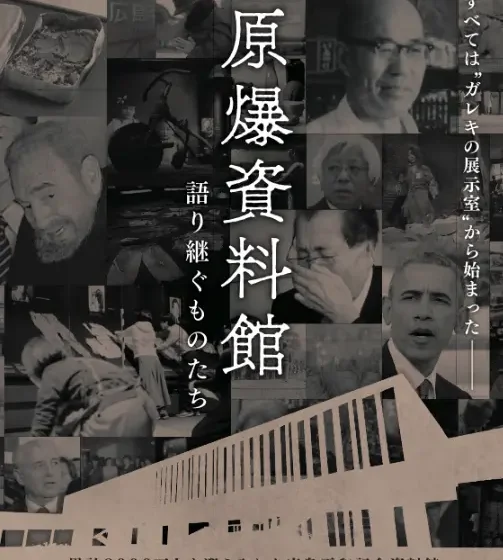
《原爆資料館 語り継ぐものたち》是一部以廣島和平紀念資料館為主題的紀錄片,回顧這座世界知名和平博物館70多年來的歷史,以及館內一代代保存並傳承的和平訊息。
Hiroshima Peace Memorial Museum: Stories to Pass On is a documentary about the Hiroshima Peace Memorial Museum, tracing more than 70 years of its history and the message of peace preserved and passed down through generations.
中文簡介
廣島和平紀念資料館於1955年開館,是世界知名的和平博物館。
資料館的起源,來自地質學家長岡省吾。為了讓世人記住原子彈爆炸造成的慘劇,他收集被原爆熔化的瓦片、石頭等遺物,並在市內公民館設立「原爆參考資料陳列室」。
70多年來,歷代館長與相關人士持續守護這些珍貴資料。
館內目前收藏超過2萬2000件遺品及相關資料,丹下健三設計的本館建築亦於2006年被指定為日本重要文化財。
本片透過珍貴的歷史影像、新的證言,以及超過100小時的素材,回顧原爆資料館的歷史,並傳達對核武器恐怖與和平的思考。
English
The Hiroshima Peace Memorial Museum opened in 1955 and has become one of the world’s best-known peace museums.
Its origins can be traced to geologist Shogo Nagaoka, who collected melted roof tiles, stones and other remains of the atomic bombing in an effort to preserve the memory of the tragedy.
For more than 70 years, successive museum directors and staff have continued to protect and preserve these important materials.
The museum now houses more than 22,000 artifacts and historical materials. Its main building, designed by architect Kenzo Tange, was designated an Important Cultural Property of Japan in 2006.
Drawing on rare archival footage, new testimonies and more than 100 hours of material, the documentary explores the museum’s history and quietly conveys its message about the horror of nuclear weapons and the importance of peace.
電影資料|Film Information
- 類型|Genre: 紀錄片|Documentary
- 導演|Directors: 斉藤俊幸、立川直樹
- 主題|Subject: 廣島和平紀念資料館
- 開館|Museum Opened: 1955年
- 收藏|Collection: 超過22,000件遺品及資料
- 建築設計|Building Architect: 丹下健三|Kenzo Tange
- 音樂|Music: 石橋英子|Eiko Ishibashi
作品特色|Highlights
本作的核心,是**「記憶如何被保存,又如何被傳承」**。透過原爆資料館的歷史、館藏與親歷者證言,將一段歷史記憶延續到今天。
The central theme of the film is how memory is preserved and passed on. Through the museum’s history, its collection and personal testimonies, the documentary carries the memory of Hiroshima into the present.
影片亦特別重視資料館本身的歷史,從長岡省吾最初保存原爆遺物,到後來數十年來持續守護與展示這些資料的人們,呈現和平訊息如何一代代傳下去。
The documentary also focuses on the history of the museum itself, from Shogo Nagaoka’s early efforts to preserve atomic-bomb remains to the generations who continued to protect and display them.