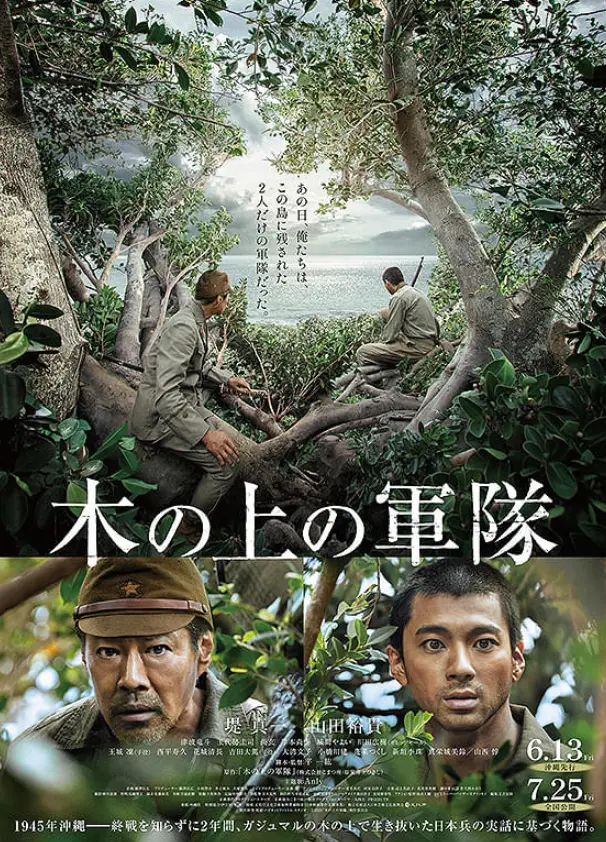
1945年沖繩伊江島戰火最激烈之際,兩名日本軍人逃進森林並躲上巨大榕樹。戰爭早已結束,他們卻因與外界失去聯絡,在樹上持續了兩年的孤獨戰爭。
In 1945, as fierce fighting devastated Ie Island in Okinawa, two Japanese soldiers escaped into the forest and hid high inside a giant banyan tree. Cut off from the outside world, they continued their lonely war for two years without knowing that the conflict had already ended.
電影內容|中文版本
《樹上的軍隊》由平一紘執導,故事以1945年太平洋戰爭末期的沖繩伊江島為背景,描寫戰場崩潰之後,兩名日本軍人在巨大榕樹上長期藏匿的特殊經歷。戰爭進入最後階段,日本軍隊在與美軍的激烈交戰中受到毀滅性打擊,原本的戰線逐漸崩潰,島嶼亦陷入極度混亂與危險之中。來自宮崎、擔任上官的山下一雄,在戰場上帶領部隊作戰;與他同行的是出身沖繩、剛剛加入軍隊的新兵安慶名Seijun。當美軍猛烈的槍火逼近,兩人被迫逃離原本的位置,為了生存而躲進森林深處。在逃亡過程中,他們發現一棵巨大的榕樹,粗壯的樹枝向四周伸展,茂密的葉片形成天然遮蔽,讓這棵樹成為理想的藏身之處。兩人於是爬上樹,在枝葉之間隱藏自己的身影,希望能夠避開敵人的搜索,等待戰況改變或援軍到來。可是,他們所想像的短暫躲藏,很快變成一段漫長而難以想像的生存日子。榕樹下的戰場並沒有停止,反而不斷留下新的死亡痕跡。兩人眼睜睜看著同伴的屍體越來越多,而敵軍陣地亦一天比一天擴大,並逐漸向他們所在的位置逼近。原本提供安全感的榕樹,慢慢成為一座與外界隔絕的牢籠。他們沒有可靠的聯絡方式,也無法確認戰場究竟發生了什麼,更不知道自己應該等待多久。對兩名士兵而言,唯一能夠相信的事情,就是戰爭仍然沒有結束,以及援軍終有一天可能出現。於是,他們選擇繼續等待,在樹上盡力維持生存。日子一天一天過去,等待卻沒有盡頭。最令人震撼的是,這段藏匿並非只有幾天或幾個月,而是足足延續了兩年。在完全不知道戰爭已經結束的情況下,兩名士兵仍然以戰時思維生活,把自己困在一場早已不再存在於外界的戰爭裡。他們在樹上進行的並非一般意義上的軍事行動,而是一場與孤獨、恐懼、飢餓、時間以及未知未來對抗的「孤獨戰爭」。樹上的狹小空間成為整部作品最重要的舞台,兩個性格與背景不同的人被迫長時間共處,在沒有外援、沒有消息、沒有明確出口的環境下,彼此之間的關係亦將面對前所未有的考驗。山下一雄是從宮崎派遣而來的上官,而安慶名Seijun則是土生土長的沖繩新兵。兩人對戰爭的理解、身份與經歷並不完全相同,但在榕樹上,他們失去了原本熟悉的軍隊秩序,只能依靠彼此共同面對漫長歲月。電影因此不只是描述兩名士兵如何躲避敵人,也把焦點放在「當一個人不知道戰爭已經結束時,他究竟還能堅持多久」這個問題上。隨著時間拉長,戰爭逐漸從外部的槍火轉變成兩人內心的壓力。樹下的敵軍、逐漸增加的屍體以及越來越接近的陣地,構成持續存在的恐懼;而與外界完全失去聯絡,則讓他們無法判斷自己究竟身處什麼時代。這種與世隔絕的狀態,令「等待」本身成為一種折磨。故事最後逐步將兩人推向極限狀態,而當肉體與精神都接近極限時,他們之間的關係以及一直支撐著他們活下去的信念,也將受到最嚴峻的挑戰。《樹上的軍隊》以一棵榕樹作為特殊舞台,將宏大的戰爭縮小到兩個人的生存困境,透過封閉空間呈現戰爭對人的長期影響。作品亦讓觀眾從另一個角度思考戰爭與「結束」的意義:對世界而言,戰爭可能已經停止,但對被困在孤立環境中的人來說,如果沒有任何消息,他們又如何知道和平真的已經到來?兩人在樹上的兩年,正是這種錯位最直接的呈現。故事以極端而特殊的生存經歷,描寫戰爭結束後仍被困在戰爭之中的人,以及人在孤獨與未知面前所能承受的極限。
English Version
The Soldiers on the Tree is directed by Kazuhiro Taira and takes place on Ie Island in Okinawa during the final stage of the Pacific War in 1945. Against the background of devastating fighting between Japanese and American forces, the film focuses on two Japanese soldiers who escape into a forest and hide in the branches of a huge banyan tree. Rather than following a conventional battlefield narrative, the story narrows the enormous scale of war down to two men trapped in an isolated position, where survival itself becomes their only objective. The Japanese forces on Ie Island have suffered catastrophic losses after intense fighting with the American military. As the battlefield collapses around them, Yamashita Kazuo, an officer dispatched from Miyazaki, and Ankena Seijun, a young soldier from Okinawa, are driven into the forest by heavy enemy gunfire. With the fighting becoming increasingly dangerous, they search for somewhere they can disappear from sight. They eventually discover a large banyan tree with thick branches and dense leaves. Its natural structure provides an effective hiding place, allowing the two men to climb above the ground and conceal themselves among the foliage. At first, the tree seems to offer a temporary refuge. The soldiers believe that if they remain hidden long enough, the fighting may pass and reinforcements may eventually arrive. But the world beneath them tells a very different story. The bodies of their fellow soldiers continue to accumulate below the tree, while the enemy positions expand and gradually move closer. What was supposed to be a place of safety becomes an isolated world from which there is no easy escape. The two men have no reliable means of communication and no way to confirm what is happening beyond the forest. They cannot know whether the battle is moving toward them or away from them, nor can they determine how long they will have to remain hidden. Their only certainty is the belief that the war is still continuing and that they must survive until help arrives. Days become weeks, and weeks become months. The waiting stretches far beyond anything they could have imagined. Most remarkably, the two soldiers remain on the tree for two years without learning that the war has already ended. The outside world has moved into a different era, but the two men remain psychologically trapped inside the conflict they believe is still taking place. Their struggle therefore becomes a different kind of war—a lonely war against isolation, fear, uncertainty, time and the basic limits of human endurance. The banyan tree becomes the film’s central stage, creating a confined environment in which two men from different backgrounds are forced to depend on each other for an extraordinary length of time. Yamashita is an officer from Miyazaki, while Seijun is a young recruit who was born and raised in Okinawa. Their military positions and personal experiences are different, and their understanding of the conflict may not always be identical. Yet once they are isolated in the tree, the normal structures of military life become increasingly distant. They have no larger unit around them, no dependable chain of communication and no immediate support. Their survival depends largely on what they can do together. The film uses this situation to explore what happens when a person has no way of knowing whether the world has changed. A war can officially end, but information about that ending means little to people who have been completely cut off from society. For Yamashita and Seijun, the conflict continues because they have no evidence that it is over. Their isolation therefore transforms time itself into a source of pressure. The enemy positions below them, the growing number of dead and the gradual approach of danger create an external threat, while the absence of communication creates an internal one. Every passing day raises the same unanswered question: how long can they continue living this way? Their two-year existence in the tree becomes a study of survival under extreme psychological and physical pressure. As their situation becomes increasingly desperate, the relationship between the two men is also pushed toward its limits. The film is not simply about hiding from an enemy or waiting for military assistance. It examines how people behave when the normal rules of life disappear and when the future cannot be predicted. The tree provides shelter, but it also confines them. It protects them from immediate danger while separating them from the rest of the world. That contradiction becomes central to the story. Their refuge is simultaneously their prison. Through this unusual setting, The Soldiers on the Tree presents war from an intimate perspective. Instead of concentrating on large battles, military strategies or historical victories, the film focuses on two individuals who remain caught in a conflict long after the outside world has moved beyond it. Their experience raises a fundamental question about the meaning of the end of war: if a person receives no message, sees no change and has no contact with the outside world, how can they possibly know that peace has arrived? The two-year wait on the banyan tree represents the extreme consequences of that uncertainty. As Yamashita and Seijun approach their physical and psychological limits, the film explores how far human beings can endure when hope, fear and reality become impossible to separate. By placing two soldiers in a single tree and allowing the story to unfold through their isolation, The Soldiers on the Tree transforms a vast historical conflict into a deeply personal survival story about loneliness, endurance and the terrible difficulty of recognising that a war has finally ended.
影片簡介|Short Description
兩名日本士兵躲上沖繩伊江島的巨大榕樹,卻在毫不知情下度過了兩年的「孤獨戰爭」。
Two Japanese soldiers hide in a giant banyan tree on Ie Island, unknowingly continuing their lonely war for two years after the conflict has ended.
電影資料
導演:平一紘
類型:戰爭、劇情、歷史、人性
上映年份:2025
主要演員
堤真一
山田裕貴
總結
《樹上的軍隊》以沖繩戰場為背景,將戰爭濃縮到一棵榕樹與兩名士兵身上。當世界已經走向和平,他們卻因失去聯絡而繼續等待援軍,兩年的孤獨歲月也逐漸把生存推向精神與肉體的極限。
The Soldiers on the Tree reduces the vast tragedy of war to two men hiding inside a banyan tree. While the outside world has already moved toward peace, their isolation keeps them trapped in the belief that the war continues, pushing their bodies, minds and relationship toward the limits of endurance.