街道筆錄 | 阜財街(香港元朗)|阜財街的由來、元朗新墟百年商業發展與歷史故事|Fau Tsoi Street, Yuen Long: The Origin of the Street and the Rise of Yuen Long New Market
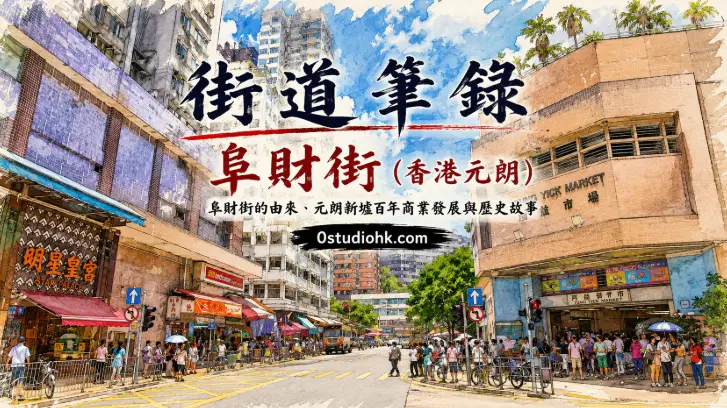
走進元朗市中心,阜財街每天人來人往,餐廳、小店與市場交織出濃厚的生活氣息。然而,這條街不只是美食集中地,它的名字承載著「物阜民豐」的美好寓意,也見證元朗由傳統墟市發展成新界重要商業中心的百年歷史。
Today, Fau Tsoi Street is one of the busiest neighbourhood streets in central Yuen Long, lined with restaurants, local shops, and constant pedestrian activity. Beyond its lively atmosphere, the street reflects the commercial heritage of Yuen Long, preserving the story of how a traditional market town gradually evolved into one of Hong Kong’s most important urban centres in the New Territories.
中文
阜財街位於香港新界元朗市中心,鄰近大棠路、又新街、教育路及合益市場一帶,是元朗新墟的重要街道之一。雖然街道長度不算很長,但多年來一直是居民購物、飲食及日常生活的重要場所,也是元朗商業發展的重要見證。街名中的「阜」有豐盛、富足、多產之意,古人常以「物阜民豐」形容地方繁榮興旺;「財」則代表財富與商業,因此「阜財」可理解為物資充裕、商貿繁盛,寓意市場興旺、生意昌隆。與附近的合財街一樣,街名均帶有吉祥及商業色彩,反映元朗新墟發展時期對繁榮市集的期望。
阜財街的歷史,與元朗新墟的建立密不可分。十九世紀末,元朗的商業活動主要集中於元朗舊墟。1911年九廣鐵路(英段)通車後,交通模式逐漸改變,商業重心開始向青山公路及鐵路附近發展。1915年,地方鄉紳及商人共同成立合益公司,在現今青山公路一帶興建元朗新墟(合益市場),希望建立新的商業中心。隨着商舖、酒樓、藥材店、布行及各類民生店舖陸續開業,新墟很快便成為新界西北最重要的墟市之一,而阜財街亦逐步形成,成為市場周邊的重要街道。
第二次世界大戰後,香港人口急速增加,元朗亦逐漸由農業墟市發展成區域市中心。五十年代,光華大戲院於附近開業,成為元朗最具代表性的娛樂場所之一。每天戲院散場後,大批市民聚集於阜財街及周邊街道,人潮帶動食肆、小販及商戶發展,使這裡成為當時元朗最繁華的商業地段之一。許多老元朗居民至今仍記得當年戲院門外排隊購票、街邊小販叫賣,以及節日人山人海的熱鬧景象。
七十年代開始,政府推動元朗新市鎮發展,大量住宅屋苑、公共設施及道路相繼落成,阜財街亦由昔日服務墟市的商業街,逐漸轉型為現代社區商業街。雖然不少舊店已被新商戶取代,但街道仍保留部分早期商住唐樓,新舊建築並存,呈現元朗不同年代的城市發展面貌。
今天的阜財街,是元朗最具人氣的民生街道之一。街道兩旁聚集了茶餐廳、甜品店、小食店、燒味店、特色餐廳及各類民生商店,每逢午飯及晚飯時間都十分熱鬧,亦是不少遊客到元朗尋找地道美食時必經之地。相比大型商場,阜財街仍保留着濃厚的街坊文化,人們可以慢慢逛街、聊天、品嚐美食,感受元朗最真實的生活節奏。
如果今天站在阜財街,很難想像一百多年前,這裡仍只是元朗新墟剛開始發展的一部分。沒有高樓林立,也沒有繁忙車流,只有一間間新開業的商舖,承載着居民對未來繁榮的期望。街名中的「阜財」,正好象徵着這份願景。經過百多年發展,街道依然熱鬧,市場精神依然延續,也讓阜財街成為元朗由傳統墟市走向現代城市的重要見證。
English Version
Fau Tsoi Street is located in the heart of Yuen Long Town, close to Tai Tong Road, Hop Yick Market, and several of the district’s oldest commercial streets. Although relatively short in length, it has played an important role in the commercial development of Yuen Long for generations and remains one of the community’s busiest neighbourhood streets.
The name “Fau Tsoi” carries a traditional Chinese meaning closely associated with prosperity. The character “Fau” suggests abundance, fertility, and plentiful resources, while “Tsoi” refers to wealth and commerce. Together, the name expresses the hope for a thriving marketplace where goods, businesses, and prosperity flourish. Similar naming traditions can also be found on nearby streets, reflecting the commercial character of Yuen Long’s early town planning.
The history of Fau Tsoi Street is closely connected with the establishment of Yuen Long New Market. Before the twentieth century, commercial activities were centred around the old Yuen Long Market. Following the opening of the Kowloon–Canton Railway (British Section) in 1911, transportation patterns gradually changed and commercial opportunities shifted closer to Castle Peak Road and the railway corridor. In 1915, local merchants and community leaders established Hop Yick Company to develop Yuen Long New Market, creating a modern marketplace that would soon become the commercial heart of northwest Hong Kong. As shops, restaurants, pharmacies, fabric stores and trading businesses gathered around the new market, Fau Tsoi Street gradually developed into one of its surrounding commercial streets.
After the Second World War, Hong Kong experienced rapid population growth and Yuen Long expanded from a traditional rural market town into an important urban district. During the 1950s, the nearby Kwong Wah Theatre became one of the district’s best-known entertainment venues, attracting large crowds every evening. The surrounding streets, including Fau Tsoi Street, became lively gathering places filled with food stalls, retailers and local businesses. For many longtime residents, the neighbourhood remains closely associated with memories of cinema queues, festive celebrations and the bustling atmosphere of old Yuen Long.
The launch of the Yuen Long New Town development during the 1970s brought another period of transformation. Modern residential estates, improved transport networks and public facilities reshaped the district. Fau Tsoi Street gradually evolved from a traditional market street into a vibrant community shopping street serving local residents. While many original businesses have changed over time, several older mixed-use buildings continue to stand alongside newer developments, illustrating different stages of Yuen Long’s urban growth.
Today, Fau Tsoi Street is widely recognised for its local dining scene and neighbourhood character. Restaurants, cafés, dessert shops, barbecue stores and everyday retail businesses attract both residents and visitors throughout the day. Unlike enclosed shopping malls, the street retains an authentic community atmosphere where daily life unfolds naturally. It remains one of the best places to experience the everyday rhythm of Yuen Long.
Standing on Fau Tsoi Street today, it is difficult to imagine that this busy commercial area began as part of a newly established market more than a century ago. Yet the street name continues to reflect the aspirations of its founders—for prosperity, successful trade and a flourishing community. More than simply a road, Fau Tsoi Street represents the remarkable transformation of Yuen Long from a rural marketplace into one of Hong Kong’s most vibrant urban districts.
總語(中文)
阜財街不只是元朗一條熱鬧的商業街,更是一段百年新墟歷史的縮影,見證元朗由傳統墟市發展成現代新市鎮的重要歷程。
Conclusion (English)
More than a busy shopping street, Fau Tsoi Street preserves the commercial heritage of Yuen Long, reflecting over a century of growth from a traditional market town into a modern urban community.