三國演義 第八十一回:劉備稱帝成都城,蜀漢正式立國 | Romance of the Three Kingdoms Chapter 81: Liu Bei Crowned Emperor in Chengdu, the Founding of Shu Han
東漢滅亡後,曹丕建立曹魏,漢室正統面臨終結。群臣一致勸進劉備承繼漢統,在成都登基稱帝,建立蜀漢政權,與魏、吳鼎足而立。這場登基大典,不僅延續漢室名義,也揭開三國鼎立的新時代。
With the Eastern Han officially replaced by Wei, many believed the imperial bloodline had reached its end. Yet Liu Bei’s ministers urged him to continue the Han legacy by ascending the throne in Chengdu. His coronation established Shu Han as a new kingdom and completed the political landscape that would define the era of the Three Kingdoms.
中文
成都城內,春意漸濃。
然而蜀漢朝廷之中,氣氛卻格外凝重。
曹丕接受漢獻帝禪位,建立魏國的消息早已傳遍天下。延續近四百年的漢朝正式走入歷史,許多舊臣悲痛不已。
大殿之上,諸葛亮、許靖、法正舊部以及文武百官齊聚。
所有人的目光,都望向坐在殿中的劉備。
多年來,劉備始終以匡扶漢室為己任。
從桃園結義開始,到顛沛流離半生,再到入主益州、奪取漢中,他始終沒有忘記自己的初心。
如今漢朝已亡,天下群雄並起。
諸葛亮首先出列。
「今漢室宗廟雖失,然皇叔乃漢景帝之後,理當承繼漢統,以安天下人心。」
群臣齊聲附和。
「請主公即皇帝位!」
劉備聞言,連連搖頭。
「吾一生為漢臣,豈可自立為帝?」
然而群臣再次跪伏。
許靖高聲奏道:
「若主公不受,則漢統自此斷絕,天下忠義之士將再無所依。」
整座大殿,一片肅然。
劉備沉默許久。
他的眼前,彷彿浮現桃園結義的那一天。
關羽已逝。
張飛仍鎮守邊疆。
昔日兄弟共同立下的誓言,如今只剩自己仍在完成。
良久,他終於緩緩站起。
「既為天下蒼生,朕願承此重任。」
群臣齊聲高呼萬歲。
成都城內鐘鼓齊鳴。
登基大典正式舉行。
禮官宣讀詔書。
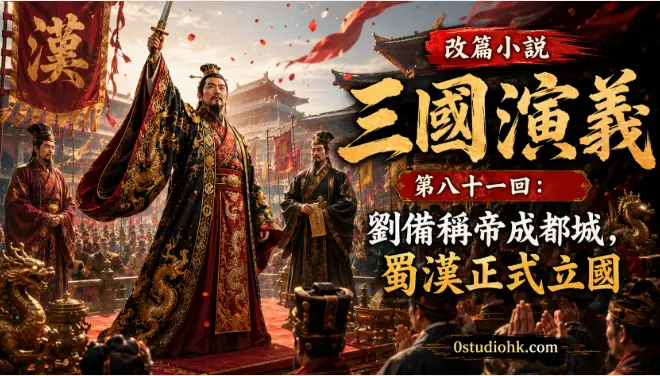
劉備身穿龍袍,登上高壇,接受百官朝賀。
他正式即皇帝位,國號仍稱「漢」,史稱蜀漢。
改元章武。
一個新的王朝,就此誕生。
登基之後,劉備首先追尊漢室歷代先帝,祭告天地宗廟。
接著大封文武。
諸葛亮拜丞相,總理百政。
許靖為司徒。
黃權、李嚴等人各授重任。
文臣武將皆各安其位。
劉備又立長子劉禪為皇太子,希望國本穩固,社稷得以延續。
然而,登基典禮結束後,劉備臉上的笑容並未停留太久。
夜深時,他獨自登上城樓。
遠望東方。
那裡,是荊州,也是關羽長眠之地。
風吹動皇袍,也吹起他的思緒。
「雲長……」
他低聲喚出兄弟的名字。
昔日三人桃園結義,如今只剩自己與張飛。
失去的不只是荊州,更是一位出生入死的兄弟。
諸葛亮緩緩走到身後。
「陛下,大業方始。」
劉備沒有回頭。
「朕知天下未定。」
停頓片刻,他目光逐漸堅定。
「但雲長之仇,不可不報。」
諸葛亮沉默不語。
他知道,此刻的新皇仍沉浸於兄弟之情。
然而,一位帝王肩負的是天下,而非私人恩怨。
只是,沒有人能改變劉備心中的決意。
成都城內燈火萬家。
百姓歡慶新朝建立。
蜀地迎來新的希望。
而在江東,孫權密切關注蜀漢動向。
在洛陽,曹丕亦派人監視西蜀。
魏、蜀、吳三國,各自積蓄力量。
真正決定天下歸屬的新時代,已悄然展開。
English Version
The streets of Chengdu were filled with celebration, yet the royal court remained solemn.
News of Cao Pi’s accession had spread across the empire. The Eastern Han had officially ended, leaving many loyal officials believing that the dynasty’s legacy was on the verge of disappearing forever.
Inside the palace, ministers assembled before Liu Bei.
For decades, he had dedicated his life to restoring the Han dynasty.
From the oath in the Peach Garden to years of wandering, from claiming Yi Province to conquering Hanzhong, every victory had been driven by that single purpose.
Now the empire stood at a crossroads.
Zhuge Liang stepped forward.
“The Han throne has fallen, but its rightful bloodline continues through Your Majesty. Only by accepting the throne can hope remain alive.”
One after another, every minister knelt in support.
Liu Bei immediately refused.
“I have always served the Han. How can I claim the imperial title for myself?”
But the ministers persisted.
They argued that rejecting the throne would allow the Han legacy to disappear forever, leaving loyal subjects without a legitimate ruler.
Silence filled the great hall.
Liu Bei remembered the oath he had once shared with Guan Yu and Zhang Fei.
Years of hardship.
Countless battles.
The dream of restoring the Han.
At last, he slowly rose.
“If this responsibility truly serves the people, then I shall accept it.”
Cheers echoed throughout Chengdu.
Drums and ceremonial bells announced the beginning of a new reign.
During the coronation ceremony, Liu Bei formally proclaimed himself Emperor.
Although his kingdom became known historically as Shu Han, he deliberately retained the state name “Han” to emphasize continuity rather than revolution.
The reign title was declared as Zhangwu.
A new dynasty had been born.
Liu Bei’s first acts reflected both gratitude and responsibility.
He honored previous Han emperors through grand ancestral ceremonies.
Zhuge Liang became Chancellor and assumed responsibility for governing the state.
Other capable ministers received important appointments, strengthening the new administration.
His eldest son, Liu Shan, was named Crown Prince to secure the future succession.
Yet despite the celebration, Liu Bei found little personal joy.
Late that evening he climbed the city walls alone.
Looking eastward toward Jing Province, he remembered Guan Yu.
The victory of founding a new empire could not erase the grief of losing a sworn brother.
Behind him, Zhuge Liang quietly approached.
“Your Majesty, the future of the empire now depends upon your leadership.”
Liu Bei remained silent before answering.
“I know the empire still requires peace.”
Then his voice grew firmer.
“But Guan Yu’s death cannot remain unanswered.”
Zhuge Liang understood the dangerous path those words suggested.
A ruler must think beyond personal emotions.
Yet he also knew that friendship, loyalty, and honor had always shaped Liu Bei’s character.
Across Chengdu, citizens celebrated the birth of a new dynasty.
In Luoyang, Cao Pi watched carefully.
In Jianye, Sun Quan strengthened his defenses.
Wei, Shu, and Wu now stood as three competing kingdoms.
The age remembered as the Three Kingdoms had fully begun.