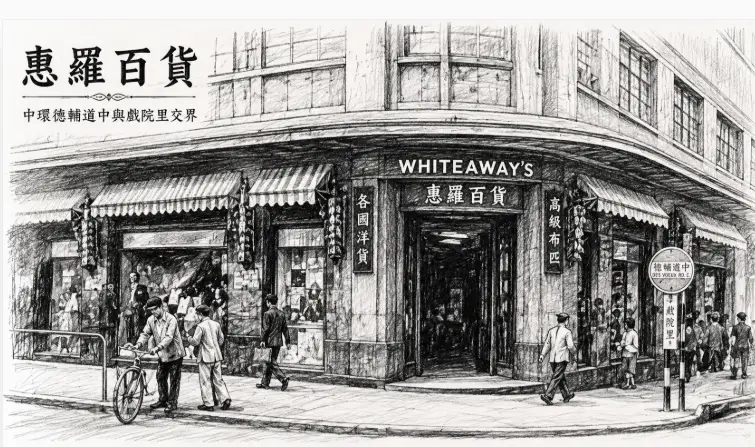
《香港百貨 006》香港惠羅百貨的殖民地傳奇|從英資洋貨王國到戰後消失的百貨巨頭 | The Story of Whiteaway, Laidlaw & Co. in Hong Kong | From Colonial Luxury Store to a Lost Retail Icon
在香港早期百貨發展史中,惠羅百貨曾是中環最具代表性的英資高級洋貨公司之一。它不僅見證殖民地時代的繁華,也經歷香港日佔與戰後重建的巨變,成為香港零售史中極具歷史價值的名字。
Long before modern shopping malls transformed Hong Kong, Whiteaway, Laidlaw & Co. stood proudly in Central as one of the city’s most prestigious colonial department stores. Its story reflects the rise of British trading culture, the turmoil of Japanese occupation, and the dramatic transformation of Hong Kong’s retail landscape after World War II.
中文
香港惠羅百貨(Whiteaway, Laidlaw & Co. Ltd.)是香港早期最具代表性的英資百貨公司之一,其源頭可追溯至1882年由兩位蘇格蘭商人 Whiteaway 與 Robert Laidlaw 於英屬印度加爾各答創立的惠羅公司。當時正值大英帝國殖民貿易的黃金年代,惠羅公司迅速發展成為橫跨亞洲與海外殖民地的重要零售集團,業務遍及印度、馬來亞、新加坡、緬甸、上海以及香港等主要港口城市,成為英國殖民地社會中極具代表性的高級百貨品牌。香港分店約於1920年代正式進駐中環,選址於德輔道中與戲院里交界的黃金地段,位置接近當時最繁盛的商業核心區,亦鄰近銀行、洋行與高級酒店。惠羅百貨的建築帶有濃厚英式殖民地商業風格,店內裝潢典雅華麗,展示櫥窗經常擺放來自英國與歐洲的時尚商品,成為當年中環街頭最具時代感的消費地標之一。惠羅百貨主要服務在港英國官員、外籍商人以及富裕華人家庭,店內售賣大量由歐美進口的高級洋貨,包括西式時裝、皮鞋、香水、珠寶、布料、家居用品、洋酒與玩具等。當時不少香港市民將能夠到惠羅購物視為身份與地位象徵,而「去中環行惠羅」亦曾是上流社會的生活文化之一。店內更聘請擁有英式管家氣派的英籍樓面經理(Floorwalker)負責巡視與接待顧客,他們身穿筆挺西裝,以嚴謹而高效率的服務方式維持商店秩序,充分展現殖民地時代英資企業的管理風格。除了商品種類齊全外,惠羅亦十分重視百貨陳列藝術與節日裝飾,每逢聖誕節與大型節慶,櫥窗都會布置成充滿歐陸氣息的節日場景,吸引大量市民前往欣賞。1941年香港淪陷後,惠羅百貨的命運亦隨之改變。日軍接管大量英資與外資企業,並推行全面「日化政策」,許多西方商號被迫停業或遭沒收。惠羅百貨最終被日方接收,其原有經營模式被迫終止,並改名為「玉屋百貨」。在日佔時期,玉屋百貨成為日本財閥體系下的宣傳與商業據點,店內不時舉辦與皇軍相關的政治宣傳展覽,包括戰功圖片展示與日本文化推廣活動,昔日充滿英倫風情的高級洋貨百貨,逐漸被濃厚軍國主義色彩取代。1945年香港重光後,惠羅公司曾短暫收回業權並重新營業,但戰後香港社會與零售市場已經出現巨大變化。大量華資企業開始崛起,而中環商業地價亦急速上升,傳統英資百貨面臨經營壓力。到了1950年代初,惠羅最終結束中環旗艦店,原址建築亦被拆卸重建為後來的德成大廈。1952年,惠羅百貨曾短暫遷往九龍尖沙咀,租用九龍電話大廈部分樓層繼續營業,希望延續品牌影響力,但隨著母公司全球殖民地零售業務逐步萎縮,加上香港零售市場開始由本地華資百貨與新式商場所主導,惠羅最終全面撤出香港市場,結束其數十年的歷史。雖然惠羅百貨今天早已消失,但它曾是香港殖民地時代最重要的高級洋貨百貨之一,其歷史不僅反映香港零售文化的演變,也見證了香港從英國殖民地、日佔時代到戰後現代化城市發展的重要歷程。對許多研究香港歷史與老香港文化的人而言,惠羅百貨依然是一個充滿時代記憶與殖民地風貌的重要名字。
English Version
Whiteaway, Laidlaw & Co. was once one of the most recognizable British-owned department stores in colonial Hong Kong, representing an era when imported European luxury defined sophistication in the city. The company originated in Calcutta in 1882, founded by Scottish businessmen Robert Laidlaw and his business partner Whiteaway during the height of the British Empire’s commercial expansion across Asia. Over time, the company evolved into a powerful retail network with branches throughout British colonies and treaty ports, including Singapore, Rangoon, Shanghai, Kuala Lumpur, Penang, and Hong Kong. By the early twentieth century, the Hong Kong branch had become one of the company’s most prestigious locations. Situated in the heart of Central at the junction of Des Voeux Road Central and Theatre Lane, the store occupied one of the busiest commercial districts in the colony. The surrounding neighborhood was filled with banks, trading houses, luxury hotels, and government offices, making it the perfect location for an elite department store catering to expatriates and wealthy Chinese residents. Whiteaway’s Hong Kong building reflected classic colonial commercial architecture, featuring elegant interiors, large display windows, polished counters, and imported furnishings that projected refinement and status. Walking into the store was considered a social experience as much as a shopping trip. Customers could browse imported British textiles, European fashion, leather goods, perfumes, jewelry, tableware, toys, wines, and luxury household products that were difficult to obtain elsewhere in the colony. At a time when Western consumer culture symbolized prestige and modernity, shopping at Whiteaway became associated with social class and cosmopolitan lifestyle. One of the store’s most memorable features was its British-style customer service culture. Floorwalkers, often British men dressed in formal suits, supervised the sales floors with strict professionalism and calm authority. Their presence embodied the discipline and hierarchy typical of British commercial institutions during the colonial period. Seasonal decorations also became a major attraction. During Christmas and other festive periods, the store’s elaborate window displays transformed Central into a miniature European shopping district, attracting families and curious pedestrians who gathered simply to admire the decorations. However, the prosperity of Whiteaway came to a sudden halt during the Second World War. In December 1941, Hong Kong fell to Japanese forces after a brief but intense battle. British-owned businesses were seized, and many foreign companies lost control of their operations under Japanese occupation policies. Whiteaway was taken over and eventually renamed Tamaya Department Store as part of Japan’s effort to reshape Hong Kong’s economy and public culture. The building no longer represented British luxury and instead became a site for wartime propaganda and imperial messaging. Exhibitions celebrating Japanese military victories and cultural programs promoting Japanese nationalism were reportedly organized within the premises. The transformation symbolized the dramatic political and cultural shift experienced throughout occupied Hong Kong. After Japan’s surrender in 1945, Whiteaway briefly regained control of its property and resumed business operations. Yet the postwar environment had changed significantly. Hong Kong’s economy was rapidly evolving, Chinese-owned businesses were expanding aggressively, and commercial property values in Central were climbing at an unprecedented pace. Traditional colonial department stores increasingly struggled to compete in a city entering a new phase of urban and economic development. By the early 1950s, Whiteaway decided to close its Central flagship store, and the original building was eventually demolished to make way for newer commercial developments, including Tak Shing Building. In 1952, the company attempted a short-lived relocation to Tsim Sha Tsui in Kowloon, operating from part of the Kowloon Telephone Building. Despite these efforts, the company’s global colonial retail empire was already declining as the British Empire itself weakened after the war. Hong Kong’s retail sector was also shifting toward locally owned department stores and modern shopping centers that better reflected the city’s changing demographics and consumer habits. Whiteaway ultimately withdrew completely from Hong Kong, ending decades of presence in the colony. Although the department store disappeared long ago, its legacy remains deeply connected to Hong Kong’s commercial heritage. The story of Whiteaway, Laidlaw & Co. captures the transformation of Hong Kong from a colonial trading port into a modern international city, while also preserving memories of an era when British department stores shaped the rhythms of urban life and luxury shopping in Central.
總結
中文
惠羅百貨不只是香港早期的英資洋貨公司,更是殖民地消費文化的重要象徵。它的興衰見證香港從殖民繁華、日佔動盪到戰後城市轉型的歷史變遷,成為老香港百貨史中難以忘記的一頁。
English
Whiteaway, Laidlaw & Co. was more than a department store. It represented an entire colonial lifestyle that once defined Central Hong Kong. Though the company vanished decades ago, its story still reflects the city’s remarkable journey through empire, war, reconstruction, and modernization.