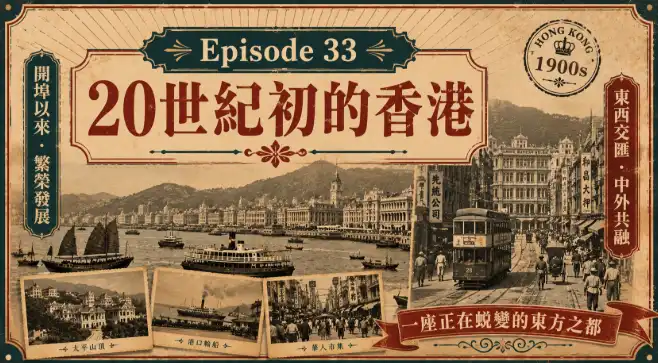
進入二十世紀後,香港逐漸由殖民港口邁向現代城市,人口、交通與商業快速發展,同時也面對瘟疫、社會變遷與國際局勢帶來的衝擊與轉型。
At the beginning of the twentieth century, Hong Kong evolved into a rapidly modernising colonial city shaped by trade, migration, infrastructure, and the uncertainties of a changing world.
中文
二十世紀初的香港正處於快速轉型時期,經過十九世紀後半葉的發展後,香港已由小型港口逐漸成長為亞洲重要商業中心,維多利亞港內商船來往頻繁,碼頭、倉庫與銀行林立,中環一帶成為殖民政府與外資企業的核心區域,而華人商人亦逐漸崛起,在航運、貿易與金融領域建立影響力,隨著人口增加,城市範圍持續擴展,灣仔、油麻地與九龍地區逐步繁榮,街道上可見電車、人力車與早期汽車並存的景象,反映傳統與現代交錯的城市氣氛,當時香港社會階層分明,歐洲人多居於山頂與較高地勢區域,而大量華人則集中於擁擠社區,居住環境狹窄,公共衛生問題嚴重,1894年的鼠疫曾重創香港,促使政府加強衛生制度與城市規劃,興建排污系統、醫院與公共設施,太平山區亦因衛生問題被重新整頓,這場危機雖造成大量傷亡,但同時推動香港現代公共衛生體系的建立,教育與文化方面,西式教育逐漸普及,教會學校與官立學校增加,培養出新一代華人知識分子,他們接觸西方思想,同時保留中國文化背景,使香港逐漸成為中西文化交會的重要城市,而中國內地的政治變動亦深深影響香港,清朝末年的改革與革命思潮透過報章、學校與商界傳入香港,辛亥革命前後,香港更成為革命人士的重要活動據點之一,不少商人與知識分子參與支援革命運動,另一方面,香港的經濟仍高度依賴港口與轉口貿易,來自中國南方的農產品、茶葉與絲綢經香港運往世界各地,而外國商品亦透過香港輸入中國市場,使香港成為東西方貿易的重要橋樑,隨著鐵路與輪船交通改善,香港與珠江三角洲及海外華人社會聯繫更加緊密,整體而言,二十世紀初的香港是一座充滿活力與矛盾的城市,它既展現現代化帶來的繁榮,也暴露殖民社會中的不平等與衛生問題,但正是在這種複雜環境中,香港逐步建立起國際城市的基礎與獨特身份
English Version
Early twentieth-century Hong Kong was a city in transition, transforming from a colonial harbour into a dynamic urban centre connected to global trade and regional politics, by this period Victoria Harbour had become crowded with merchant ships carrying goods between China and the wider world, commercial districts expanded rapidly as banks, trading houses, and shipping companies established strong foundations in Central and along the waterfront, Chinese entrepreneurs also gained increasing influence in business and finance, contributing to the rise of a growing local elite, urban expansion spread into areas such as Wan Chai, Yau Ma Tei, and Kowloon where dense residential communities emerged beside bustling markets and industrial workshops, daily life reflected a blend of old and new as electric trams shared the streets with rickshaws and horse-drawn vehicles, despite economic prosperity, colonial society remained sharply divided, Europeans often lived in cooler and less crowded hillside districts while Chinese residents faced overcrowded housing and limited sanitation in packed urban neighbourhoods, public health became a major concern after the devastating plague outbreak of 1894, which exposed poor living conditions and forced authorities to improve drainage, hospitals, and urban planning, these reforms marked the beginning of a more modern public health system in Hong Kong, education also expanded during this period, missionary schools and government institutions introduced Western-style learning while nurturing a generation of Chinese intellectuals who balanced traditional cultural values with modern political and social ideas, events unfolding in mainland China deeply influenced the colony as reform movements and revolutionary activities found support within Hong Kong’s merchant and student communities, newspapers and public discussions spread new political thought across the city, making Hong Kong an important meeting point for reformers and revolutionaries in the years surrounding the fall of the Qing dynasty, economically the city remained dependent on maritime trade, exporting tea, silk, and agricultural products while importing manufactured goods from overseas markets into China, improved steamship and railway connections strengthened ties with the Pearl River Delta and overseas Chinese communities, creating a wider network that linked Hong Kong to both Asia and the global economy, overall the city at the dawn of the twentieth century represented a unique mixture of opportunity, inequality, innovation, and cultural exchange, laying the foundations for the modern international metropolis that would later emerge
總結
中文
二十世紀初的香港在經濟繁榮與社會挑戰中快速成長,港口發展、公共衛生改革與文化交流,共同塑造現代香港的早期輪廓。
英文
The early twentieth century shaped Hong Kong through trade, reform, and cultural interaction, establishing the foundations of a modern city connected to both China and the wider world.